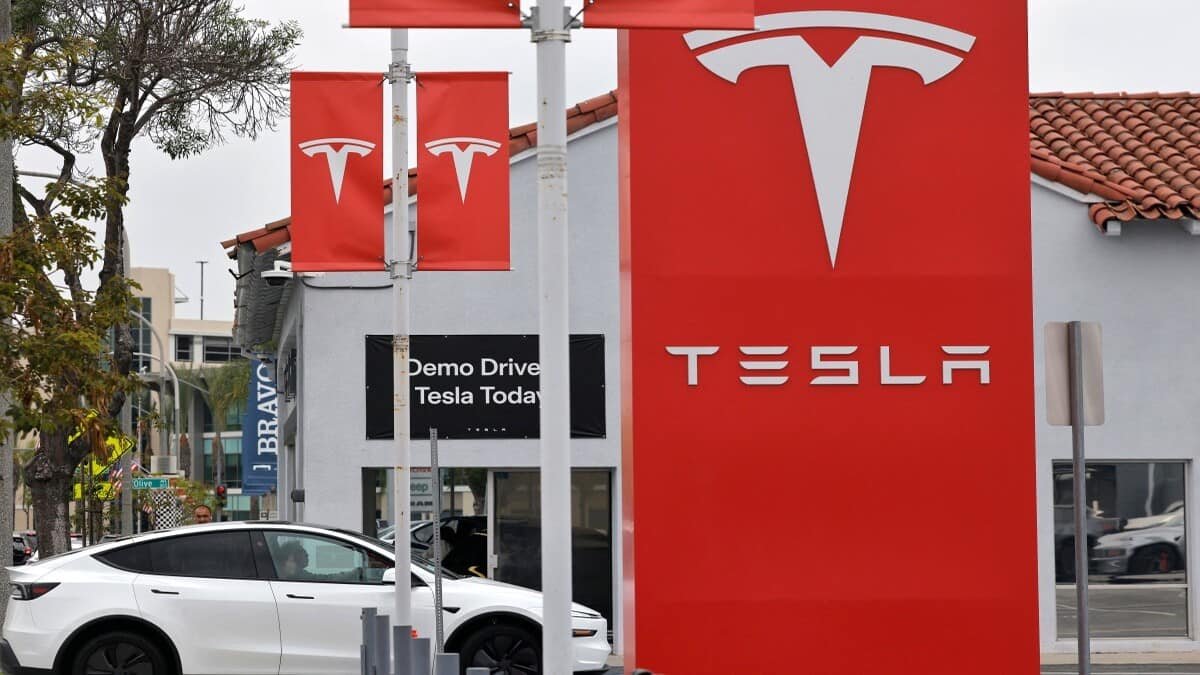
Elon Musk’s Tesla has won its bid to revive a London lawsuit against US technology firm InterDigital and patent licensing platform Avanci, seeking a patent licence ahead of the automaker’s planned launch of 5G-enabled vehicles in Britain.
Tesla sued InterDigital and Avanci—which licenses patents from multiple owners, primarily for automotive applications—in London’s High Court in 2023.
The UK Supreme Court ruled in Tesla’s favour, stating that patent owners are not released from their obligation to license patents on fair, reasonable, and non-discriminatory (FRAND) terms simply by joining a patent pool or licensing platform. The case is now expected to return to the High Court.
Laurie Fitzgerald, President of Avanci Vehicle, said in a statement, “We respectfully disagree with today’s decision and continue to believe Tesla’s claims are without merit.”
Tesla’s charges against AVANCI
To roll out 5G-enabled vehicles in the UK, Tesla needed access to standard-essential patents (SEPs) covering wireless communications technologies. Instead of negotiating directly with individual patent holders, the automaker was directed to Avanci, a joint licensing platform that bundles tens of thousands of global 5G SEPs owned by more than 60 independent telecommunications companies, including technology firm InterDigital.
Avanci offered Tesla a global platform licence at a fixed, non-negotiable rate of $32 per vehicle. Tesla objected to the terms, arguing that the flat-rate pricing structure for the entire patent pool far exceeded what could legally be considered a fair, reasonable, and non-discriminatory (FRAND) royalty.
After Avanci declined to negotiate its licensing terms, Tesla filed a lawsuit in the High Court of England and Wales. The automaker sought a judicial declaration establishing a fair global FRAND royalty rate for the entire Avanci 5G licensing platform. In the early stages of the case, the defendants strongly opposed Tesla’s claims, arguing that English courts lacked the jurisdiction to rewrite the commercial terms of a voluntary third-party licensing platform.
The UK Court of Appeal later dismissed Tesla’s licensing claims in a majority decision, ruling that traditional FRAND commitments grant manufacturers the right to negotiate bilateral licences only with individual patent holders, rather than licensing platforms such as Avanci. Tesla subsequently appealed to the UK Supreme Court, whose ruling has now set an important precedent for future disputes involving patent licensing platforms and FRAND obligations.