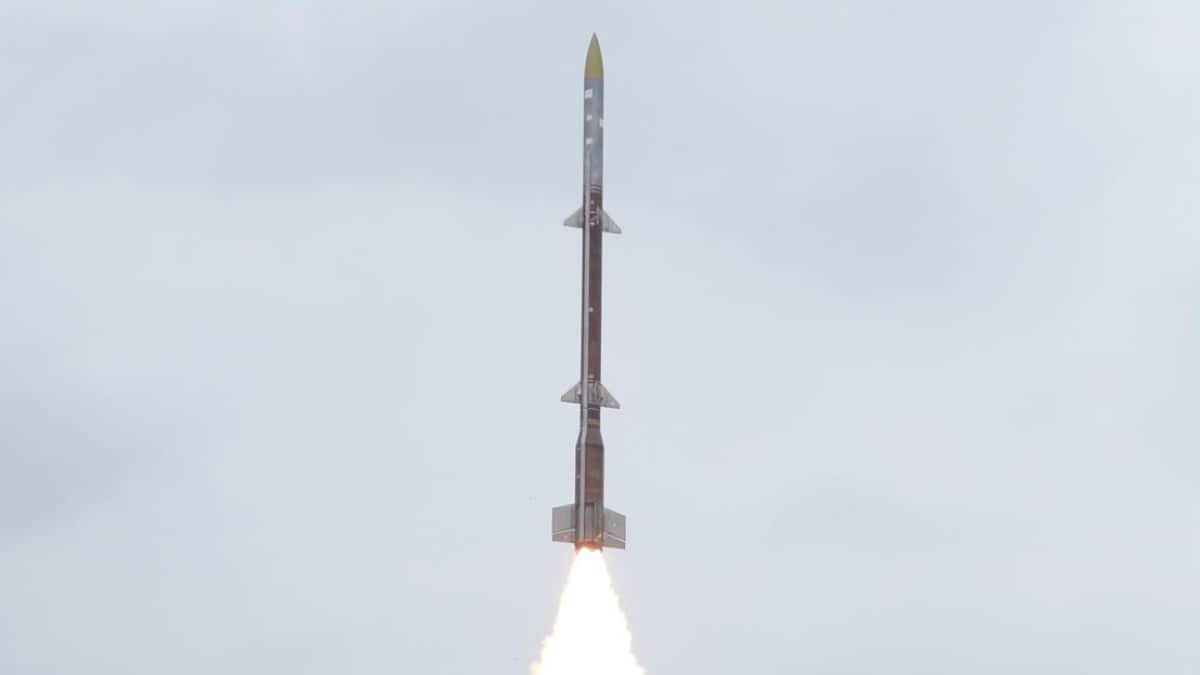
In a major step in strengthening the country’s air defence capabilities and reducing dependence on imported weapon systems, India on Wednesday successfully conducted the test flight of the indigenous ‘Kusha’ long-range surface-to-air missile system.
Developed by the Defence Research and Development Organisation (DRDO) in collaboration with industry partners, the ‘Kusha’ system is designed to neutralise a range of aerial threats, including fighter aircraft, missiles, unmanned aerial vehicles (UAVs) and large enemy aircraft across a wide range and altitude envelope.
Describing the successful test as a significant achievement for India’s defence research, Defence Minister Rajnath Singh said the milestone demonstrated the country’s growing capability to develop advanced long-range surface-to-air missile systems, a technology possessed by only a handful of nations.
More from India What Vikram-1 launch says about India’s future in space India awaits first private orbital rocket launch after 35-minute delay; PM Modi hails Vikram-1 as a 'historic new frontier' He said the successful development of the ‘Kusha’ system would help reduce India’s reliance on imports for such critical defence platforms while providing a major boost to the country’s air defence architecture.
Defence Secretary and Secretary, Department of Defence R&D, Rajesh Kumar Singh, who monitored the launch, congratulated the DRDO scientists and all teams associated with the successful test flight.
The successful trial is expected to advance India’s efforts to build a layered, indigenous air defence network capable of countering a broad spectrum of aerial threats.
Quick Reads View All China has dominated Myanmar’s rare earth mines — now India eyes deal to harness country’s critical minerals CJP protest in Delhi: New videos of stone pelting, violence emerge as police, agitators trade charges