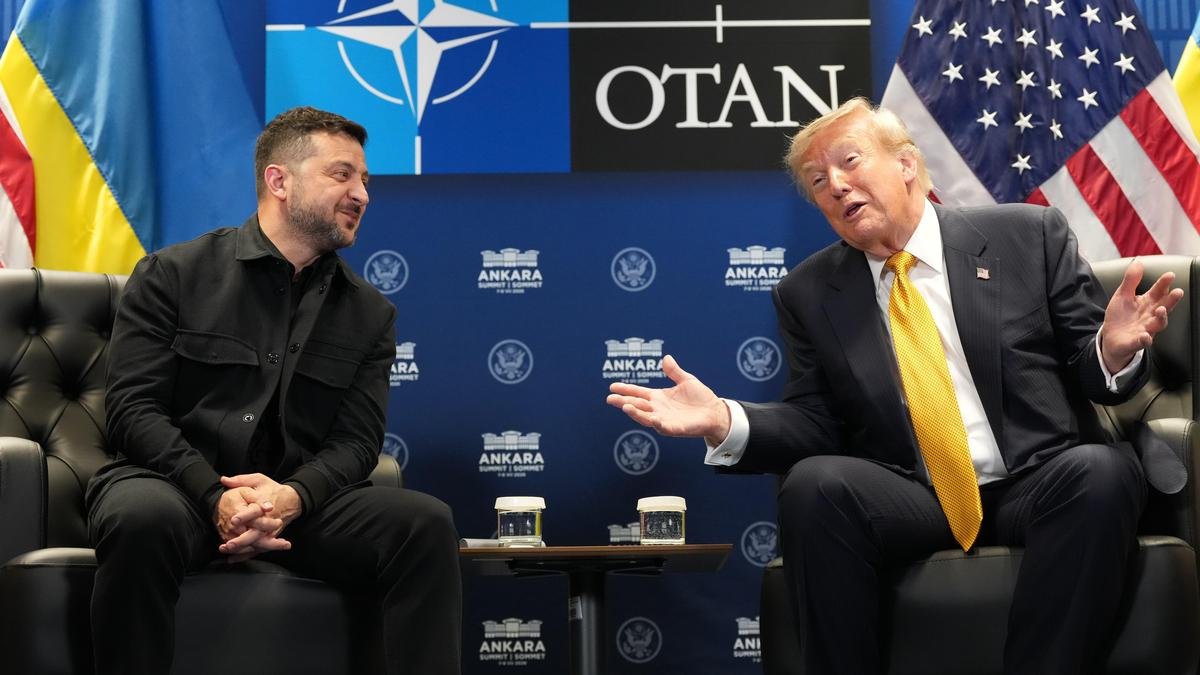
Figure caption, Zelensky and Netanyahu discuss critical meetings with Trump ByBernd Debusmann Jr, White House reporter , Olga Malchevska, Washington DC and Brandon Drenon Published 28 July 2026 Updated 3 hours ago US President Donald Trump has held separate meetings with Ukrainian President Volodymyr Zelensky and Israeli Prime Minister Benjamin Netanyahu, which the White House described as "positive and productive".
The two leaders were in Washington to attend the funeral of Senator Lindsey Graham, a staunch supporter of Israel and advocate for US aid to Ukraine.
He died earlier this month.
Zelensky and Trump discussed Kyiv's hope that the US would help bolster its air defences.
Netanyahu, for his part, arrived at a time when US-Israel ties have been frayed by diverging views on Iran.
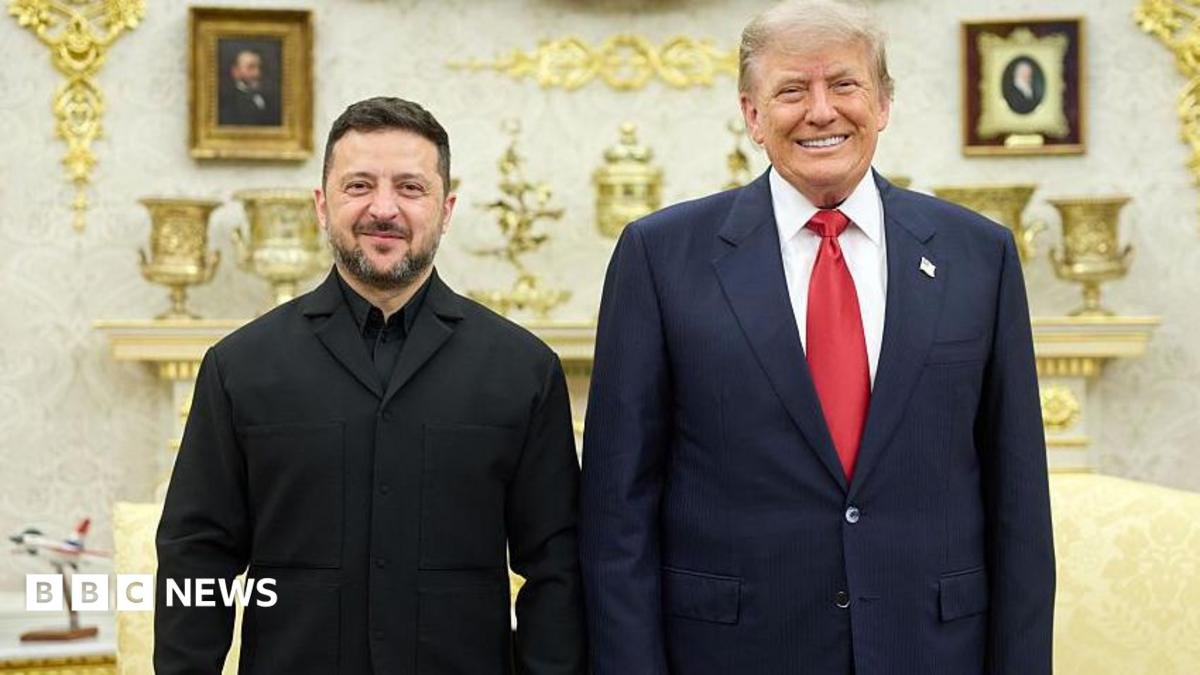
Image source, Zelensky Social Media Account/Handout Image caption, Ukraine is seeking Patriot air defence missiles to combat Russian aerial attacks Ahead of the visit, Zelensky was expected to press Trump to follow through on a promise he made at this month's Nato summit to grant Ukraine a licence to produce Patriot interceptor missiles.
Ukraine has long sought American Patriot missiles, which Kyiv says could be used to defend Ukrainian cities from escalating Russian drone and ballistic missile attacks across the country.
The Ukrainian leader's diplomatic mission in Washington was focused.
After arriving at the White House, he slipped past reporters and avoided cameras as he entered through a side door before joining Trump in a closed-door meeting.
Trump described the meeting afterwards in a post on Truth Social, saying it "went very well!" Lindsey Graham remembered by Trump as 'giant of the US Senate' at funeral Published 17 hours ago As the US pauses the war with Iran, is Trump really running out of weapons?
Published 1 day ago While there was no official US confirmation of military assistance to Ukraine, Zelensky said afterwards that Trump had agreed to give Ukraine licences for domestic production of Patriot missiles.
"He accepted that he will give us licences," Ukraine's leader told Fox News.
The BBC asked the White House for comment.
On his DC visit, Zelensky also met with leaders from the behemoth US weapons manufacturer Lockheed Martin.
In a statement on X, which was accompanied by photos of himself posing with company executives, he wrote: "We talked about our joint capabilities regarding Patriots and other systems.
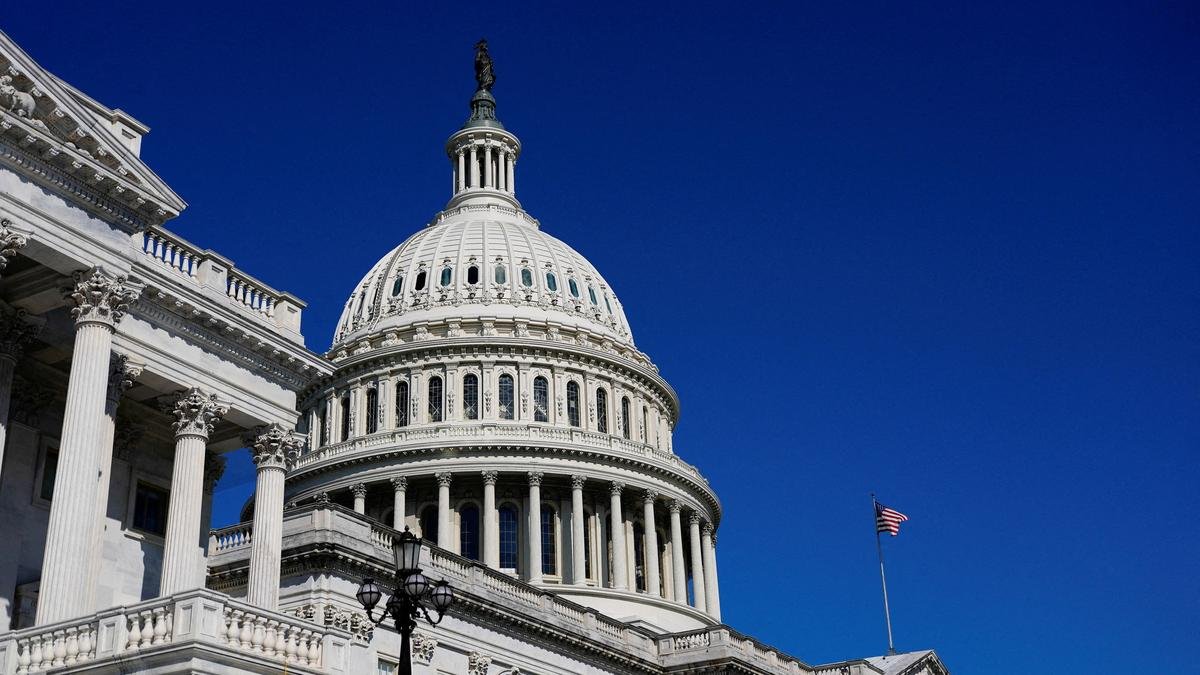
"Our teams are already working on specific solutions to move to joint production as quickly as possible." Zelensky's last stop would be the US Capitol, where he met dozens of senators in another closed-door meeting ahead of a crucial vote on a new package of sanctions on Russia.
He stood in a crammed hallway after the meeting and told a gaggle of reporters that Patriot systems were discussed here, too, and said passing the sanctions bill would send a "big signal to Europe, big signal to Ukraine, big support of our people".
Zelensky was then ushered into the Senate chamber for a front-row seat as lawmakers voted overwhelmingly to advance the bill, a year after Graham, the late US senator, co-authored it.
If the Senate gives final approval to the bill, it will move to the House of Representatives, which is in recess until September.
The Patriot is one of the few air defence systems able to intercept ballistic missiles, which Russia has increasingly used to bombard Ukrainian cities.
It can catch rockets with flight ranges of up to 1,000km (620 miles).
One battery can simultaneously track up to eight targets and detect more than 100.
But it comes with a price tag – each missile for the Patriot is estimated to cost from $3m to $5m.
Zelensky and the Ukrainian army have previously said Ukraine needs 25 Patriot interceptor systems.
As well as beefing up Ukraine's military, domestic production of Patriots would shore up Zelensky's approval rating in the wake of recent protests over his decision to oust a popular defence minister.
The key question is where Ukraine might produce those systems away from the prying eyes of the Kremlin, and whether it could be done quickly enough to alter the balance of the conflict.
Image source, Maâayan Toaf (GPO)/Handout/Anadolu via Getty Images) Image caption, A photograph of Netanyahu and Trump meeting in the White House was shared on the former's X account Shortly after Zelensky left on Tuesday, Netanyahu arrived at the White House for talks that were expected to focus heavily on the conflict in Iran.
Once-friendly ties between them have become more tense in recent months, with Trump frequently criticising Israel for continuing strikes in Lebanon and ignoring a ceasefire.
Afterwards, Trump said in a brief post on Truth Social that it was "a very good meeting!" Netanyahu told Israeli media the two had "an understanding of a shared goal, to ensure that Iran does not have nuclear weapons, and other goals as well".
"One of the best conversations I have had with the president of the United States," he added.
A photograph of the two leaders shared on Netanyahu's X account shows the two men seated in the Oval Office, smiling towards the camera.
After the meeting, the US military said Iranian forces had attempted a surprise attack on American forces in the Middle East, but that all the missiles were intercepted.
US and Saudi forces meanwhile attacked Iranian proxies in eastern Iraq which had allegedly fired drones at Saudi energy infrastructure, according to the US military.
Tehran has not yet commented.