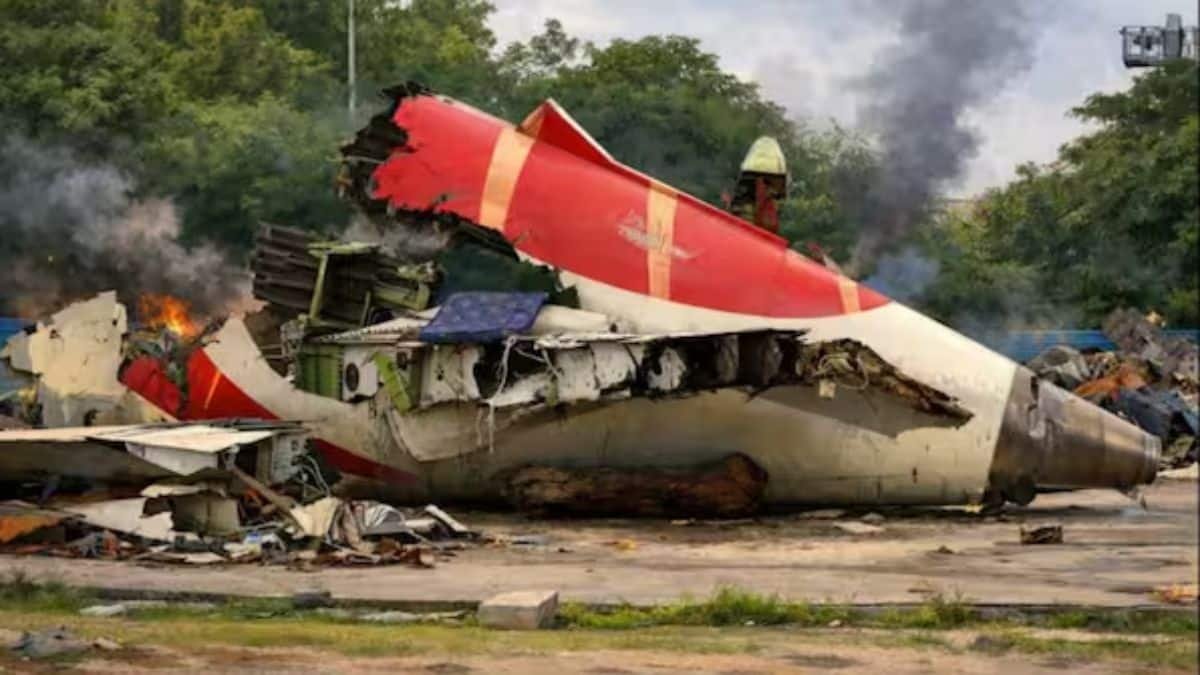
The investigation into the Air India AI-171 crash that killed 260 people has entered its final stages, with the government informing Parliament that no defect has been found in the aircraft’s fuel control switch or its locking mechanism.
Replying to questions during the Monsoon Session, Minister of State for Civil Aviation Murlidhar Mohol said advanced tests conducted by aircraft manufacturer Boeing found the fuel control switch to be functioning normally.
The government also said the Aircraft Accident Investigation Bureau (AAIB) would release its final report once the investigation is complete.
The update comes amid reports suggesting the final investigation had been delayed because a detailed technical examination of the aircraft’s damaged engines remains incomplete. The government, however, said accident investigations do not follow a fixed timeline and are guided by evidence as it emerges.
Fuel switch found to be functioning normally
According to Mohol, Boeing carried out a detailed examination of the fuel control switch, including the structural integrity of its locking mechanism, after the Directorate General of Civil Aviation (DGCA) ordered additional airworthiness checks.
“A detailed examination of the fuel control switch, including the structural integrity of its locking detents, found no abnormality,” the minister said.
However, investigators are still examining the aircraft’s complete Thrust Control Module at Boeing’s facility in Seattle. Mohol said the findings from that inspection are still awaited.
Engine forensics remain a key focus
While one possible cause has effectively been ruled out, investigators are continuing an extensive examination of the aircraft’s engines and maintenance records.
According to earlier reports, one of the key areas under investigation is the condition of the fractured turbine blades. Metallurgical experts are studying whether the blades broke while the engines were producing high power or whether they had already lost thrust before the aircraft crashed.
The outcome of these engine forensics is considered crucial because investigators cannot conclusively rule out a power failure until the physical evidence matches information recovered from the flight data recorder and cockpit voice recorder.
Quick Reads
Exam reforms bill passed in Lok Sabha by voice vote amid Rahul-Rijiju war of words
India's top court clears former PM Manmohan Singh in coal block case, quashes 2015 summons order
The digital data provides details of pilot inputs, throttle positions and engine performance during the flight. However, investigators must also confirm that the damaged engines and other wreckage support those findings before determining the exact sequence of events.
Final report to be made public
The government also rejected claims that the AAIB had delayed its final report.
Mohol told Parliament that investigations into major aviation accidents often take time because every possible cause and contributing factor has to be examined thoroughly.
“All probable causes and contributing factors leading to the accident are being investigated,” he said.
According to the government, the AI-171 investigation is now in its final phase. Once the probe is completed, the AAIB’s final report will be made public and uploaded to its official website.
Although international aviation guidelines generally recommend releasing an interim report within a year of a major accident, experts have noted that the complex engine teardown and forensic analysis could extend the timeline before investigators can present a definitive account of what caused the crash.