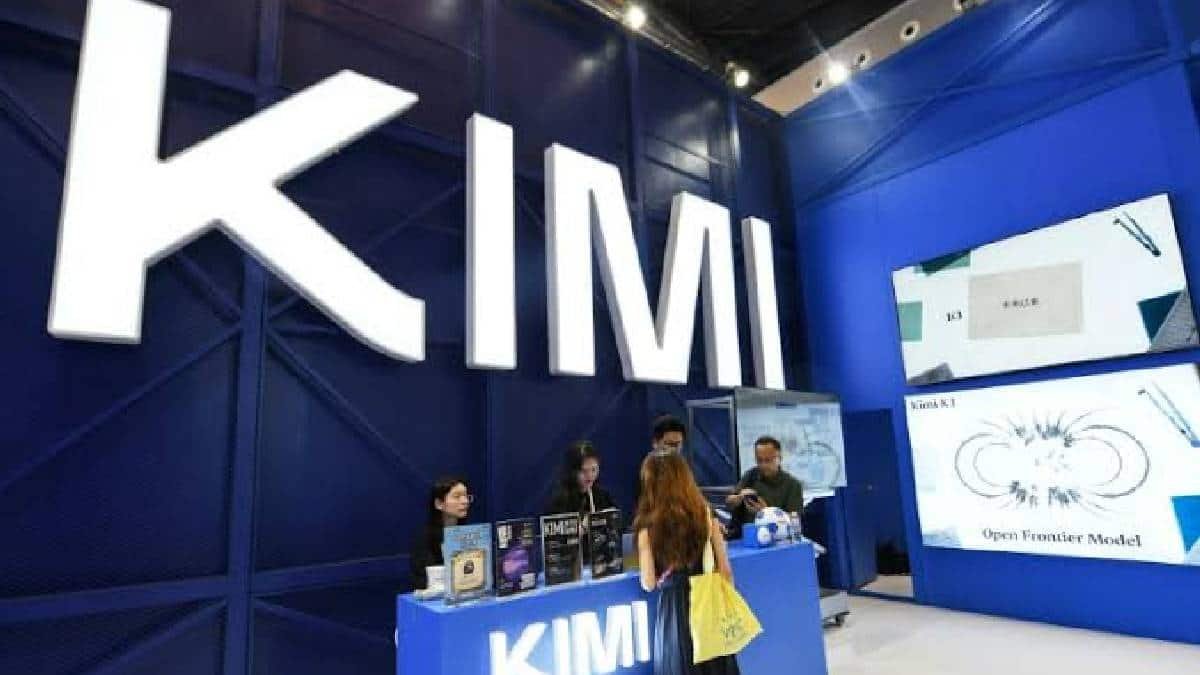
Fresh tensions have emerged in the technology rivalry between the United States and China after senior Trump administration officials accused Chinese artificial intelligence startup Moonshot AI of unlawfully using Anthropic’s proprietary technology to develop its latest flagship model.
The allegations, which also include claims that Moonshot obtained advanced Nvidia AI hardware despite US export controls, mark the latest escalation in Washington’s efforts to curb China’s progress in cutting-edge AI. Chinese officials have strongly denied the accusations, calling them politically motivated and without factual basis.
US alleges AI model theft, considers sanctions
Michael Kratsios, a senior technology official in the Trump administration, said the US had intelligence indicating that Moonshot AI relied on Anthropic’s frontier model, Fable, while developing its newly launched Kimi K3 system.
In a post on X, Kratsios wrote, “We have information that Moonshot AI distilled Anthropic’s Fable for the development of its K3 model.” He described the alleged activity as “large-scale, covert industrial distillation aimed at stealing proprietary U.S. technology and undermining American research.”
The accusation centres on a technique known as AI distillation, in which developers train smaller or newer models using outputs generated by more advanced systems. While the process can significantly reduce development costs, companies including Anthropic argue that unauthorised use of their models violates intellectual property rights and service agreements.
US Treasury Secretary Scott Bessent later indicated that the administration was considering further action, saying Moonshot AI could be added to a US trade blacklist and potentially face sanctions.
Anthropic also backed Washington’s concerns. Sarah Heck, the company’s public policy executive, said in a post on X that the theft of American AI models by Chinese firms poses “serious national security risks for the United States.”
Quick Reads
Elon Musk predicts superintelligent AI within five years, says there's no stopping it
Patreon layoffs: CEO says AI isn't replacing workers as company cuts 20% jobs
Kratsios additionally alleged that Moonshot had acquired servers equipped with Nvidia’s GB300 AI chips and used them in Thailand to train its models, raising fresh questions over compliance with US export restrictions on advanced semiconductors.
Beijing rejects claims as AI rivalry deepens
China dismissed the allegations, insisting its AI sector has achieved its progress independently while respecting intellectual property protections.
Liu Chang, spokesperson for the Chinese embassy in Washington, described the claims as “entirely unfounded”, urging US officials to recognise China’s advances instead of attempting to discredit them.
Separately, Chinese foreign ministry spokesperson Lin Jian criticised Washington for politicising technological competition, warning that turning AI into a geopolitical battleground would ultimately hinder global innovation.
The accusations come shortly after Moonshot unveiled Kimi K3, a 2.8 trillion-parameter model the company described as the world’s largest open-weight AI system. Moonshot said the model delivers performance close to Anthropic’s Fable, despite being released only weeks after the US government withdrew Fable and Anthropic’s Mythos models over security concerns.
Washington has increasingly focused on what it sees as systematic efforts by Chinese AI companies to replicate leading American models. According to a diplomatic cable previously reported by Reuters, the US State Department instructed embassies worldwide in April to highlight alleged attempts by Chinese firms, including Moonshot AI, to obtain intellectual property from US AI laboratories.
The latest allegations also follow earlier claims by Anthropic that Moonshot, DeepSeek and MiniMax collectively generated more than 16 million interactions with its Claude model using approximately 24,000 fake accounts, violating the company’s terms of service and regional restrictions. OpenAI has similarly warned US lawmakers that Chinese developers have sought to reproduce frontier AI models through unauthorised distillation techniques.
Moonshot AI has not publicly responded to the latest accusations. As both countries continue racing to build increasingly capable AI systems with commercial and military significance, the dispute is likely to intensify scrutiny over technology transfers, intellectual property and access to advanced computing hardware.