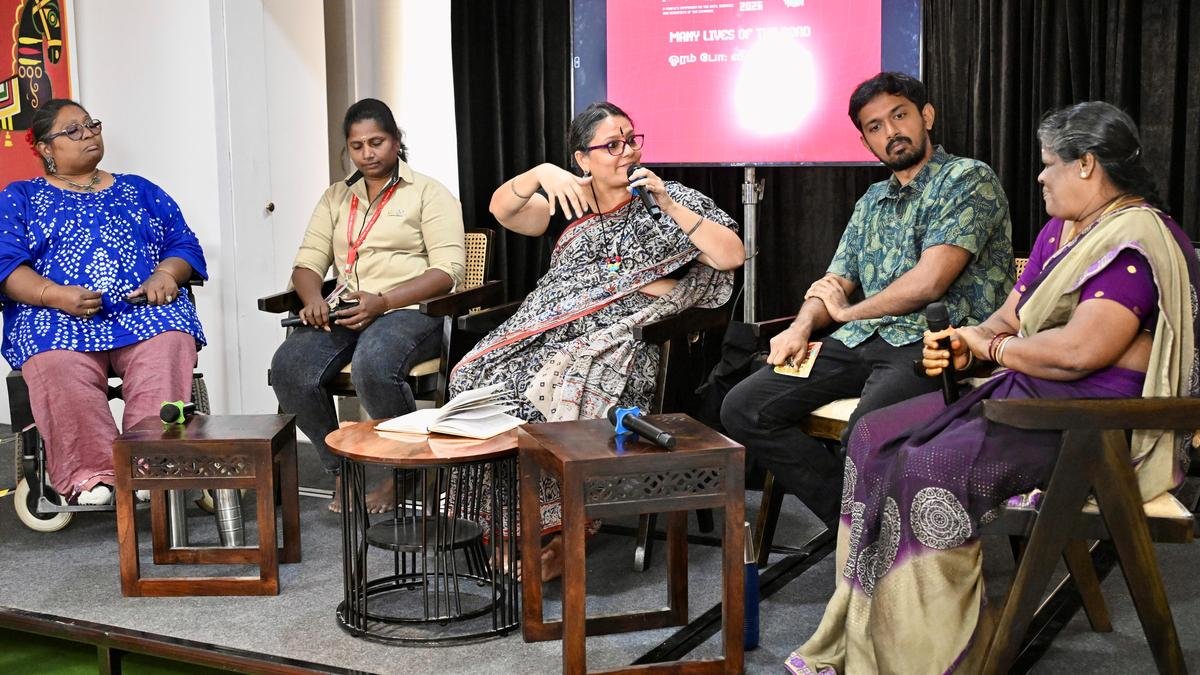
Chennai’s commons belong to those who live, work, and depend on them, speakers at Porombokkiyal 2026 held in Mylapore said on Saturday.
Now in its fourth edition, the event seeks to reclaim poromboke (shared communal land) from its derogatory stigma, integrating the commons into discussions on urban spaces, music, and the internet.
In the opening session — The Many Lives of the Road — a fish vendor from Nochikuppam Mullai said the Loop Road had already disrupted accessibility and livelihoods, subsuming 10 villages and leaving children to play on the streets.
Reclaiming porombokke: Who gets to shape the commons?
Highlighting systemic exclusion, disability rights activist Aiswarya Rao noted how narrow footpaths and debris made parks inaccessible for wheelchair users.
Autorickshaw driver Mohana spoke of the lack of women-only autorickshaw stands and public restrooms.
In the second session titled Commons of Care, moderated by Prashanth, wetland researcher Sarath Kumar, founder of Vyasai Thozhargal (Comrades of Vyasarpadi), shared how residents had transformed a neglected dump yard in the area into the Dr.
Ambedkar Tuition Centre in just seven days.
The tuition centre has achieved a 100% pass rate for 11 years.
Related Stories Chennai Kalai Theru Vizha’s Porombokkiyal ’24 throws light on knowledge and expertise built on lived experiences Chennai | Attend this symposium of art, science, and knowledge to learn from the experts Alleging problems with fish market complex in Pattinapakkam, vendors move stalls to premises’ parking lot International Toilet Festival 3.0: Chennai Corporation’s ‘Toilet Walk’ sparks discussions on inclusivity The founder of Pagir, Archana Mohan, shared how she left a 20-year corporate career to create accessible community spaces, as she and her co-founder grew tired of searching for affordable places to meet without having to buy expensive coffee.
In the session on Sharing Fairly: Music, Internet & the Ethics of the Commons, singer Bindhu Malini suggested citing musical inspirations like academic research.
Rohith Abraham, aka ofRo, founder of Atti Culture, an independent Chennai-based music label, questioned the ownership of music, while advocate M.V.
Moderator T.M.
Krishna pondered whether music’s intangible nature complicates ownership.
The final open-house session, Naa Porombokku!
Nee Porombokkaa?, invited attendees to discuss sustainable shared spaces.
For Lily Ann B., who studied political science and is pursuing environmental change and sustainability, the sessions were inspiring.
In a world where hyper-individualism and capitalism corroded care, the sessions offered hope by bringing real-world interconnections to light, she said.