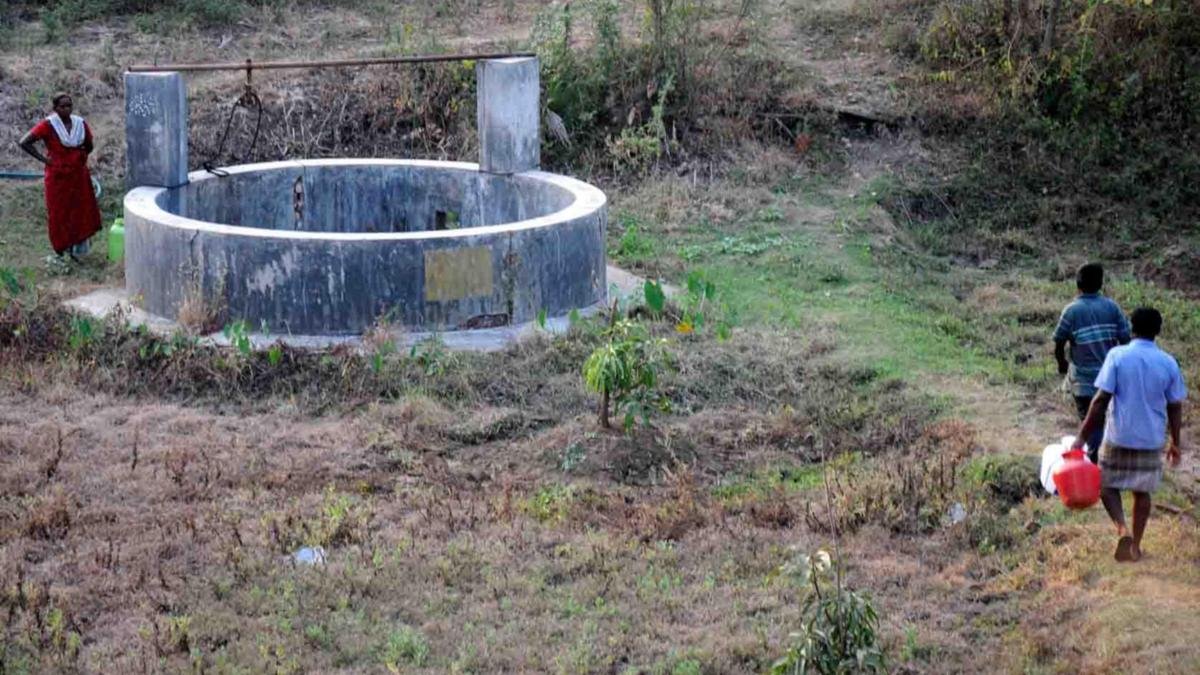
The story so far The groundwater resources of Kerala have been under severe stress due to changes in rainfall pattern following climate change, high population density as well the fact that approximately 62% of the population relies on groundwater from an estimated 6.5 million open wells for their domestic needs.
The State’s fragmented wastewater management system and the unscientific construction of septic tanks and pit latrines at homes close to shallow and open wells have resulted in persistent faecal contamination of ground water in the State, which has been documented by several studies.
A 2024 study in the Journal of Environmental Management reported that 7.4% of the State’s population could be making do with poor quality of groundwater and estimated that 0.59 million people in 252 local self government bodies in the State could be continuously exposing themselves to health risks from consuming ground water from wells which may not be chlorinated regularly.
And the latest report on E.coli contamination comes from Pala, where a water quality assessment conducted in flood-affected areas along the Meenachil river detected E. coli bacteria in 67% of the samples, raising concerns over the safety of drinking water sources in and around Pala.
Researchers attributed the spike in bacterial contamination to the recent floods, which may have allowed contaminated surface water to enter water sources.
Ground water extraction: three Kerala blocks continue in ‘critical’ list How is contamination taking place?
It is a dangerous combination of high population density, unplanned urbanisation with hundreds of septic tanks and wells sitting close to each other in small plots and the State’s natural hydrogeological features that allow surface pollutants to reach the water table quickly.
In recent years, unpredictable and heavy rainfall has been adding to the State’s woes, as oversaturation of the soil and the overflow of drainage systems can quickly allow pollution and microbial contamination to infiltrate ground water.
Environmental scientists explain that groundwater is drawn mostly from shallow, unconfined aquifers, which are recharged directly by rainfall and surface infiltration.
In most areas the local water table might be sitting just below the level of the river bed and it naturally leaks water downwards to recharge the underlying unconfined aquifers.
If rivers are polluted, then all groundwater resources in the surrounding area would also be carrying the same pollutant.
India’s toxic taps: how groundwater contamination is fuelling chronic illnesses What is the extent of groundwater contamination in Keralam?
A community-level GIS study of 449 households in an urban area of Thiruvananthapuram in 2018 had reported that most of the wells were in an intermediate-high contamination risk state, with more than 77% of wells having a septic tank within 7.5 m radius.
Coliform contamination was prevalent in 73% of wells, and the groundwater was predominantly acidic with a mean of 5.4, rendering it unfit for drinking.
This picture could be true for the rest of the State also.
Because of the State’s unique geography and highly dispersed, continuous rural-urban settlement pattern, just about 5-6% of major urban zones are connected to a centralised pipe-based sewerage network system.
The State’s sanitation strategy relies heavily on onsite sanitation systems, with individual household septic tanks and soak pits for sewage disposal.
Unscientific construction of these household sanitation systems has rendered much of the groundwater resources unsafe for human consumption, unless properly treated.
Water woes in Kerala’s wetland What are the health impacts?
Safe drinking water is one of the crucial social determinants of health.
It is thus unfortunate that a State which has made enviable strides in developing its public health sector has paid little attention to ensuring that people have access to safe drinking water.
While people in urban areas have to a large extent, access to treated water supply, in many rural areas of the State serviced by local small water supply schemes, water distribution lines often run close to sewerage lines and even small breaks in the pipelines can lead to the contamination of drinking water Recurrent outbreaks of water-borne diseases like Hepatitis A, Shigellosis and norovirus outbreaks have been the bane of the State in recent years, especially in the northern districts of the State, indicating the scale and impact of groundwater contamination.
Hepatitis A in particular has been taking a heavy toll on the State since the last three years, with significant mortality and in many instances, leaving people with severe morbidities Epidemiological studies conducted by the ICMR and Health department into amoebic meningoencephalitis, which has emerged as a significant public health problem in Keralam in recent times, has traced the infection to the use of non-chlorinated well water which has high concentration of E.coli, in which free-living amoeba thrive Keralam witnesses 7th-lowest southwest monsoon season What is the sewerage infrastructure status?
To modernise sewerage infrastructure, the State is executing projects under the AMRUT 2.0 Mission, a Central initiative aimed at ensuring universal access to safe water and reliable sewerage connections across urban areas.
The CAG’s 2025 report stated that at the closure of the AMRUT Mission (Atal Mission for Rejuvenation and Urban Transformation), Kerala’s overall achievement was just 11.25% and only 0.13% households got sewerage connections.
Keralam’s geography, population density, lack of vast tracts of uninhabited land means that many proposed treatment plants end up being close to residential areas, which triggered huge public protests.
Such protests led to the cancellation of multiple approved septage treatment plant projects in many parts of the State.
There are also reports about the State’s financial crunch affecting project payments leading to delays in implementation