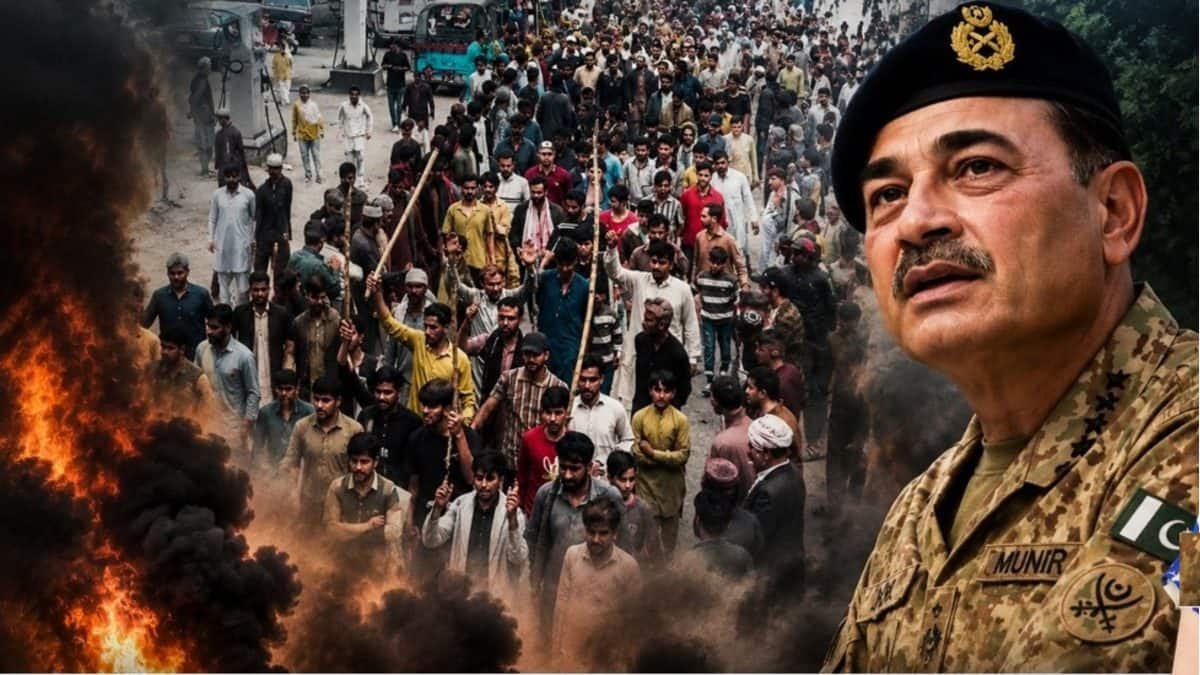
Islamabad Signs Defence Pacts Abroad While Its Own Territories Slip Out of Its Hands
Kuwait has ratified a five-year Defence Cooperation Agreement with Pakistan covering joint training, intelligence sharing and defence technology. Unlike Saudi Arabia’s 2025 pact, it carries no mutual-defence clause, and Firstpost notes it fits a wider Gulf hedging pattern, oil monarchies diversifying security bets beyond an unpredictable American umbrella, with Islamabad trading manpower for bailouts. Delhi barely needs to react: India’s Gulf relationship runs on $100 billion in trade, Pakistan’s runs on soldiers for hire.
The timing: Islamabad is shopping security deals abroad in the same weeks its water leverage over India has become permanent, its insurgencies have started blurring into one, and one of its own “provinces” is holding an election beside a crackdown a global rights body is now calling out by name.
The water leverage Pakistan has no answer for
India has held the Indus Waters Treaty in abeyance since Pahalgam. Firstpost’s Gaurav Sen calls it a long-term pressure tactic rather than a one-off punishment. Pakistan draws roughly 80 percent of its water from the Indus system, and that supply underwrites a quarter of its GDP. Cutting data-sharing and hydropower cooperation stays well short of anything that risks war, and that restraint is what lets India keep the pressure on for years. Amit Shah has ruled out restoration entirely. Jaishankar has made any reversal conditional on Pakistan giving up cross-border terrorism. Pakistan’s old playbook - sponsor militants, hide behind the bomb, absorb calibrated retaliation - has no answer for a lever that isn’t military.
Where the insurgencies start looking alike
Inside the country, the lines are dissolving too. Baloch separatists and the TTP, long treated as ideologically distinct, are converging in territory and tactics, per Firstpost’s Nazir Ahmad Mir, who details three attacks in early July, on a Ziarat police post, in Gwadar’s Jiwani, and in Hanna Urik, that killed over a dozen security personnel in a single week. Islamabad’s response has been to blame the Afghan Taliban and strike across the border, without home-front attacks actually slowing.
PoK: an election next to a crackdown, and now an Amnesty probe
PoK is where all of it converges. A three-phase Assembly election is running alongside the territory’s biggest protest wave in decades. Firstpost’s Tara Kartha writes more than 40 have died since June, with nearly a third of deployed police carrying combat weapons rather than crowd-control gear, and the real fight is over 12 reserved refugee constituencies the JAAC wants scrapped. Firstpost’s Omer Ghazi pushes it further: a territory branded “Azad” Kashmir is governed through internet shutdowns and mass arrests. Now Amnesty International has demanded an independent probe into lethal force used near Rawalakot and an end to the blackout in place since June 5, reported by Firstpost. It’s no longer Indian commentary making this case, it’s the West.
The structural read
Firstpost’s Utpal Kumar ties it together: Balochistan, KP and PoK aren’t separate fires but symptoms of one defect, a state built by Punjab’s landed elite that never became a genuine federation. Each of Pakistan’s past bursts of relevance, the 1970s US-China opening, the Zia-era jihad, the Musharraf years, coincided with deeper fracture rather than preventing it. A Kuwait pact doesn’t break that pattern.
Delhi’s answer
At Kargil Vijay Diwas in Dras, Rajnath Singh said any future talks with Pakistan would cover only Pakistan-occupied Kashmir, calling it Indian land under illegal occupation, and that the line between Pakistan’s army and its militants had all but vanished, per Firstpost’s coverage. It inverts the old default where Kashmir dialogue meant India’s own territory on the table. With the IWT in abeyance and Sindoor paused rather than closed, India is negotiating from its strongest position since Kargil, precisely because Pakistan is negotiating from its weakest.
01
THREAT BOARD
Pakistan’s K2 Playbook: Weaponising India’s Own Protests
Kashmir and Khalistan may be converging into a single operating theatre. Indian agencies have reportedly begun calling it the “K2 strategy,” and in a News18 exclusive, Manoj Gupta reports it appears active inside India’s current protest cycle. The suspected method isn’t inventing dissent, that’s costly and traceable. It looks parasitic instead: latch onto a real grievance, agrarian distress, unemployment, student anger, and let it drift until a local demand starts reading as confrontation with the state, the shift gradual enough that most inside the movement may never notice it.
The alleged setup has two halves: coordination traced to handlers in Pakistan, amplification run through Khalistani fronts in North America and Europe, bot clusters, AI content, hijacked hashtags. If real, the logic is simple, conventional escalation costs Pakistan more than it can absorb, information warfare costs almost nothing, and the design is built for deniability, a bot in one country, funded from another, pushing content made for a third.
A grey zone with a paper trail, allegedly
The picture agencies are piecing together involves dark money, hawala routes, and diaspora charities that may exist mostly on paper. Some suspect fringe actors are nudged into clashes purely to produce footage, a viral clip of a baton charge doing more for Pakistan’s Kashmir case abroad than years of UN statements. Sikhs for Justice’s alleged 2021 cash-for-symbols push at the Red Fort is treated as the template.
North America and Europe supply the diaspora density and legal room that would make such a network durable, host states rarely act unless speech crosses into open incitement. Delhi’s response has stayed reactive, taking down channels tied to the Farmers’ Protest and CAA-era disinformation only after the fact, and the network reportedly resurfaces under new names within days. If the theory holds, the real exposure isn’t the bots, it’s that India’s youngest, most online generation is also its widest attack surface.
Thirteen Trapped, Four Dead: India’s Seafarers Caught in the Black Sea Crossfire
Ukrainian Foreign Minister Andrii Sybiha and EAM Jaishankar spoke this week, with Sybiha stressing that attacks on civilian vessels in the Black Sea threaten freedom of navigation and global food security, a warning that landed just as the crisis it describes was already unfolding for Indian citizens on the ground.
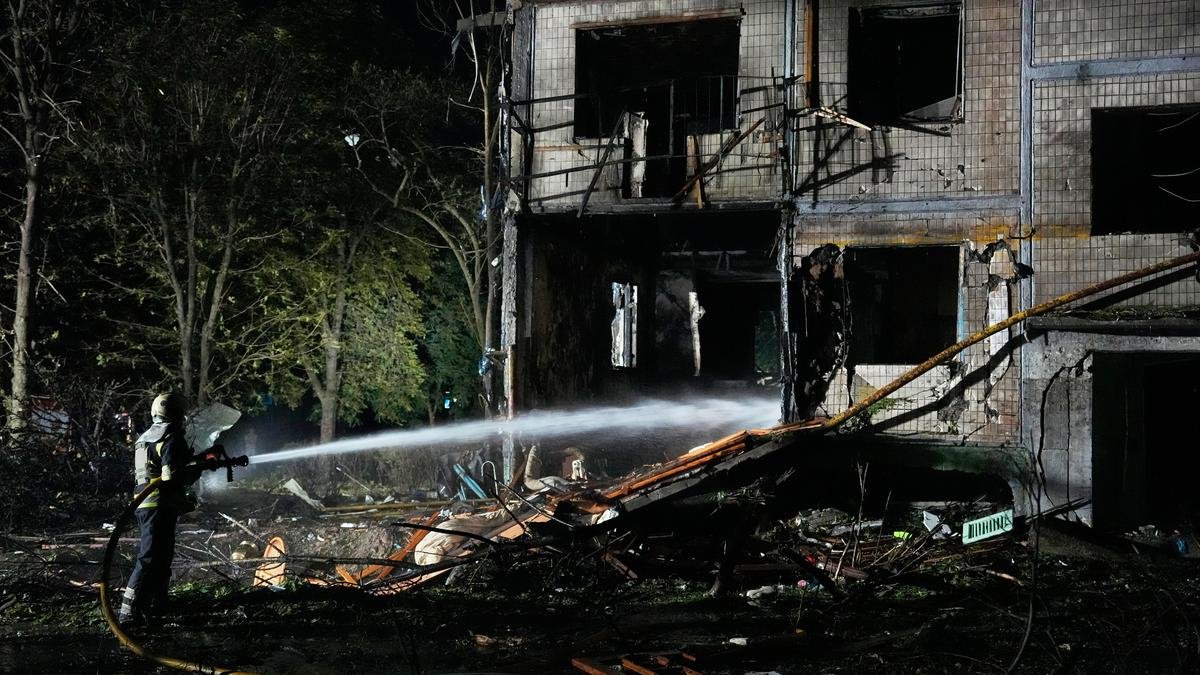
Thirteen Indian crew are among fifteen stranded aboard MV AMIR1 at Ukraine’s Chornomorsk port as strikes continue nearby, their union calling it life-threatening. It follows the Odesa attack that killed Indian sailors on a grain carrier this month, at least two ships with Indian crew hit, five sailors dead in total. In an exclusive, News18’s Manoj Gupta reports the government has now escalated this to a diplomatic blitz, the shipping ministry and Indian missions pressing every available forum for global cooperation. The real chokepoint isn’t diplomacy, it’s data, foreign shipping employers are going unresponsive, forcing Indian embassies to bypass them entirely and go straight to the IMO and local port authorities just to locate their own citizens.
This is the human cost of the threat this dispatch flagged last week with the MV Golden Leo strike, and it’s widening. Over 200,000 Indians work as seafarers, and the Black Sea grain route runs them through a war zone where neither side’s drones spare a civilian hull. India has now protested to both Moscow and Kyiv, a test of how far Delhi can press two partners at once while still moving discounted Russian oil through the same waters it’s demanding safe passage in.
Quick Reads
One migrant worker killed, another critically injured in terror attack in Jammu and Kashmir's Kulgam
Indian Air Force plans to arm helicopters with micro-missiles & AI radars to catch drones
China’s J-35 for Pakistan Puts IAF’s Fifth-Gen Gap Back in Focus
Pakistan is moving toward buying China’s J-35 stealth fighter and would become its first foreign operator. Strip away the aircraft specs and this is really about Beijing using Islamabad as a live testbed and showcase customer for its export fighters, the same role Pakistan played for the JF-17. If the J-35 deal goes through, it hands China a foothold to prove fifth-generation export credibility in South Asia, directly undercutting the argument that Chinese stealth tech trails the West by a comfortable margin.
For India the problem is: The IAF has no fifth-generation fighter in service, AMCA isn’t expected to fly before the early 2030s, and a Pakistani J-35 arriving first would be the first real generational edge Islamabad has held over the IAF in decades, not parity, an actual gap. However, India already has layered deterrence in motion. A J-35 flying out of Pakistan doesn’t erase the S-400’s ability to track and engage it, and it doesn’t touch BrahMos’s ability to hold Pakistani airbases at risk before that jet ever gets airborne.
Pakistan’s Defence Minister Warns Against India-Israel Military Cooperation
Pakistan’s Defence Minister Khawaja Asif has called India-Israel defence cooperation a long-standing danger to Islamabad. He spoke after it emerged publicly that Israel had supplied Litening targeting pods for India’s Mirage 2000 fleet during the 1999 Kargil War, letting those jets put laser-guided bombs onto high-altitude positions like Tiger Hill.
Asif’s complaint describes a partnership that has served India across every subsequent crisis, from those Kargil pods to Phalcon early-warning aircraft, Barak air defence, and Heron and Harop drones. That Pakistan continues to raise a 27-year-old episode, rather than field an equivalent capability of its own, is itself a measure of the gap between the two air forces.
Home Ministry Plans 40 Permanent Intelligence Bureau Offices Along West Bengal-Bangladesh Border
The Union Home Ministry is planning around 40 permanent Subsidiary Intelligence Bureau campuses across West Bengal’s districts bordering Bangladesh, moving units out of rented premises into dedicated facilities. The plan follows the state’s handover of nearly 143 acres to the BSF for fencing and border outposts along a frontier of which close to 600 km remains unfenced.
The expansion targets a border that has grown volatile since the fall of the Hasina government, with Dhaka’s reorientation and reports of Chinese infrastructure interest raising concern in Delhi. Pairing physical fencing with a permanent intelligence presence strengthens counter-infiltration capacity. India’s eastern flank is increasingly a two-front concern, with an uncertain Bangladesh adding pressure toward the same Siliguri Corridor that China presses from the north.
Piracy Advisory Issued for Gulf of Aden as Attacks Resurface
India’s maritime authority has directed shipping companies to strictly follow standard anti-piracy protocols in the Gulf of Aden and off the Horn of Africa, following a string of piracy attempts since April. The route was largely pacified for over a decade after international naval patrols broke the back of Somali piracy. It’s coming back now that fewer warships are actually patrolling there.
Indian sailors make up a huge share of the global seafaring workforce, and this month alone Indian crew have already been hit in Black Sea attacks. A second shipping lane turning dangerous means Indian sailors are now exposed on two fronts at once, which is exactly why the Navy has kept ships stationed in the western Indian Ocean and works through joint task forces to keep that corridor safe.
02
INDIA DEFENCE UPDATES
Op Jal Rahat: Army’s Flood Response Runs Simultaneously in Assam and Gujarat
The Army is fighting floods on two fronts at once. In Assam, Spear Corps troops are using logistic drones to reach cut-off villages, running medical aid and restoring connectivity where roads have failed. In Gujarat, columns evacuated over 790 civilians across Valsad, Vapi, Navsari, Silvassa and flood-hit Ahmedabad, including Dholka and Rajoda, in just three days, moving food, water and relief material alongside NDRF and SDRF.
#OpJalRahat𝗛𝗼𝗽𝗲 𝗜𝗻 𝗔𝗰𝘁𝗶𝗼𝗻Amidst the devastating floods in #Assam, the #IndianArmy continues its relentless humanitarian mission under #OpJalRahat. Working shoulder-to-shoulder with the civil administration, NDRF, SDRF and local agencies, troops of @Spearcorps are… pic.twitter.com/mHaPU5jTXt— ADG PI - INDIAN ARMY (@adgpi) July 29, 2026
#OpJalRahat𝗛𝗼𝗽𝗲 𝗜𝗻 𝗔𝗰𝘁𝗶𝗼𝗻Amidst the devastating floods in #Assam, the #IndianArmy continues its relentless humanitarian mission under #OpJalRahat. Working shoulder-to-shoulder with the civil administration, NDRF, SDRF and local agencies, troops of @Spearcorps are… pic.twitter.com/mHaPU5jTXt
The bigger picture: NDRF exists precisely so the Army doesn’t have to be the first responder, yet it invariably is. Terrain access, airlift, manpower at scale, none of that scales fast in NDRF alone during a compound crisis. So the military becomes the surge capacity civil agencies lean on, not by mandate but by default. That dependency is structural, not seasonal, and it hasn’t been solved by three decades of disaster-management reform.
Navy Launches Machilipatnam, Seventh of Eight Mahe-Class Anti-Submarine Shallow Water Craft
Machilipatnam was launched on July 29 at Cochin Shipyard, seventh in the eight-ship Mahe class of anti-submarine warfare shallow water craft, built with over 80 percent indigenous content. The craft handles underwater surveillance, anti-submarine warfare, mine warfare and low-intensity maritime operations, and takes its name from the old trading port on the Andhra coast.
Larger frigates sit too deep to hunt a diesel-electric submarine in shallow coastal water, and that is the water a submarine chooses when it wants to stay hidden. The Mahe class is built for that environment, freeing larger warships to remain deployed in open waters. With Chinese submarines and survey vessels appearing more frequently in the Indian Ocean, this division of roles underpins the Navy’s plan for sixteen such vessels.
IAF Sets Out Plan to Turn Helicopters Into Drone Hunters, Issues Call to Industry at SANKALP Seminar
The Indian Air Force and the Society of Indian Defence Manufacturers held the SANKALP seminar in New Delhi on July 30, and the concrete outcome was a released problem-statements handbook, with one item standing out: a call to industry to arm helicopters with specialised micro-missiles and AI-driven radars to hunt drones and loitering munitions, per News18. The spec sheet is unusually precise for this stage, 20mm gun integration, lightweight RF and GPS jammers paired with IR pods, and proximity-fused fragmentation warheads built for a 25-metre mid-air kill radius against slow, low flying targets.
The push comes from a gap ground based air defence can’t close on its own. Terrain masking and line-of-sight blind spots let low cost, low radar cross section drones slip through, a vulnerability Operation Sindoor and recent conflicts in West Asia have both exposed, where attack helicopters have already been used to intercept drones and loitering munitions in the field. Turning helicopters like the Apache and indigenous LCH Prachand into mobile counter-UAS platforms would give the IAF a layer that moves with the threat instead of waiting for it to enter a fixed engagement zone.
Rajnath Singh Announces Coast Guard Reforms on Gender-Neutral Commissions and Ex-Gratia
Defence Minister Rajnath Singh announced two Coast Guard policy reforms on July 28, ahead of the force’s golden jubilee in 2027. Women can now take both Short Service and Permanent commissions on the same footing as men, and those already serving on Short Service terms can move to Permanent, removing the career ceiling that kept women off command and senior operational tracks. The second reform lets the force treat personnel lost at sea on duty as presumed dead for ex-gratia, cutting the delay their families faced before compensation and terminal benefits came through, closing a gap that sat oddly against a force running real operational risk day to day.
Army Shows Off High-Altitude Combat Readiness at Matayen on Kargil Vijay Diwas
Operational Readiness on Display at Matayen 🇮🇳As part of the 27th Kargil Vijay Diwas commemorations, the Indian Army conducted an Operational Capability Demonstration and Static Display for media representatives at Matayen, showcasing its combat readiness, technological… pic.twitter.com/6W3X79azq2— @firefurycorps_IA (@firefurycorps) July 27, 2026
Operational Readiness on Display at Matayen 🇮🇳As part of the 27th Kargil Vijay Diwas commemorations, the Indian Army conducted an Operational Capability Demonstration and Static Display for media representatives at Matayen, showcasing its combat readiness, technological… pic.twitter.com/6W3X79azq2
To mark the 27th Kargil Vijay Diwas, the Army’s Fire and Fury Corps put on a live capability show and equipment display at Matayen in Ladakh on July 28. At its heart were the small-team concept, drones, and a range of vehicles built for movement and surveillance in the high mountains.
There is a message here for the neighbour across the LAC. In this kind of terrain, small self-contained teams that move and strike quickly do better than heavy formations, which tend to get stuck, and tying them to drones and recon vehicles is where mountain warfare is heading. Holding the event on Kargil Vijay Diwas links it back to memory, those hard-won 1999 ridgelines are now guarded by a force shaped for precisely that ground.
03
CHINA WATCH
China Expands J-20 Stealth Fighter Presence at Airbases Near the Indian Border
Eleven Chinese J-20 stealth fighters have turned up in satellite imagery at two bases near India, seven at Hotan in Xinjiang and four at Damxung close to Lhasa, making it one of the larger visible groupings of the jet along the frontier. Where the fleet stood at roughly 50 aircraft in 2019, estimates now put it at 300 to 500 by mid-2026, with about 125 coming off the line each year.
The basing is the real message. Hotan sits over the Ladakh sector while Damxung faces Arunachal, so China can now push a radar-evading fighter through both ends of the LAC, use it to guide its own strikes, and pick off Indian aircraft before they register the threat. India has nothing comparable flying, the AMCA still some years from squadron service, which is why the counter isn’t a matching jet but the means to spot and hit a low-observable aircraft, sharper radars, layered air defence, and the long-range strike to put those forward bases at risk, the reasoning behind the S-400 and Project Kusha. The larger worry is that fifth-generation flying from high-altitude fields in Tibet and Xinjiang has become ordinary for the PLA, hardening an edge India has to close while already on the back foot.
India’s 200-Ship Navy Plan Takes Shape as Diplomacy Tries to Keep the Northern Front Quiet
India is building toward a 200-ship navy within a decade, up from roughly 150 vessels today, with a new warship entering service every six weeks. Five indigenously built ships have joined the fleet in the last six weeks alone, including the stealth frigate INS Mahendragiri, 75 percent indigenous, sixth in the Nilgiri class, with the seventh due within months. Geography explains the urgency. India sits across sea lanes carrying two-thirds of global oil shipments and half the world’s container traffic, while China’s navy has crossed 370 warships, the world’s largest fleet, and its survey vessels and submarines are showing up in the Indian Ocean with increasing regularity. To the west, Pakistan has locked in eight Chinese-built Hangor-class attack submarines worth up to $5 billion, sitting directly across India’s Arabian Sea approaches. Two hostile-leaning neighbours, two coastlines, one navy expected to hold both simultaneously, which is the real logic behind the 200-ship number: two self-contained fleets, one per coast, each ready without falling back on the other for support.
That naval buildup is happening even as Delhi works to keep the land border calm. Foreign Secretary Vikram Misri met China’s Vice Foreign Minister Sun Weidong in Beijing on July 27, with both sides agreeing to keep the LAC quiet and expand trade and people-to-people ties, per Firstpost’s report. Days earlier in Manila, Jaishankar told Wang Yi almost the same thing, that a quiet frontier is what any real reset depends on, two officials making the same point in the same week being no accident.
Why it matters: The two tracks explain each other. Both governments now call each other development partners rather than rivals, language unthinkable at the height of Galwan, but it’s a tactical thaw that stops well short of the actual dispute, China keeps building roads, airbases and missile sites along the LAC on its own schedule regardless of what gets said in these meetings. A quieter northern border is exactly what buys India the room to build out its navy without a two-front squeeze forcing trade-offs between the fleet and the frontier. Delhi’s framing has been deliberate throughout: calm on the border is a precondition it expects.
04
PROCUREMENT AND INDUSTRY TRACKER
IAF’s Medium Transport Aircraft Contest Enters Bid Stage With Three Contenders
The IAF’s Medium Transport Aircraft programme, worth close to Rs 1 lakh crore for around 60 aircraft, has cleared technical evaluation. Embraer’s C-390, Lockheed Martin’s C-130J and Airbus’s A400M are competing to replace the ageing An-32 fleet, mostly to be assembled in India under a Buy-and-Make deal. Around 100 Soviet-era An-32s, flying since the mid-1980s, still carry India’s tactical airlift, and a June crash at Jorhat that killed five underlined how hard they are to keep flying.
Medium transport is the layer that moves troops, howitzers, ammunition and rations into forward airstrips too short or too high for a C-17 to land on, exactly the terrain that defines Ladakh, Arunachal and the island chains, where the An-32 has been the only aircraft doing that job for forty years. A fleet this old now runs on a shrinking spares pipeline, since Antonov’s own production base in Ukraine can barely sustain itself, let alone support India’s overhaul depots, leaving squadrons increasingly dependent on India’s own reverse-engineered maintenance to stay airworthy. That’s the real gap this contract is meant to close, tactical airlift capacity that has been flying on borrowed time in precisely the terrain a two-front contingency would need it most.
Nagpaash: Private Firm Unveils Air-to-Air Electronic Warfare Jamming Drone
Pisarv Technologies, a private firm, has unveiled Nagpaash, a drone that carries an electronic-warfare jammer into the air to disrupt hostile drones, aircraft and communications from inside contested airspace rather than from the ground. It jams across a 500-metre radius, works when GPS is denied, and stays up for 35 to 45 minutes.
Ground jammers are boxed in by terrain and horizon; a jammer that flies puts the attack where the enemy’s drones and control links actually are. Operation Sindoor and the fighting in Ukraine both showed how much modern combat turns on breaking that link back to the operator. A small, cheap platform built for exactly that, and emerging from a private startup, fits the section-level counter-drone capability the Army has been building toward, and it lands just as Defence Secretary Rajesh Kumar Singh has said India’s goal is a drone ecosystem built to world standards, powered by exactly this kind of private-sector push.
Goodluck Defence, Sigma Advanced Systems Land Big Contracts as India Ramps Up 155mm Shell Production
Two contracts this month point at the same shift. Goodluck Defence, a Ghaziabad firm, has cleared DGQA certification to supply the Army with 155mm M107 artillery shells and is scaling capacity from 150,000 to 400,000 shells a year for domestic and export demand. Sigma Advanced Systems, out of Hyderabad, has signed a Rs 1,013-crore deal to supply 1,47,000 units of 155mm base bleed shell bodies to a North American customer, delivery due within six to twelve months, a contract its CEO is treating as a reference project meant to open the next door rather than a one-off payday.
Why it matters: 155mm is the calibre that runs through India’s artillery, the Bofors-descended Dhanush, the K9 Vajra, the M777s flown into high-altitude posts, and it’s also the standard NATO and most Western militaries build their guns around. The war in Ukraine has drained Western stockpiles of it faster than domestic factories in Europe and the US can produce more, since sustained artillery duels burn shells at a rate peacetime supply chains were never sized for. That shortage is why buyers are now actively hunting for new suppliers outside their usual circle, and why an Indian firm clearing certification to build this exact calibre at scale is landing real contracts, not just interest. Base bleed shells specifically, the kind Sigma is exporting, extend a round’s range by reducing drag mid-flight, the sort of upgrade militaries have prioritised since Ukraine showed how much standoff distance matters when counter-battery fire can find a gun within minutes of it firing.
DRDO Develops Indigenous Radome for Tejas Mk-1
DRDO’s Pune lab has built an indigenous radome for the Tejas Mk-1A, cleared testing, and readied it for industry. The radome is the aircraft’s nose cone, it protects the radar while letting its signals pass through cleanly, so a poor one blunts detection and tracking.
It looks minor beside an engine, but it is exactly the sort of imported small part that has repeatedly stalled Tejas deliveries, with the line waiting on pieces HAL could not make at home. This lands alongside the indigenous Uttam radar and the servo-valve work, all fixing the same weakness, and the know-how carries forward into Tejas Mk-2 and the AMCA.
ISRO Validates Indigenous Ship-Borne Tracking Terminals Ahead of Gaganyaan
Off the coast of Chennai on July 26, ISRO ran a live trial of its own ship-borne tracking terminals aboard the vessel Sagar Manusha, and the equipment tracked its target accurately even as the ship moved beneath it. The terminals follow rockets and satellites once they travel past the range of land-based tracking stations, which is what makes the moving-deck test matter, the system has to work from a ship at sea, not just fixed ground.
For Gaganyaan, controllers need continuous contact with the crew module as it passes over open ocean, and until now that meant leaning on foreign stations or living with blind spots. An Indian terminal on an Indian ship removes both. It is the kind of unglamorous downrange infrastructure a country has to own before it can fly astronauts on its own schedule, and the same capability carries into future satellite and deep-space missions.
Apollo Micro Systems Picked to Turn IAF’s Unguided Bombs Into Precision Weapons
Hyderabad’s Apollo Micro Systems has been chosen by the IAF to build a bolt-on kit that turns the 500-kg unguided bombs already in service into precision glide weapons, able to hit from 80-100 km out to within a few metres. Over 500 units could follow in the opening phase.
Buying fresh precision munitions from abroad is expensive; fitting a guidance kit to bombs the IAF already stocks does the same job for far less. What sets this kit apart is its core, India’s own NavIC satellites, a first for any weapon of its kind, and it holds its aim even when an enemy jams GPS. Reach is what keeps the aircraft safe, firing from 100 km lets a jet stay clear of most air defences, the same standoff edge used during Operation Sindoor.
BAE Systems Eyes India Build for TRIDON MK-2 Air Defence Gun
BAE Systems wants to make its truck-mounted anti-aircraft gun in India, and it’s saying so on the record. Tony Walton, the newly appointed India MD, confirmed that the company is evaluating local manufacturing partnerships for the TRIDON MK-2, a system built around a modernised version of the Bofors 40mm gun. The system was first shown off at Eurosatory 2024 in Paris; nothing about an Indian production line is locked in, and BAE hasn’t named any shortlisted partners or confirmed a live procurement program tied to it.
The bigger picture: This lands squarely inside India’s hunt for V-SHORADS, very short-range air defence, the layer built specifically to catch low-flying threats like drones that missile systems are too expensive or too slow to intercept. A 40mm gun is cheap-per-shot in a way interceptor missiles aren’t, which matters when the threat is a 2,000 dollar quadcopter, not a fighter jet. BAE’s pitch leans hard on Atmanirbhar Bharat language, “confidence in Indian companies’ technological capabilities,” supplying through an Indian company, but the company was equally clear that everything hinges on India actually selecting TRIDON MK-2 first.
Parliamentary Panel Slams Ministry Over Rs 42,500-Crore Offset Mess
Foreign companies that win big Indian defence contracts are supposed to reinvest part of that money back into Indian industry, sourcing components locally, setting up joint ventures. That’s the offset policy, running since 2005. The Public Accounts Committee has now flagged that nearly 45 percent of what’s owed under it, about Rs 42,500 crore, simply hasn’t been paid, and it’s ordered a special audit, pointing to loopholes and planning failures in how these obligations get tracked.
The sharper criticism buried in the report is that the ministry has never actually checked whether offsets work at all, no study on whether the policy has genuinely built up Indian industry, just a running tally of money owed. A framework meant to force foreign vendors to build capability inside India has instead turned into a compliance number nobody is auditing for real outcomes, which is the PAC’s real complaint.
NavIC Falls Short of Minimum Satellites, Exposing a Gap in India’s Navigation Independence
India’s own satellite navigation system, NavIC, is currently running on just three working satellites, one short of the minimum needed to independently pinpoint a user’s location. The shortfall traces back to an atomic clock failure on one satellite at the end of its working life. Timing signals are unaffected, and users are leaning on GPS to fill the gap for now, but the irony is hard to miss: several NavIC satellites have failed early because of imported atomic clocks, the exact foreign dependency this system was supposed to end.
Worth watching closely: NavIC underpins precision targeting, secure military communications and battlefield positioning that India built specifically so it wouldn’t have to depend on American GPS during a crisis, the way it was famously denied GPS access during Kargil. A gap in the constellation means the military currently has a fallback plan built on the very system it wanted independence from. ISRO already has replacement satellites queued for launch, but until those go up, India’s self-reliance push in navigation is running on borrowed capability rather than its own.
India and Germany Set to Finalise Rs90,000 Crore Submarine Deal
India and Germany are close to signing off on six Type-214 submarines, with Germany’s ambassador saying the deal could be inked within weeks. The boats will be built in India by Mazagon Dock with ThyssenKrupp. What makes the Type-214 valuable is Air Independent Propulsion, letting it stay submerged for weeks instead of days, a real jump in stealth over what India runs today.
The deal matters on two fronts: It adds real underwater capability just as Chinese submarines show up more often in the Indian Ocean and Pakistan locks in eight Chinese boats of its own. And it gives India a second serious Western submarine partner, cutting some of its historical dependence on Russia and France for a capability that takes decades to rebuild if a supplier relationship ever sours.
05
EXERCISES, DIPLOMACY AND PARTNERSHIPS
India and Ivory Coast Deepen Defence Ties in New Delhi Visit
Ivory Coast’s air force chief, Air Major General Koffi N’Guessan Alfred, spent this week in New Delhi, sitting down with Air Chief Marshal AP Singh and the Defence Secretary to talk through how to modernise his service.
On its own the visit hardly registers, but it slots into a pattern India has built up across Africa, training, maintenance and kit priced within reach, all of it becoming a regular thread in these relationships. And there is a rivalry humming beneath the surface. China works hard to win over African militaries, so India pitches something different, cooperation it calls South-South partnership, and the payback shows up at the UN, where Abidjan has backed Delhi on both terrorism and Kashmir.
Pakistan Rides China’s Coattails Into Southeast Asia’s Fighter Market
Indonesia has signed up for 42 Chinese J-10Cs and is now deep in talks for over 40 JF-17s, the fighter Pakistan builds jointly with China. That second deal is the one worth watching. It’s not just China selling jets abroad, it’s Pakistan riding along as a co-seller, using a Chinese partnership to break into a market it could never crack on its own.
For India, that’s the real concern. Delhi has spent years courting Jakarta precisely because Indonesia sits on the Malacca Strait, a country India wants inside its own Indo-Pacific circle, not China’s. A Pakistani-built fighter landing in the Indonesian air force chips away at that quietly. It gives Pakistan’s defence industry credibility outside the India-Pakistan rivalry, and it shows the China-Pakistan partnership expanding into a region India has worked hard to bring closer. The J-10C deal is China growing its footprint. The JF-17 talks are Pakistan growing alongside it, and that combination is what deserves the closer look.