
It’s been a week of highs and lows for India.
A five-week-long protest by the Cockroach Janta Party (CJP) came to an end, following the resignation of Education Minister Dharmendra Pradhan.
But the matter didn’t end there.
Prime Minister Narendra Modi also instituted a new task force on exam reforms to win back the hearts ofGen-Z.
Heading this crucial team is one of India’s most famous technocrats — Nandan Nilekani, the co-founder of Infosys.
Taking inspiration from the CJP protests, this movement gained momentum as it demanded the resignation of Union Minister Nitin Gadkari and transparency in the country’s fuel policy.
More from Explainers Ex-Isro chief to IIT director: Who's on PM Modi's Nandan Nilekani-led exam reforms panel?
Meeting between CJP, Union ministers underway after Dharmendra Pradhan's resignation This week also saw India take the New York Times for its “misleading” headline, referring to Pakistan-occupied Kashmir as ‘Pakistani Kashmir’.
In a statement, the Indian Embassy in the US strongly objected to the phrasing of its headline, terming it “misleading”.
Those dreaming of going to the US were also dealt a big blow after it was reported that the Trump administration is mulling a $100,000 (Rs 95.36 lakh) fee on the Optional Practical Training (OPT) visas, which are an extension of F-1 visas issued to students.
If you missed any of these stories over the week, don’t fret.
We have it all covered in our roundup of the big news.
1) After the CJP protests ended and the last protester returned home from Jantar Mantar in New Delhi, PM Modi announced the constitution of a new six-member task force to recommend reforms for India’s public examination system.
Quick Reads View All ‘Ceuta Invasion’ as migrants from Morocco swim to Spain’s territory: What caused this surge?
No more American Dream?
How Trump’s $100,000 fee on foreign students could hurt Indians The task force has been instructed to suggest technology-driven and structural changes to restore trust and integrity in national examinations.
Heading this six-member team is Infosys co-founder Nandan Nilekani.
The others in the team include former Isro Chairman S Somanath, former Intelligence Bureau Director Tapan Deka, IIT Madras Director V Kamakoti, former Education Secretary Anita Karwal, and logistics expert Amrit Lal Meena.
Read our analysis here.
2) Hours after Education Minister Dharmendra Pradhan resigned from his post after widespread protests helmed by the Cockroach Janta Party, a new online movement under the name of E20 Janta Party (EJP) began taking shape.
The demands of this now growing movement are: freedom to choose 100 per cent original fuel and the resignation of Union Minister Nitin Gadkari, who has been facing digital backlash over the E20 fuel.
While the identity of the founder or other people behind this social media outfit is yet to be known, it has amassed over lakhs of followers across various social media platforms.
Will the E20 Janta Party be able to replicate the CJP’s success?
Only time will tell.
Vessels in the Strait of Hormuz near the beach of Bandar Abbas, Iran.
Reuters 3) This week, India celebrated the fact that the country is now the world’s second-largest supplier of seafarers, contributing 311,936 maritime professionals to the global shipping industry.
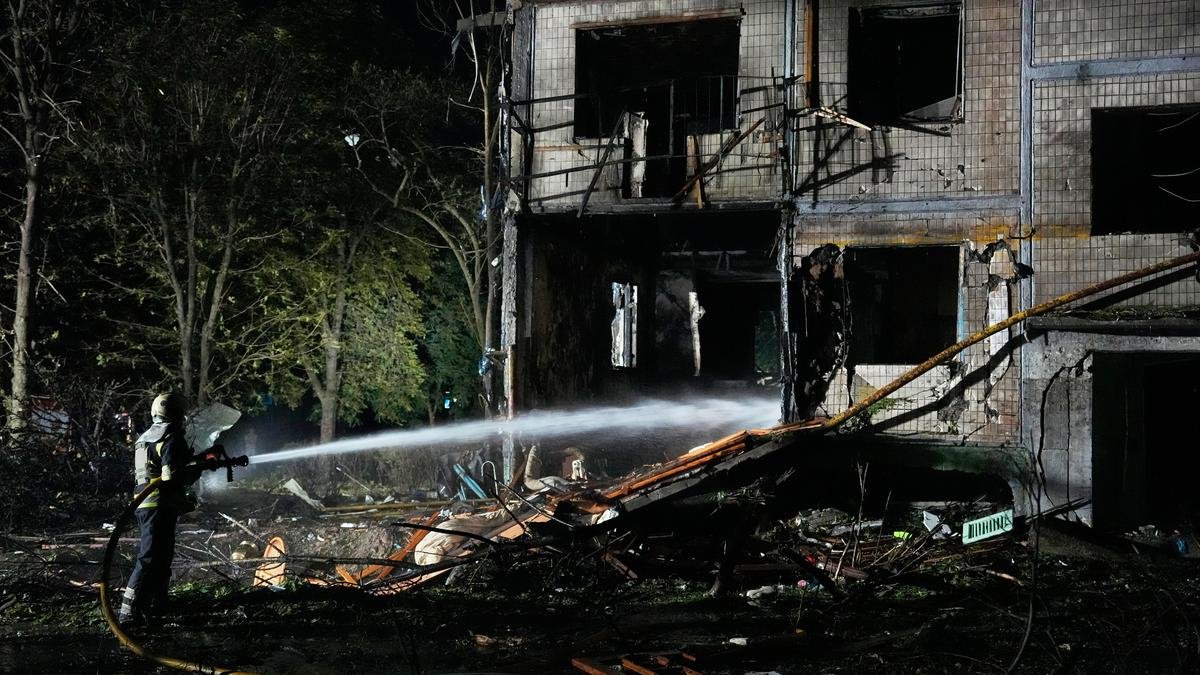
This week, at least 13 were reported to be trapped aboard a cargo vessel at Ukraine’s Chornomorsk port amid drone and missile assaults continuing near the Black Sea port.
There have also been an estimated 20 deaths in this year alone.
Yet as bodies return to Indian soil and diplomatic tensions flare in New Delhi, thousands of young Indian men and women continue to queue outside maritime academies, eager to sign contracts that will send them into those same contested waters.
Here’s why.
4) It’s been a mixed bag for Indians seeking to move to the US.
On one hand, a Democratic senator has renewed his push for a legislation, which provide millions, including Indians, with a fresh pathway to permanent residency.
On the other hand, it has been reported that the Trump administration is mulling a whopping $100,000 fee for students seeking work authorisation under the Optional Practical Training (OPT) programme.
Here’s how this plan could hurt Indians the most.
People pass in front of The New York Times building in New York City.
The Indian Embassy in the US has criticised the newspaper for its report on violence amid the polls in Pakistan-occupied Kashmir.
File image/AFP6) The New York Times came under fire this week in India.
The Indian Embassy in the US called out the newspaper for the term “Pakistani Kashmir” in a headline about unrest in Pakistan-occupied Kashmir (PoK).
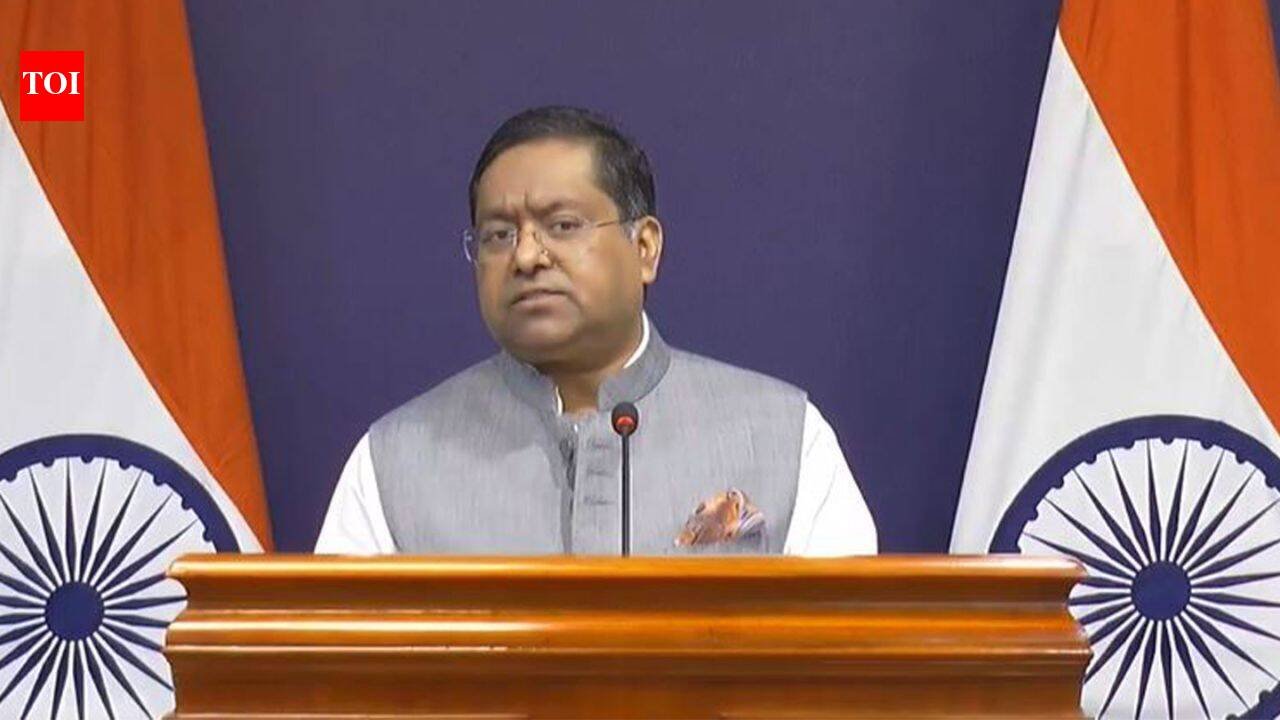
The Indian embassy in the United States issued a public statement, reiterating that Jammu and Kashmir, including PoK, is an integral part of India and that Pakistan has illegally occupied these territories.
The embassy described the New York Times headline as “misleading and incorrect,” emphasising that there is no entity called “Pakistani Kashmir”.
But this isn’t the first time that the newspaper has got it wrong on India.
There have been numerous instances where it has been called out by Indians for its reported bias.
File image/Reuters 7) Infosys was in the news this week.
But not because Narayana Murthy has reiterated his demand for a 70-hour workweek.
This time, his company has been fined around Rs 2 crore by French labour authorities after its employee working-hours recording system was found to be non-compliant with the country’s labour laws.
DRIEETS Ile-de-France, the regional labour authority, found that Infosys’ system for recording employees’ working hours did not fully satisfy the country’s legal requirements.
What does all this mean though?
Our explainer has the answer.
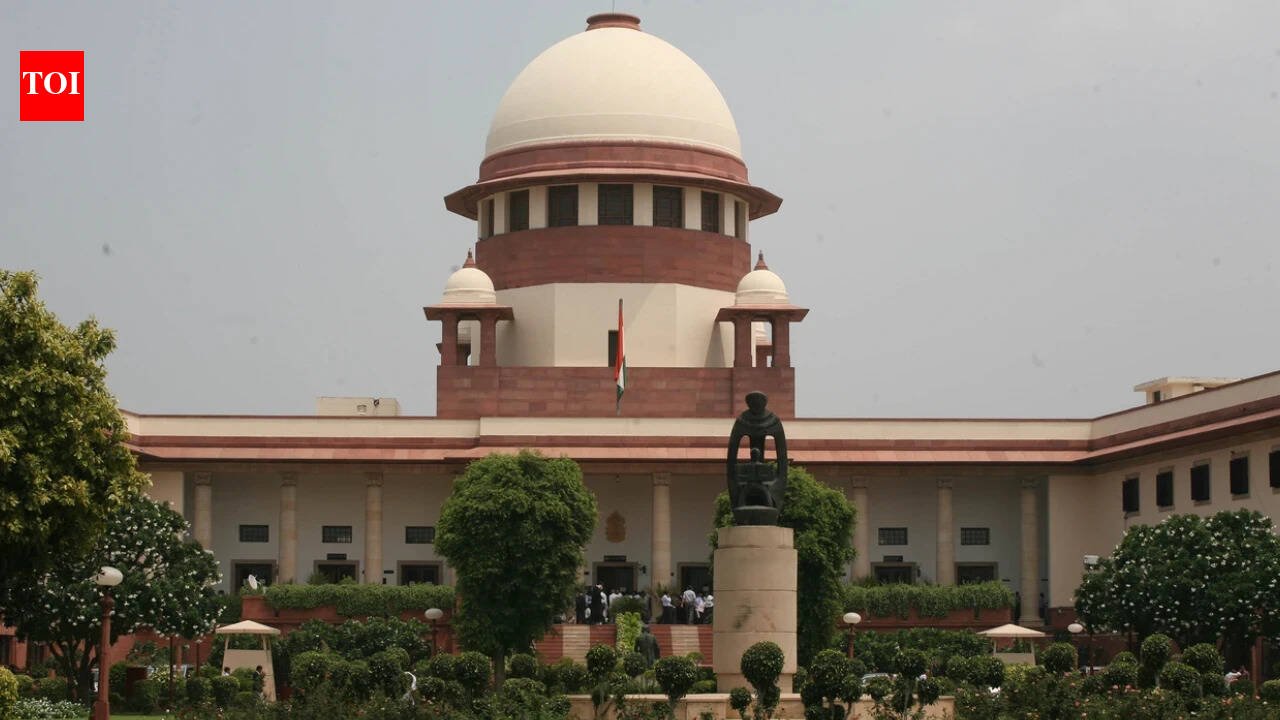
In a landmark verdict, the Supreme Court has noted that any accident involving elevators will have to be jointly borne by the manufacturer, maintenance agency and building owner.
File image/Reuters 8) Who is responsible in case of an elevator accident?
The Supreme Court has answered this question this week, noting that any accident involving elevators will have to be jointly borne by the manufacturer, maintenance agency and building owner.
This is a significant verdict delivered by the Supreme Court.
It opens a window for those who get injured or die due to technical glitches in the operation of a lift to demand joint compensation from such parties.
And that’s it from us this week.
Bookmark this page if you are interested in reading more such stories.
P.S: This Week was International Tiger Day.
In India, while the conservation efforts have borne fruit, here’s what we need to keep in mind for the future.