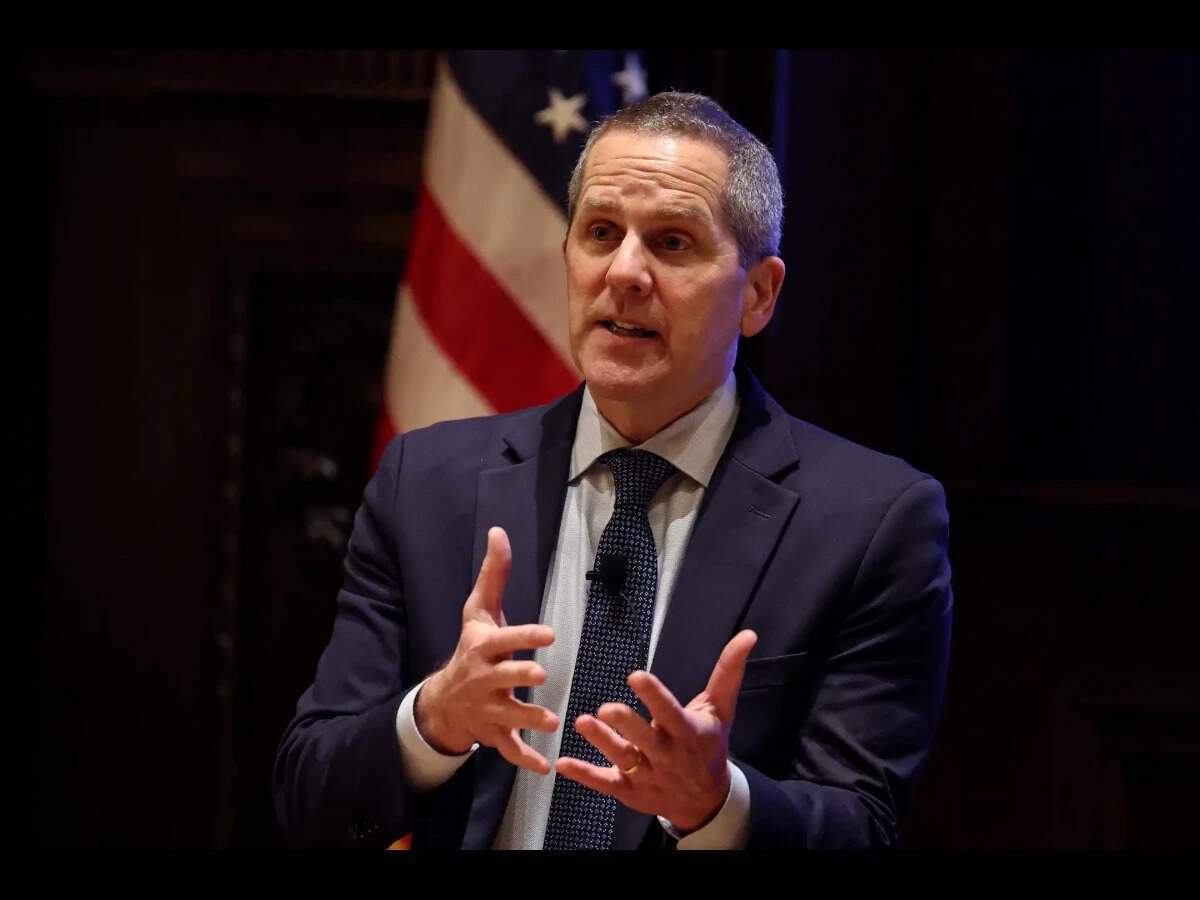
Federal Reserve Governor Michael Barr said on Tuesday the U.S. central bank may need to raise interest rates if inflation does not show enough signs of cooling, adding to the pressure on policymakers ahead of their September meeting.
"Inflation remains too high and has been for over five years," Barr said in prepared remarks for the Second Chance Lending Forum.
With the Fed's September 15-16 policy meeting approaching, Barr said the direction of inflation will be critical in determining whether policymakers need to tighten monetary policy further or can afford to wait for more evidence.
"If inflation appears not to be moderating sufficiently, then I think we should act decisively to raise rates," he said.
For latest US market live updates, click here
Barr also left the door open to a less aggressive approach if incoming economic data provide greater confidence that inflation is moving toward the Fed's 2% target.
"If trends in the data give me some confidence that inflation is moderating on a path to 2%, then I think we can take a bit more time to assess our policy stance," he said.
His comments come as inflation remains above the central bank's target and several Fed officials have signaled that another rate increase remains on the table. Fed Chairman Kevin Warsh also pointed to the prospect of higher rates last week. "We must be confident that underlying inflation is moving to our objective, clearly and at sufficient speed. Otherwise, we have work to do."
Financial markets are betting on a quarter-point increase in the Fed's benchmark overnight interest rate at the September meeting. The rate is currently in the 3.50%-3.75% range.
Barr said the broader economy remains on solid footing, helped by investment in artificial intelligence technology. He also described the labor market as stable, with unemployment relatively low, suggesting policymakers have room to focus on persistent price pressures.
Fed's Barr raises risks to privacy in AI
Beyond monetary policy, Barr raised concerns about the consequence of the rapid expansion of AI: consumer privacy.
He said AI has significant upside potential but also carries risks that need to be managed. Privacy controls are a key area of concern, particularly as AI systems increasingly rely on large amounts of consumer data.
"We need to be sure that the data that is being harnessed by AI is not shared in a way that reduces the ability of consumers to control their own information," Barr said.
The comments put the focus on two sides of the AI boom. While investment in the technology is helping support economic activity, its growing use also raises questions about how consumer information is collected, used and protected.