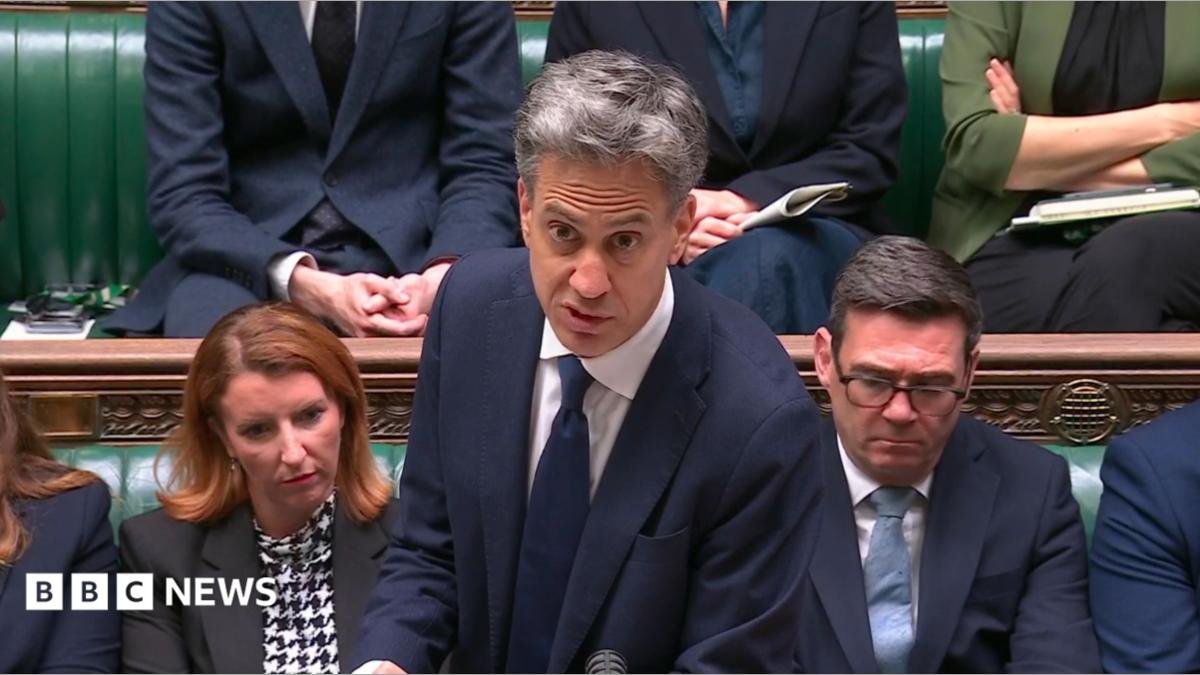
Figure caption, Watch: There is ethnic cleansing in areas of the West Bank, says Miliband ByPaul Adams, Diplomatic correspondent and Henry Moore Published 8 September 2026, 18:09 BST Updated 2 minutes ago The UK has announced sanctions on illegal Israeli settlements in the occupied West Bank, accusing Israel's government of turning a blind eye to the "ethnic cleansing" of Palestinians by settlers.
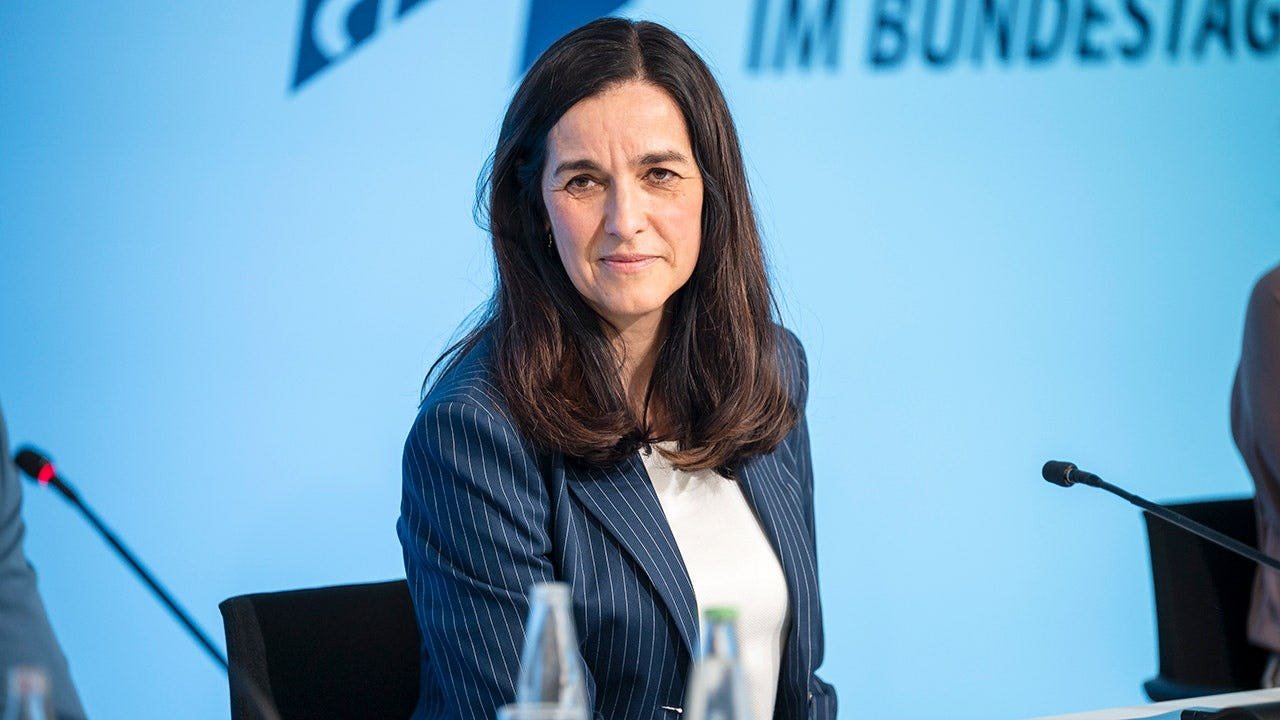
Foreign Secretary Ed Miliband said the move marked the "beginning of a new approach" to the Israeli-Palestinian conflict, which "not only calls out injustice and suffering but acts".
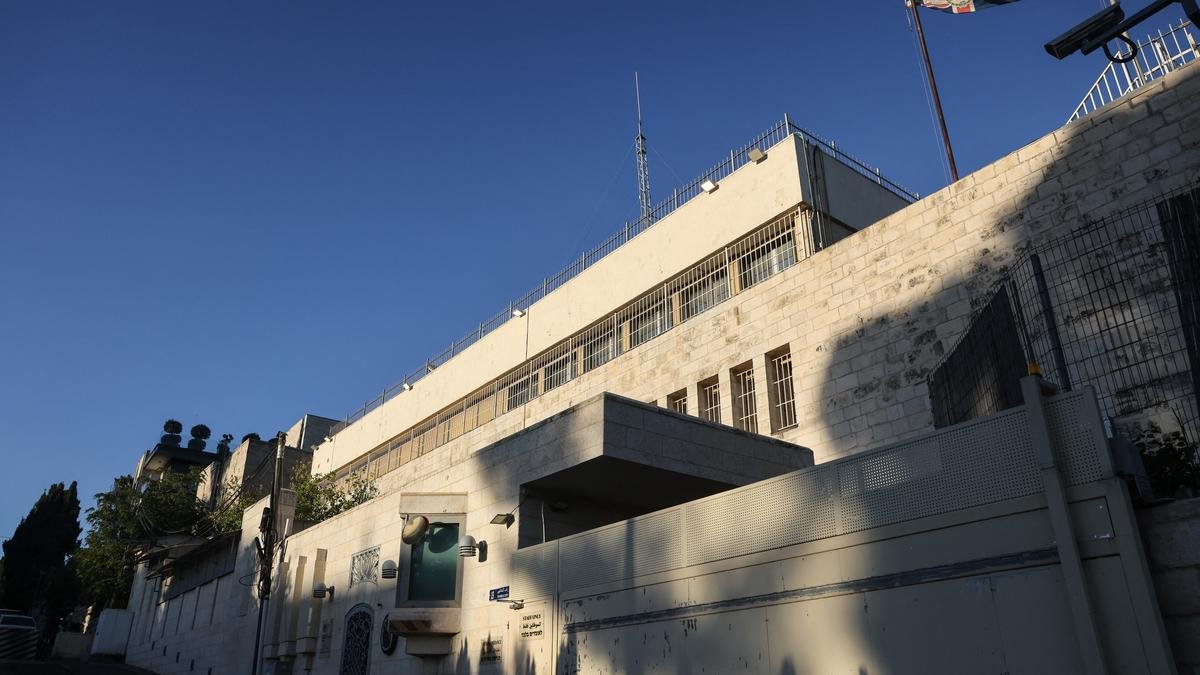
Israel's Foreign Minister Gideon Saar responded by accusing him of spreading an "outrageous lie" and announced counter-measures including shutting the UK's consulate in East Jerusalem.
The UK sanctions will ban settlement goods but also act against companies and individuals providing services for settlement expansion.
In West Bank, date farmers weigh impact of UK sanctions on Israeli settlers Published 3 hours ago How Israel is expanding settlements in drive to reshape West Bank Published 21 August The sanctions were launched alongside France and Canada, who in a joint statement with the UK said the action "marks a further turning point in our approach to protecting the two-state solution".
Settlements are illegal under international law, and there has been a rise in violence towards Palestinians in the West Bank by settlers in recent months.
In a statement to MPs, Miliband said: "The British government agrees that there is ethnic cleansing of Palestinians in areas of the West Bank, perpetrated by settler terrorists.
"And all too often the Israeli government has turned a blind eye to this and worse, members of it have made statements and taken actions to support the forced displacement of Palestinians." He said ethnic cleansing was defined by the UN as a "purposeful policy designed by one ethnic or religious group to remove by violent means another ethnic or religious from certain areas".
Miliband said the official view of the government was that the Israeli occupation of the West Bank was unlawful because of the "entrenchment of its control, its intention to extend permanent sovereignty, and its expansionist agenda via illegal settlements".
He said this position, which is in line with a 2024 advisory opinion from the International Court of Justice, should be reflected in the UK's "economic relationship" with the occupied West Bank.
As a result, over the next six to nine months, the UK will introduce "a new comprehensive sanctions regime", he said.
The foreign secretary also announced a ban on advertising illegal West Bank settlements in the UK.
"The sanctions regime will target illegal settlements and settlement expansion, not Israel," Miliband added.
Later on Tuesday, Prime Minister Andy Burnham said the targeted measures were "aimed not at the Israeli people, but in support of the two-state solution".
Announcing the closure of the UK consulate, which represents the UK government in Jerusalem, West Bank and Gaza, Israel's Foreign Minister Saar said at a press conference: "We know that we have many friends in Britain.
"Unfortunately, we have a hostile Labour government that is consistently operating against the State of Israel, and it has left us no choice but to respond to its hostile actions." He added that 11 UK MPs, including Jeremy Corbyn, Diane Abbott and all five sitting Green Party MPs, would be banned from entering Israel, accusing them of "antisemitic and anti-Israel activity".
The UK also issued a joint statement with 11 other countries; France, Canada, Denmark, Spain, Finland, Ireland, Iceland, Norway, Poland, Portugal and Sweden.
It said the group was unequivocally committed to the two-state solution and would introduce national measures or support European restrictions on trading goods with West Bank settlements.
Image source, EPA Image caption, Foreign Secretary Ed Miliband announced the measures on Tuesday The UK announcement comes after Israel opened up tenders for the construction of some 1,200 settlement homes in the so-called E1 area - a strategically important area east of Jerusalem.
The plans have drawn widespread international condemnation.
Israel has held off on plans to build in the area for decades under global pressure.
Miliband told the Commons the UK's "new approach" was necessary because plans for the E1 development in the West Bank would render a two-state solution "unviable" by "cutting through the heart of Palestine".
Elsewhere, he said the Hamas-led attack on southern Israel on 7 October 2023, which triggered the Gaza war, carried "terrible echoes of the centuries of persecution of the Jewish people" and stressed Israel had "the right to protect its people and defend its territory".
However, he added, "that cannot justify what has happened in Gaza".
He said: "International humanitarian law imposes clear rules for states fighting wars, including to ensure access to food and medical supplies, to avoid mass displacement of civilians, and to avoid the targeting of civilians.
Serious and international violations of this law, if proven, amount to war crimes.
"What has occurred, including the actions of the IDF (Israel Defense Forces), have been examined in depth by a number of organisations, including the UN Independent International Commission of Inquiry.
"The conclusions of these reports represent increasing evidence that war crimes appear to have been committed, and we support legal processes to determine this." He added it was up to international courts to determine if Israel has committed a genocide in Gaza.
Israel's leaders have consistently rejected allegations of genocide, crimes against humanity and war crimes.
They have insisted that Israeli forces have operated in accordance with international law.
Figure caption, Why is the UK against Israel's proposed West Bank E1 settlement?
Miliband began his statement to the Commons by referring to his Jewish roots and childhood experiences of visiting Israel, as well as recent antisemitic attacks in the UK.
He described himself as "a proud British Jew" and outlined his steadfast support for the state of Israel.
He said: "My personal story and that of thousands of British Jews is one of the many reasons why I say to anyone here or around the world who questions Israel's right to exist as a homeland for the Jewish people - you are wrong, and we will call you out whenever you engage in this attempt at the erasure of Israel." But the UK's Chief Rabbi Sir Ephraim Mirvis said it was a "truly a dark day for British Jews", saying the sanctions were "little more than political flag bearing for mendacious anti-Israel rhetoric" that would embolden people who "use hatred as a weapon against Jews".
The Board of Deputies of British Jews expressed "deep regret" over Tuesday's announcement, and urged both the UK and Israeli governments to "avoid pursuing what appear to be party interests over national interests".
Responding in the Commons, Conservative shadow foreign secretary Tom Tugendhat claimed ministers were "enacting policies that the Foreign Office knows won't work".
He agreed that illegal settlements were wrong and "some Israeli ministers have indulged in hateful propaganda and incitement" but added "this isn't about Israel alone and it certainly isn't about reducing the complexity of the region to a single sentence.
Sadly, the government is in the process of doing just that".
Israel's foreign minister Saar also said British representatives from the International Gaza Support Center in Kiryat Gat in southern Israel would be removed, and UK activities to train Palestinian Authority forces in Judea and Samaria - how the Israeli government refers to the West Bank - would be terminated.
Speaking earlier on Tuesday, the country's President Isaac Herzog said the decision would "fall on the wrong side of history", adding: "In the current context, it would be a gross interference in the democratic elections of a sovereign nation." Herzog said the move would directly harm Palestinians and urged foreign governments to turn towards "constructive dialogue" and cooperation, adding "sanctions are not a solution".
US Secretary of State Marco Rubio told reporters the White House had no comment on the joint action, adding that "obviously we're not going to do what the UK did".
Earlier, Donald Trump's ambassador to Israel Mike Huckabee earlier told the BBC that the US - Israel's most powerful ally - would "without a doubt" respond to the expected sanctions, warning of a "huge economic impact on British businesses".
He suggested action could be taken by individual US states as well as at a central, federal level.
The Palestinian presidency welcomed the UK's decision, saying it was "an important step towards confronting Israel's colonial system and its violations against the Palestinian people".
As part of the UK announcement, Miliband also announced sanctions on the financing wing of Lebanon's Hezbollah, the Iran-backed armed group.
New sanctions in line with the US and European Union were also announced on Iran.
The intervention comes almost a year after Sir Keir Starmer's government recognised a state of Palestine, and said the UK had a moral responsibility to support a peaceful future for Israelis and Palestinians.
Israel rejects a two-state solution.
It says any final settlement must be the result of negotiations with the Palestinians, and statehood should not be a precondition.
The Palestinian Authority backs a two-state solution but Palestinian armed group Hamas does not because it is opposed to the existence of Israel.
Hamas says that it could accept an interim Palestinian state based on 1967 de facto borders, without officially recognising Israel, if refugees were given the right to return.
Israel has built about 160 settlements housing 700,000 Jews since it occupied the West Bank and East Jerusalem during the 1967 Middle East war.
An estimated 3.3 million Palestinians live alongside them.
There has been a surge in attacks by settlers on Palestinians and their property in the West Bank since the start of the Gaza war, which was triggered by the Hamas-led attack on Israel on 7 October 2023.