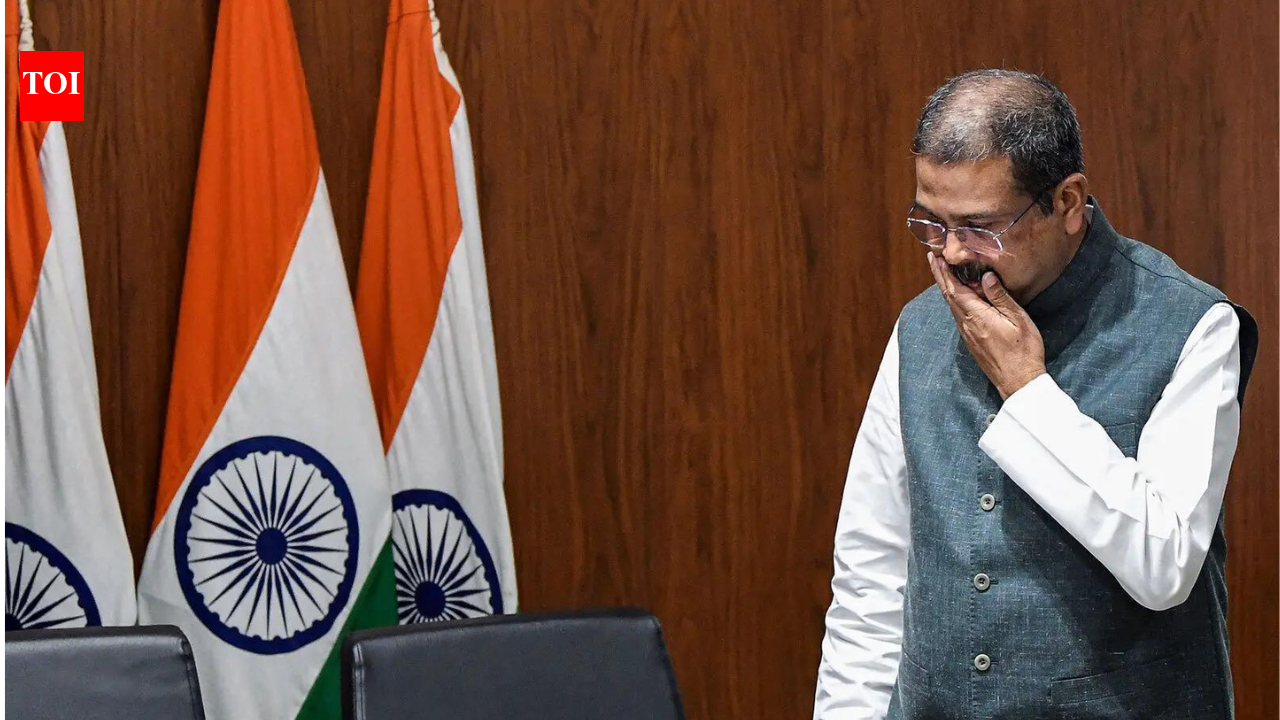
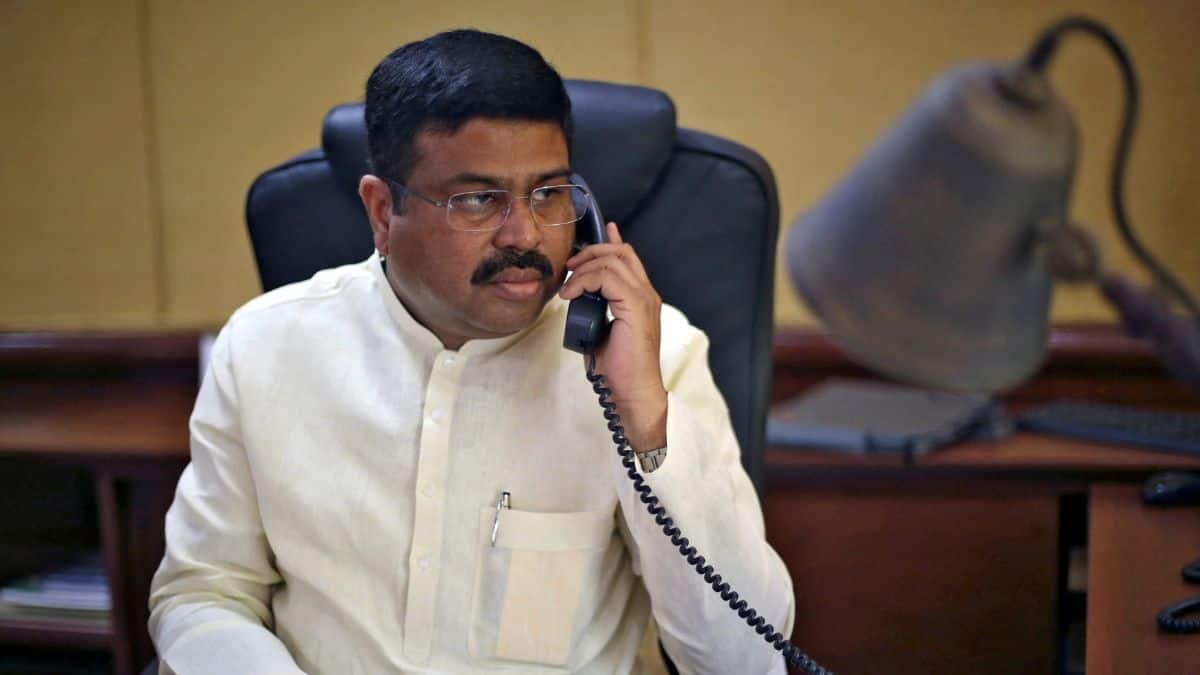
It will be remembered as one of the most most dramatic political exits in India’s history as Union Education Minister Dharmendra Pradhan tendered his resignation from the Council of Ministers on Saturday.
Bending to weeks of relentless nationwide student demonstrations, political pressure, and mounting outrage over systemic irregularities in the National Eligibility cum Entrance Test (Neet-UG 2026), Pradhan’s departure marks the end of a five-year tenure at the helm of India’s education policy.
In a two-page letter addressed to Prime Minister Narendra Modi and the “young friends” of the nation, Pradhan stated that he was stepping down in the larger interest of students to ensure that India’s youth “do not remain trapped in a web of confusion” or become vulnerable to political exploitation.
“For over four decades, I have dedicated myself to the cause of students, teachers, and educational reform,” Pradhan wrote in his resignation letter.
pic.twitter.com/VSArqS98OJ— Dharmendra Pradhan (@dpradhanbjp) July 25, 2026
“This is not a matter of personal prestige… To ensure that anti-national forces do not benefit from the situation at Jantar Mantar and across the country, and to ensure that not a single Indian student’s future gets entangled in legal complexities, I have tendered my resignation.”
The announcement triggered immediate celebrations among thousands of student protesters gathered at Delhi’s Jantar Mantar.
The demonstrations were spearheaded by 30-year-old Boston University alumnus Abhijeet Dipke and his youth movement, the Cockroach Janta Party (CJP), which had made Pradhan’s exit a non-negotiable prerequisite during negotiations with the Union Government.
The resignation represents a stark turning point in the career of a leader once viewed as one of the ruling party’s most dependable administrative crisis-managers and political strategists.
From his beginnings as a student activist in Odisha to becoming the architect of the government’s flagship welfare schemes, Dharmendra Pradhan’s trajectory has been defined by big political ambitions — and ultimately, an unforeseen administrative undoing.
The roots of a strategist: From Utkal University to Lok Sabha
Born on June 26, 1969, in Talcher in Odisha’s coal-mining heartland of Angul district, Dharmendra Pradhan was raised in a political family.
His father, Debendra Pradhan, was a respected Bharatiya Janata Party (BJP) leader who served as a Union Minister of State in Atal Bihari Vajpayee’s government.
Pradhan’s own political career began on university grounds. While pursuing his Master’s degree in Anthropology at Utkal University in Bhubaneswar, he joined the Akhil Bharatiya Vidyarthi Parishad (ABVP) in 1983.
Rising through the ranks of the BJP’s student wing, Pradhan developed an understanding of youth mobilisation, organisational mechanics, and student-led activism — the very forces that would decades later surround his ministry at Jantar Mantar.
Pradhan’s electoral debut came in 2000, when he was elected to the Odisha Legislative Assembly from the Pallahara constituency at age 31. Recognising his organisational capability, the BJP leadership tapped him for national roles.
In 2004, he won his first term in the Lok Sabha from the Deogarh constituency. Though the constituency was abolished during the 2009 delimitation exercise, Pradhan transitioned seamlessly into the BJP’s central organisational machinery.
Over the next decade, Pradhan earned a reputation as a key party strategist. As the party’s in-charge for politically sensitive states such as Bihar, Jharkhand, Karnataka, and Uttarakhand, he worked behind the scenes to engineer coalitions and strengthen grassroots networks.
His strategic utility was rewarded with consecutive Rajya Sabha terms — first representing Bihar in 2012 and later Madhya Pradesh in 2018.
The “Ujjwala” era
When Modi assumed office as Prime Minister in May 2014, Dharmendra Pradhan was appointed Minister of State (Independent Charge) for Petroleum and Natural Gas. It was in this ministry that Pradhan established his profile as a policy administrator.
His defining career achievement came with the launch of the Pradhan Mantri Ujjwala Yojana (PMUY) in May 2016.
Designed to deliver clean Liquefied Petroleum Gas (LPG) connections to rural women living below the poverty line, the scheme became a major social welfare success for the Modi administration.
Under Pradhan’s stewardship, over 80 million BPL households were provided with LPG connections, transforming rural kitchens across Northern and Eastern India.
Pradhan also spearheaded the PAHAL scheme — recognised as the world’s largest Direct Benefit Transfer (DBT) program for fuel subsidies — alongside the #GiveItUp campaign, which persuaded over 10 million affluent citizens to voluntarily forfeit their LPG subsidies.
His performance in the energy portfolio earned him a promotion to Cabinet rank in September 2017, along with the additional charge of the Ministry of Skill Development and Entrepreneurship.
Later, during Modi’s second term in 2019, Pradhan was entrusted with the Ministry of Steel alongside Petroleum.
By 2024, Pradhan returned to direct electoral politics, winning the Sambalpur Lok Sabha seat in Odisha by a wide margin, cementing his political authority in his home state.
Taking the helm of education: The NEP 2020 mandate
In July 2021, amidst a major cabinet reshuffle following the Covid-19 pandemic, Modi assigned Dharmendra Pradhan to one of the government’s most challenging portfolios: the Ministry of Education (alongside Skill Development).
Replacing Ramesh Pokhriyal ‘Nishank’, Pradhan was tasked with executing the National Education Policy (NEP) 2020 — India’s first comprehensive education reform framework in 34 years.
Pradhan approached the ministry with characteristic energy:
Structural reforms: He pushed for the rollout of multidisciplinary undergraduate courses, the Academic Bank of Credits (ABC), and the National Curriculum Framework (NCF) for foundational and school education.
Digital integration: He championed digital learning tools, e-content expansion, and the modernization of technical institutes like the IITs, NITs, and central universities.
Global outreach: He facilitated internationalization initiatives, encouraging top foreign universities to establish campuses in India and opening Indian institute campuses abroad.
Despite these policy initiatives, Pradhan’s tenure was increasingly burdened by the sheer scale and complexity of managing India’s central testing ecosystem, governed by the autonomous National Testing Agency (NTA).
Cracks in the system
The first major warnings emerged during the 2024 examination cycle, when widespread complaints surfaced regarding the Neet-UG test, including allegations of grace mark manipulation, localised paper leaks, and institutional delays.
While the Supreme Court ultimately held that there was no evidence of a nationwide systemic breach in 2024, the incident damaged public trust in the NTA.
Subsequent cancellations of examinations like the UGC-NET due to compromised integrity heightened scrutiny on the Education Ministry.
The crisis reached a boiling point during the Neet-UG 2026 examination cycle:
May 3, 2026: Neet-UG 2026 exam conducted nationwide for over 2 million medical aspirants. Reports of paper leaks in multiple states surface within hours.
May 15-20, 2026: Initial government reluctance gives way to widespread evidence. CBI takes over the probe; original May 3 exam cancelled.
June 21, 2026: Fresh re-examination conducted across the country under heightened security.
July 16, 2026: Results declared; despite high scores, student dissatisfaction surges amid news of suicides due to academic distress.
July 20, 2026: Mass student march toward Parliament in New Delhi leads to violent police clashes, tear gas, and internet suspensions around protest centres.
July 25, 2026: Dharmendra Pradhan submits his resignation to Prime Minister Narendra Modi.
The paper leak scandal exposed systemic vulnerabilities within the NTA’s printing, transport, and digital verification pipelines. Critics argued that the ministry had been slow to implement structural safeguards against “exam mafias” that exploited vulnerable candidates.
The Jantar Mantar siege: How youth activism forced a resignation
Unlike previous political controversies that played out primarily in televised debates and parliamentary shouting matches, the 2026 student movement took on a distinct, grass-roots character.
Led by Dipke and the CJP, thousands of students, parents, and youth activists occupied Delhi’s Jantar Mantar. Dipke’s organisation framed the struggle not merely as a dispute over test scores, but as a broader defense of India’s meritocratic system.
CJP’s three core demands:
Immediate resignation of Education Minister Dharmendra Pradhan (Accepted - July 25, 2026)
Financial compensation for families of students who lost their lives to exam-related stress (“Approved in-principle”)
Full legal immunity and drop of charges against protesting students (“Approved in-principle”)
When multi-round talks between the Centre and CJP representatives reached a standstill on July 24, the government agreed “in-principle” to student compensation and immunity from prosecution.
However, student negotiators stood firm: Pradhan’s resignation was a non-negotiable condition for clearing the streets.
Recognising that the ongoing standoff risked spiralling into a broader domestic political crisis, Pradhan chose to step down, preventing further escalation ahead of upcoming state assembly elections.
What next
Pradhan’s departure leaves the Union Education Ministry at a critical junction. In his parting communication, the outgoing minister outlined several structural decisions already set in motion to overhaul the testing process:
CBT transition: Starting from the 2027 academic session, Neet-UG will transition entirely from pen-and-paper OMR sheets to a Computer-Based Test (CBT) model to eliminate physical paper transit vulnerabilities.
Anti-paper leak legislation: The Union Government is preparing to introduce comprehensive legislation establishing Special Fast Track Courts to prosecute examination crimes.
Special Task Force: A national STF will be formed to monitor high-stakes competitive examinations and dismantle organised cheating syndicates.
For the BJP, Pradhan’s resignation represents a calculated move to contain public dissatisfaction and restore credibility among the nation’s youth.
For Pradhan himself, who remains an elected Member of Parliament from Sambalpur, the exit marks a temporary retreat from the cabinet floor.