This is the essence of strategic autonomy: India will engage with multiple powers but will not allow any one relationship to define its national choices.
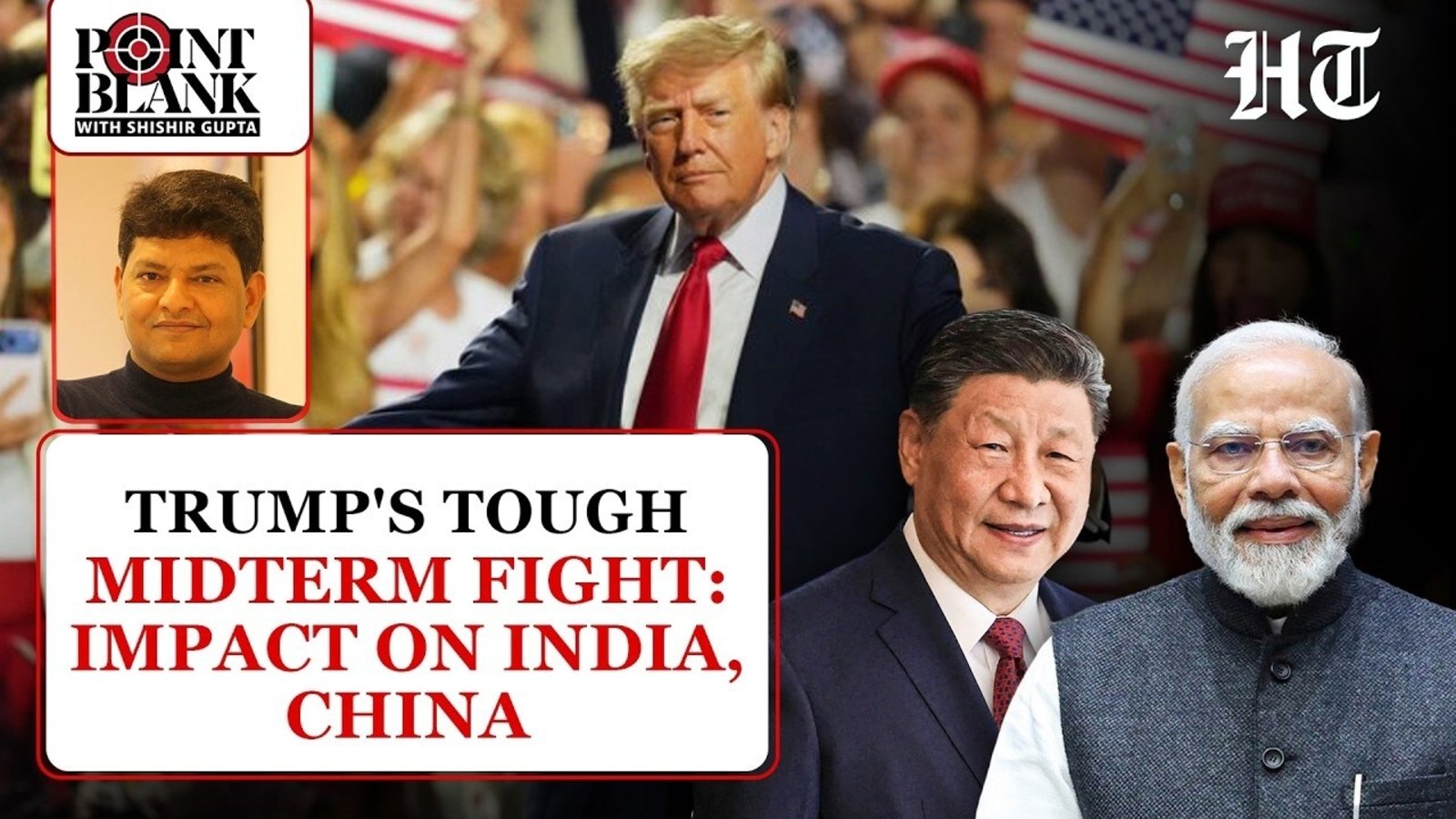
In a world increasingly shaped by great-power rivalry, regional wars and economic uncertainty, India’s foreign policy cannot be reduced to a simple choice between Washington and Beijing. That was the central argument made by Hindustan Times Executive Editor Shishir Gupta in a conversation with senior anchor Aayesha Varma on Point Blank.
Discussing the Xi Jinping–Donald Trump summit, the China-Russia-North Korea alignment, tensions with Iran, India’s energy security and Pakistan’s terrorism narrative at the United Nations, Gupta argued that India’s overriding priority must remain its own national interest. The prescription, he said, is strategic autonomy backed by stronger domestic manufacturing, military deterrence, diversified energy supplies and a larger leadership role among countries of the Global South.
Xi-Trump optics versus substance
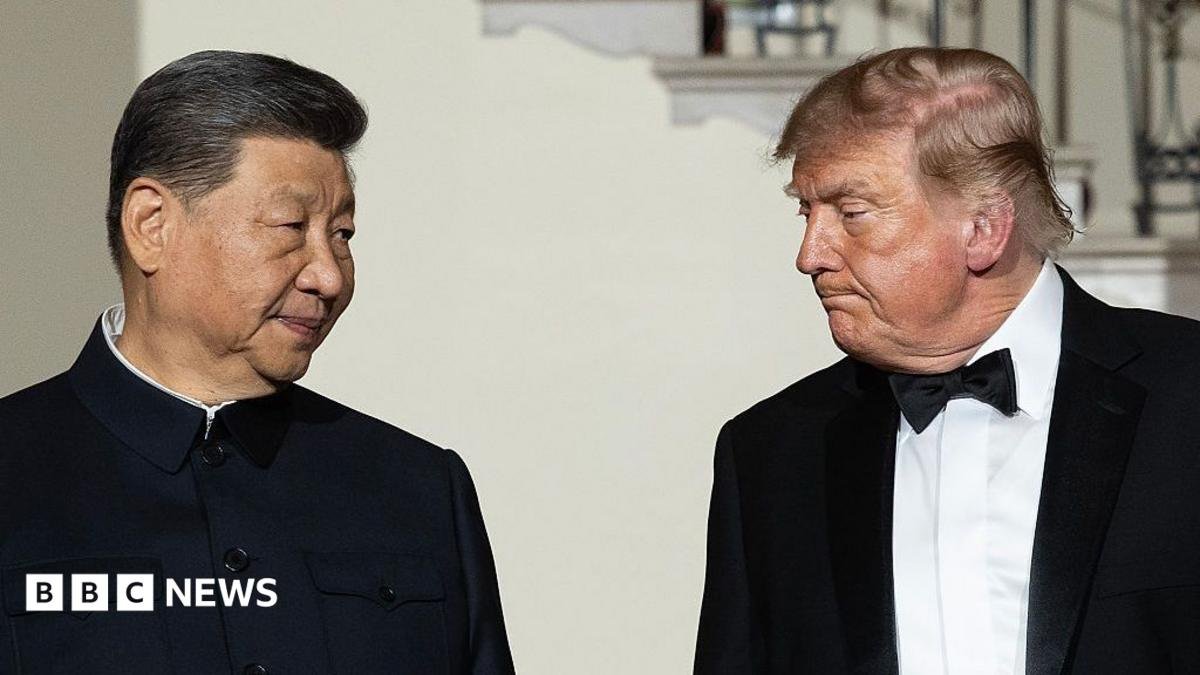
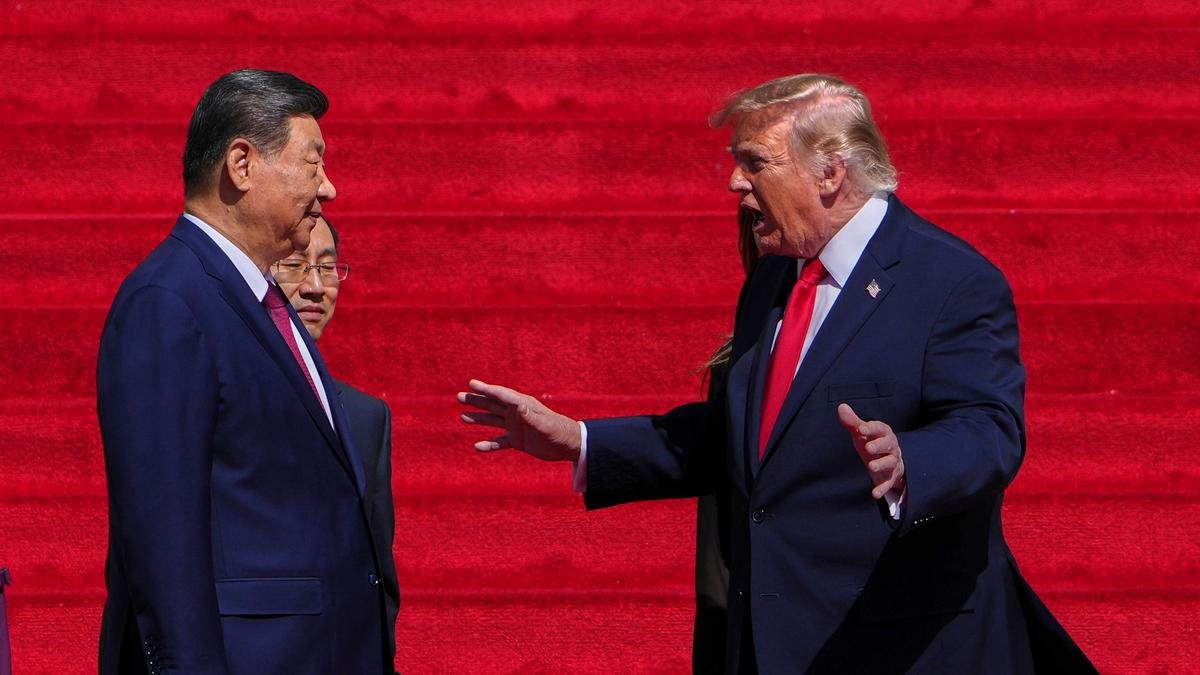
The state visit of Chinese President Xi Jinping to Washington was marked by ceremonial grandeur: a red-carpet welcome, high-profile meetings, gala events and carefully choreographed displays of goodwill. But Gupta drew a sharp distinction between the summit’s optics and its outcomes.
While the two sides appeared willing to engage and reportedly discussed trade, tariffs and artificial intelligence, the harder strategic disputes remained unresolved. Questions surrounding Taiwan, China’s expanding missile arsenal, Beijing’s actions in the Indo-Pacific, its relationship with Iran, and its military posture in the South China Sea were not visibly settled.
The basic reality, according to Gupta, is that the United States and China are competitors for global primacy. The US remains the leading power in terms of economic and military capability, while China is the rising challenger. Dialogue between the two is therefore necessary, but it should not be mistaken for a strategic breakthrough.
“Talking” is not the same as agreeing. The more accurate comparison, Gupta suggested, may be the long US-Soviet engagement during the Cold War: dialogue continued, but both sides often spoke past each other while fundamental rivalries persisted.
That assessment is especially relevant to Taiwan. China continues to regard Taiwan as part of its territory and seeks a reduction in US arms support for Taipei. Washington, meanwhile, has its own commitments and strategic interests in the region. Similarly, tensions over the South China Sea and China’s growing military footprint remain live sources of friction, not issues that can be solved through a single summit.
The China-Russia-North Korea challenge
One of the most consequential developments for Washington is the growing strategic convergence between China, Russia and North Korea. Gupta noted that the US would naturally view closer China-Russia military coordination with concern, particularly their exercises in the Sea of Japan and cooperation in areas such as air and naval operations.
The developing relationship also has an economic and geopolitical dimension. Russia and China have explored Arctic connectivity and alternative trade routes that could link Asia and Europe through northern waters. Such routes may gain importance as climate change alters access to the Arctic.
For the US, this expanding alignment creates a more difficult security environment. China has not given Washington any indication that it will dilute ties with Russia, nor has it signalled that it will substantially soften its approach towards countries in Southeast Asia facing Chinese pressure.
Gupta’s broader point was that Beijing’s negotiating style requires patience. China may be willing to talk at length, but its core strategic positions tend to move slowly. Countries engaging with China, whether the US, India or regional states in the Indo-Pacific, must therefore distinguish diplomatic engagement from tangible change on the ground.
Why India has not been “dumped”
A recurring criticism in Indian political debate is that New Delhi drew closer to Washington to balance China, only for the US to resume direct engagement with Beijing. Gupta dismissed that argument as fundamentally flawed.
India’s relationship with the US is important, especially in defence and logistics. India’s airlift and transport capabilities have increasingly relied on American-origin platforms such as the C-17 Globemaster, C-130J Super Hercules, Chinook heavy-lift helicopters and Apache attack helicopters. These acquisitions reflect operational requirements and the need for more effective capability in difficult terrain, including the Himalayas.
But military procurement does not make India an ally in the narrow, treaty-bound sense. India has repeatedly retained the ability to take independent positions on major international conflicts and interventions.
As Gupta pointed out, India did not send troops to US-led wars in Afghanistan or Iraq, and it did not automatically align with Washington on every question related to Ukraine. India also maintains dialogue with both the US and China, while preserving longstanding defence and strategic links with Russia.
This is the essence of strategic autonomy: India will engage with multiple powers but will not allow any one relationship to define its national choices. In Gupta’s formulation, India should not see the world as a binary contest in which it must either choose America or choose China. “India goes with India” — with policies determined by its own security, economic and diplomatic interests.
Self-reliance as foreign policy
Gupta linked India’s external security directly to domestic economic capacity. In an unstable global system, self-reliance is not merely an economic slogan; it is a strategic necessity.
The push for Atmanirbhar Bharat and “Make in India” becomes especially important when supply chains, energy markets and defence partnerships can be disrupted by war or sanctions. India must build the ability to manufacture more at home, particularly in sectors connected to defence, technology and critical infrastructure.
He also stressed that this requires serious improvements in the ease of doing business. Private investment and manufacturing expansion cannot succeed if firms are burdened by excessive regulation, administrative obstacles and rent-seeking. India’s defence-industrial push, including a greater role for the private sector in conventional missile production, signals movement in the right direction.
The goal is not isolation from the world. Rather, it is to ensure that India has the industrial depth to withstand shocks and make sovereign decisions during crises.
Iran, oil and the Gulf balance
The Middle East is another arena where India’s balancing act will be tested. Gupta warned that an escalation involving the US and Iran could deepen global oil insecurity, placing pressure on import-dependent economies such as India.
Any prolonged disruption around the Strait of Hormuz — a vital route for global oil shipments — would raise oil prices and, in turn, intensify inflationary pressures in India. New Delhi must therefore diversify its energy basket, maintain multiple supplier relationships and prepare for volatility.
At the same time, India has several interests to protect: energy ties with Gulf states, relations with the United Arab Emirates and other Arab partners, connectivity ambitions centred on Chabahar in Iran, and the need to avoid exposure to secondary sanctions.
Gupta argued that India’s approach must remain pragmatic. It should support the security and stability of its Gulf partners, particularly the UAE, while ensuring that its own economic interests are not compromised. The region’s tensions are unlikely to end quickly, especially if missile and drone exchanges continue and no political settlement emerges inside Iran.
A firm message on terrorism
On Pakistan and Operation Sindoor, Gupta said External Affairs Minister S. Jaishankar delivered a clear message at the United Nations: India reserves the right to respond if it is attacked.
The warning, he said, was broader than Pakistan alone. It was intended for any actor contemplating attacks on India’s security interests. Pakistan’s attempts to project itself as a force against terrorism, Gupta argued, cannot obscure the presence and activities of terror groups operating from its territory.
The larger context is a world marked by simultaneous conflicts — from Ukraine and Gaza to the Gulf and the Indo-Pacific. In such an environment, countries that lack economic resilience, military capability and diplomatic weight are more vulnerable to external shocks.
India’s response, according to Gupta, must be to strengthen deterrence, expand self-reliance, use every multilateral forum to articulate its interests and emerge as a credible voice for the Global South. The United Nations remains an important platform, but Gupta questioned whether repeated speeches without institutional reform can adequately address the disorder of the current era.
For India, the lesson is straightforward: engagement is necessary, partnerships are useful, but national capability remains indispensable. In a turbulent world, strategic autonomy will matter only if it is supported by economic strength, credible deterrence and the ability to act independently when the situation demands it.