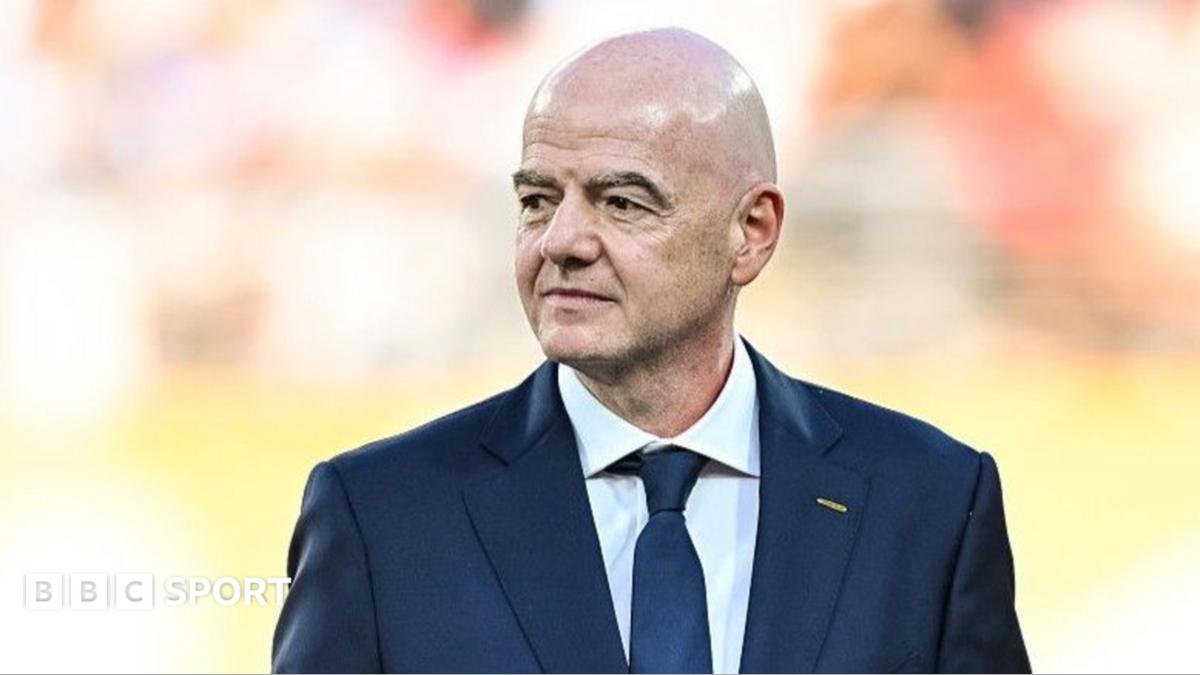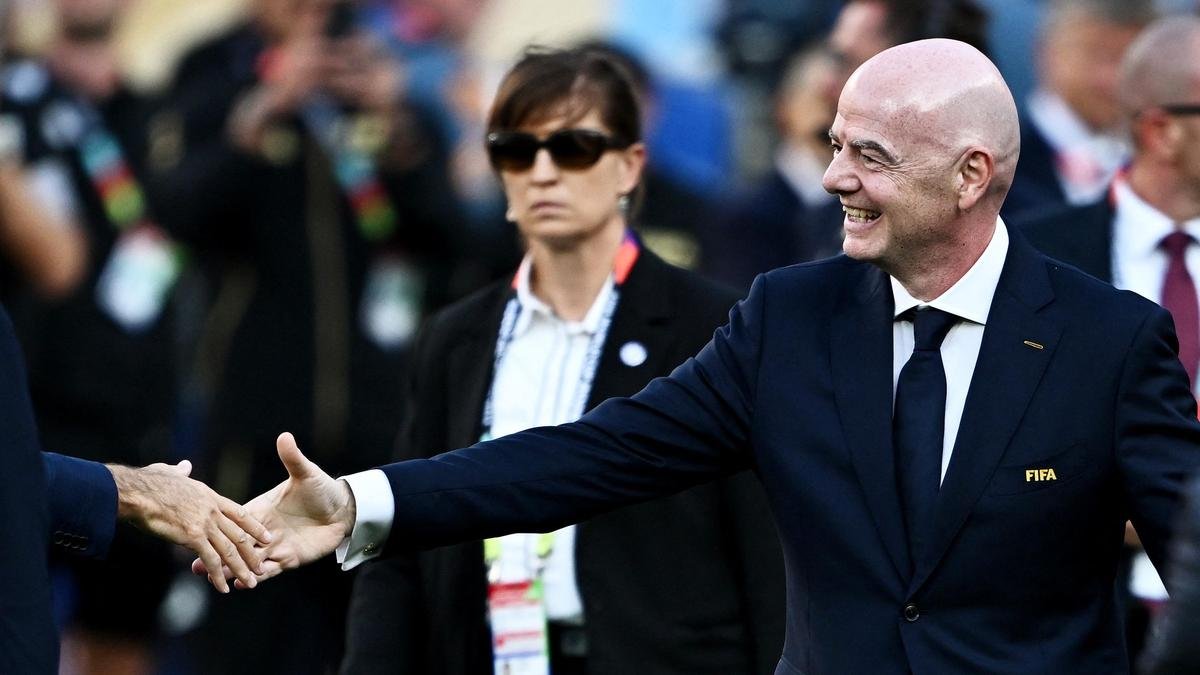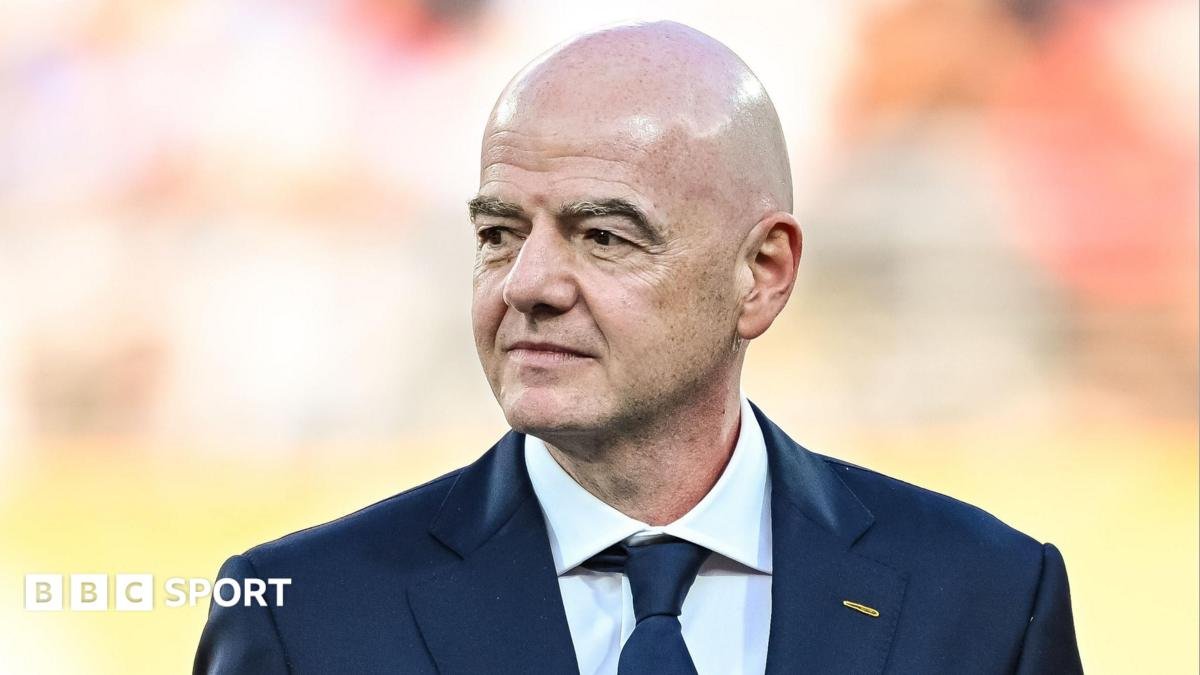
The story so far: On July 31, the Fédération Internationale de Football Association (FIFA) abandoned its controversial plan to sell stakes in the World Cup to private investors.
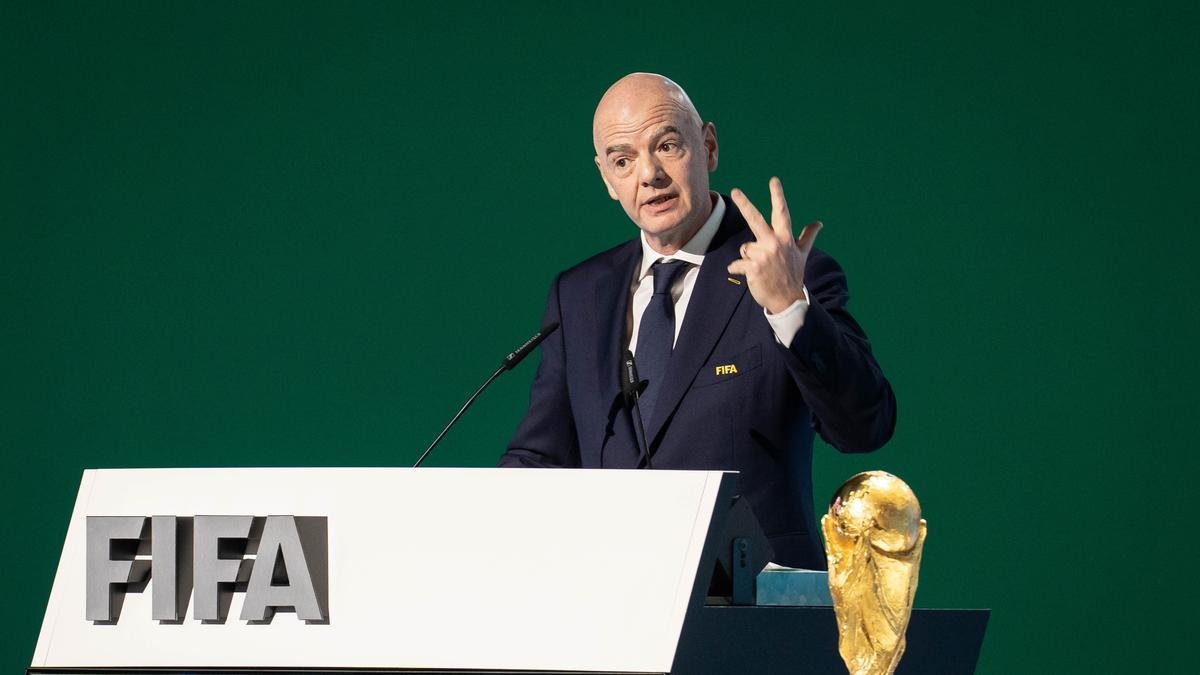
What began as FIFA president Gianni Infantino’s vision for a new commercial subsidiary, backed by venture capitalist Joshua Kushner, quickly unravelled amid fierce opposition from the Union of European Football Associations (UEFA), other confederations, and FIFA’s own senior staff.
What did FIFA propose?
Shortly after the 2026 World Cup, Mr.
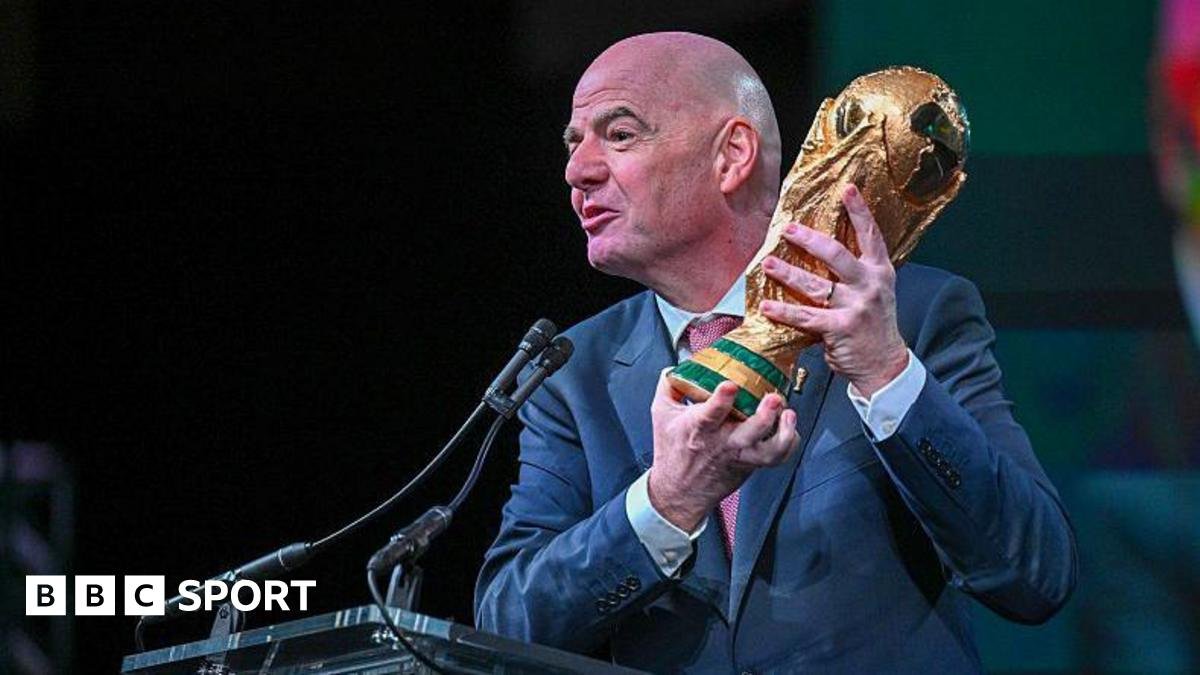
Infantino unveiled plans to create a new subsidiary called FIFA Forward Enterprise (FFE).
This entity was to consolidate all of FIFA’s revenue-generating operations — broadcasting, sponsorships, ticketing, licensing, and tournament operations — under one structure.
FIFA stated that it would retain majority control of FFE and bring in outside investors to hold minority, non-controlling stakes.
In that regard, venture capitalist Joshua Kushner, through his holding company Thrive Eternal, was reported to be the lead investor under consideration.
Mr.
Kushner is the brother of Jared Kushner, U.S.
President Donald Trump’s son-in-law.
Infantino shares a close relationship with Mr.
Trump, as seen in his awarding of a FIFA peace prize to the President and allowing his intervention to overturn U.S. striker Folarin Balogun’s suspension during the World Cup.
Asia confederation president says FIFA's lack of consultation over World Cup plan 'totally unacceptable' What did FIFA’s member associations stand to gain from this proposal?
By selling stakes now, FIFA, a non-profit organisation under Swiss law, would allow private investors to benefit from future growth that would otherwise accrue entirely to FIFA and football.
FIFA had reportedly offered its 211 member associations an upfront $20 million payment upon approval, followed by three more payments of $20 million, $22 million, and $24 million between 2027 and 2038.
In an official press release, Mr.
Infantino explained that his move would democratise football.
He said, “We intend to invest heavily even in the smallest or most remote parts of the footballing world, places that are too often passed over.
Every FIFA member association, whatever its size, resources, or geographic location, will have a voice and the opportunity to determine its own course.
Football has become a truly global game and so the benefits must be felt globally.” FIFA gave its 211 member associations until September 19 to decide whether to support the plan, or risk losing the one-time payout offer.
What was the immediate response?
UEFA, the wealthy and powerful European football governing body, held an emergency meeting with its 55 member nations on July 30 and voted to boycott World Cups if FIFA moved forward with the plan.
In a statement, UEFA said, “We unanimously and unequivocally reject FIFA’s proposal to transfer ownership interests in the World Cup and other FIFA competitions to private investors.
The World Cup cannot be treated as an investment product.
It is one of football’s greatest sporting legacies.
It has been built over generations by players, national teams and supporters across every continent.
No part of it should ever be surrendered to private investors.
The World Cup is not for sale.” Has FIFA ever faced such opposition before?
Yes.
In 2018, Mr.
Infantino pursued a similar investment deal with Japan’s SoftBank to fund the Club World Cup, but that plan fell apart amid public criticism.
In 2021, UEFA’s threat to boycott helped derail Mr.
Infantino’s proposal to hold the World Cup every two years instead of every four.
UEFA intensifies opposition to FIFA’s World Cup plans Is UEFA alone in opposing this?
UEFA was the first to oppose FIFA’s plans.
UEFA has had other run-ins with FIFA too: its president boycotted the World Cup final in protest against FIFA’s decision to overturn Mr.
Balogun’s suspension after Mr.
Trump’s intervention; and it also criticised other FIFA decisions such as hydration breaks.
But UEFA was not the only one to oppose this plan.
CONCACAF (Confederation of North, Central America and Caribbean Association Football) and AFC (Asian Football Confederation) also raised concerns about the lack of transparency in the process, as did individual federations such as England’s FA (Football Association) and the global players’ union FIFPRO (Fédération Internationale des Associations de Footballeurs Professionnels).
OFC (Oceania Football Confederation) refused to immediately state how it viewed FIFA’s plans and instead said that the proposal would be considered by the OFC Executive Committee at a meeting later this month.
Has anyone from FIFA addressed this issue?
Carlos Cordeiro, Mr.
Infantino’s senior adviser who represented FIFA on the White House Task Force at the World Cup, resigned and urged other senior FIFA staff to speak out.
“I cannot stand by while FIFA considers selling a stake in the World Cup.
I oppose it unequivocally,” Mr.
Cordeiro said in a statement.
Kevin Lamour, FIFA’s chief operating officer, also issued a statement about the lack of transparency.
“Not only must this project not go ahead.
The time has now come for football political leaders to ask themselves the right questions and make the right decisions.
And if that means I lose my job, then so be it,” he said.
How has FIFA responded?
On July 31, Mr.
Infantino announced that FIFA would not be moving forward with the proposal.
“Having listened carefully to all the views, it has become clear that the project has created divisions of a nature that, regardless of the level of support, are no longer in the interest of the objective set out in the first place.
Our purpose has always been — and will always be — to unite and improve.
As a result, this proposal will not proceed,” he said in a statement.