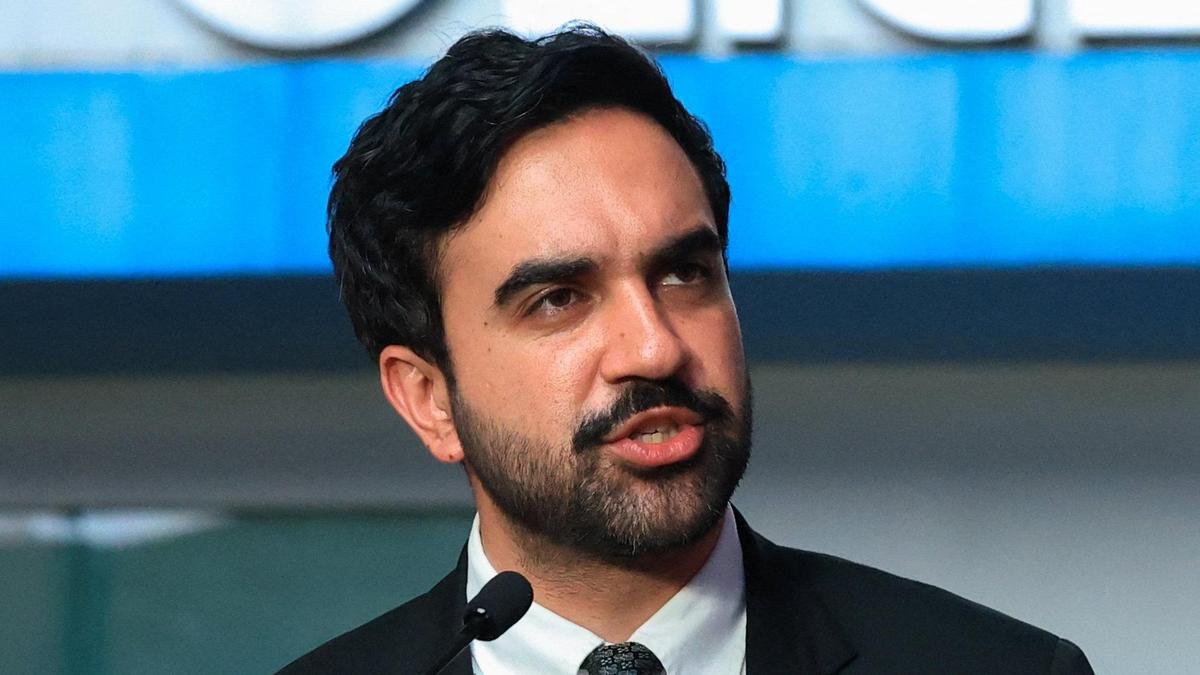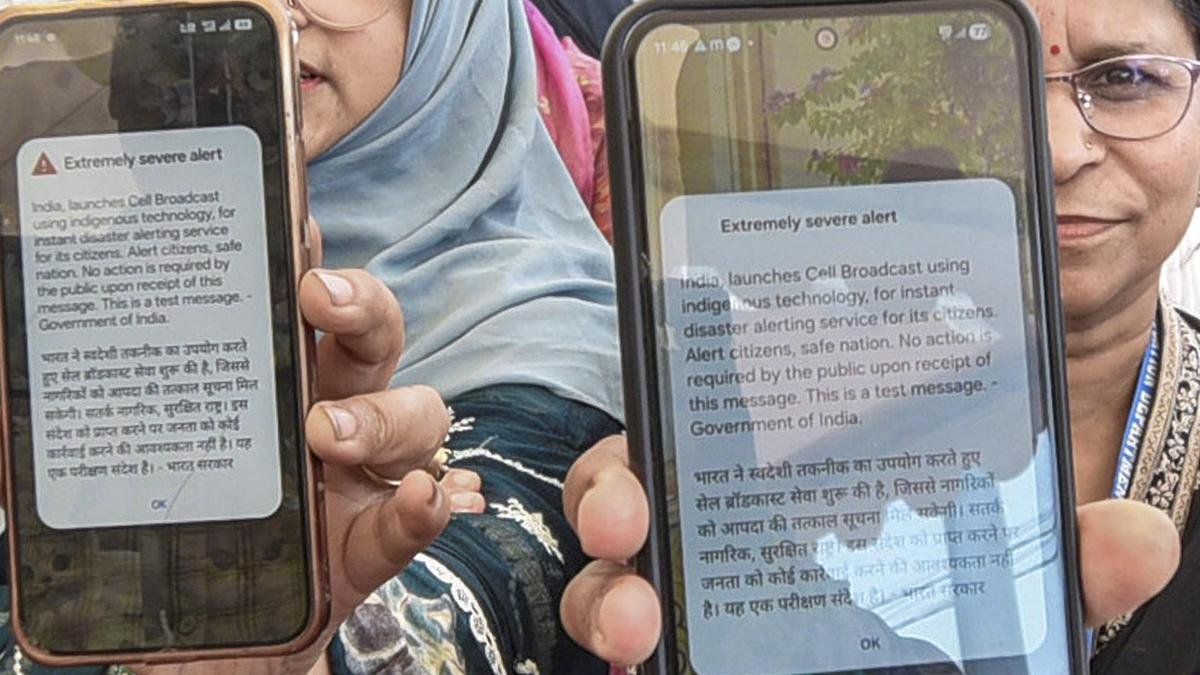
The story so far: Following a few weeks of break, the Cell Broadcast System (CBS) has been resumed in India, according to Centre for Development of Telematics (C-DOT) CEO Rajkumar Upadhyay.
The feature sends out alerts for natural disasters and extreme weather conditions, reaching telecom users in a matter of seconds.
The system was put on pause at State Disaster Management Agencies (SDMA)’s end after an errant alert went off in Central Delhi.
Emergency broadcast messages resumed, C-DOT CEO says How does the CBS work?
The CBS displays a prominent alert on most smartphones and many feature phones sold over the last decade.
The system uses common messaging protocols that have been incorporated by all the major handset makers around the world.
However, Mr.
Upadhyay of C-DOT pointed out that only two major providers existed until his organisation developed and finalised its own implementation.
“It is a very complex technology,” Mr.
Upadhyay said, since there is a huge variety of telecom gear out in the market.
“So you have to work very hard to make it work as per Motorola Radio, Siemens Radio, [ZTE] Radio, Huawei Radio.
In [ZTE] also, if it is a 2G radio version one, it is different; version 2 is different.
There are not less than 300-350 adapters,” he said, adding that C-DOT had to write code for each of these hundreds of adapters to make the system work.
Upadhyay said, which C-DOT had access to.
“BSNL is a museum of technology.
You make it work in BSNL, and then it can work anywhere,” he said.
How quickly can CBS alert users?
Once an alert is sent out, CBS can reach an entire district, State or even the country in a matter of seconds.
But the main friction may be the agency that is authorised to send out the alerts.
“Now the alert pressing button responsibility is with the SDMAs,” Mr.
Upadhyay said.
“When SDMA in his panel sees the system is telling him here is the [cyclone], this is the message.
He can alter that message, he can alter that area based on his local knowledge, but he hits the button.” Centre suspends Cell Broadcasting Services As such, alerts for hurricanes and heavy rain, if they are issued, may come a little later than ideal.
But, he said, there are situations where CBS messages do not wait for human intervention.
“In some of the disasters, we do not wait for him.
Lightning, earthquake, gas leak, tsunami, we will wait for 10 seconds,” Mr.
“Beyond 10 seconds, we will go.
It is fully auto, no human intervention.” The CBS war room at C-DOT and SDMAs has live data feeds from a variety of agencies, such as the meteorological department and the National Centre for Seismology’s network of earthquake-sensing infrastructure throughout India.
As such, the data that leads to alerts being surfaced to SDMAs is an automated pipeline.
Why was CBS challenged in court?
What is India’s new Cell Broadcast System?
Everything you need to know Utimaco, a Germany-based firm that has set up a CBS solution for several countries, sued the Union government for not allowing private firms to bid for rolling out a CBS.
The government argued in the case that CBS was a strategically important infrastructure that would be important to build and operate domestically.
The Delhi High Court ruled in the government’s favour, but said that if procedural irregularities in how the decision to hand C-DOT the task were established, Utimaco would be at liberty to seek damages in further court proceedings.