U.S.
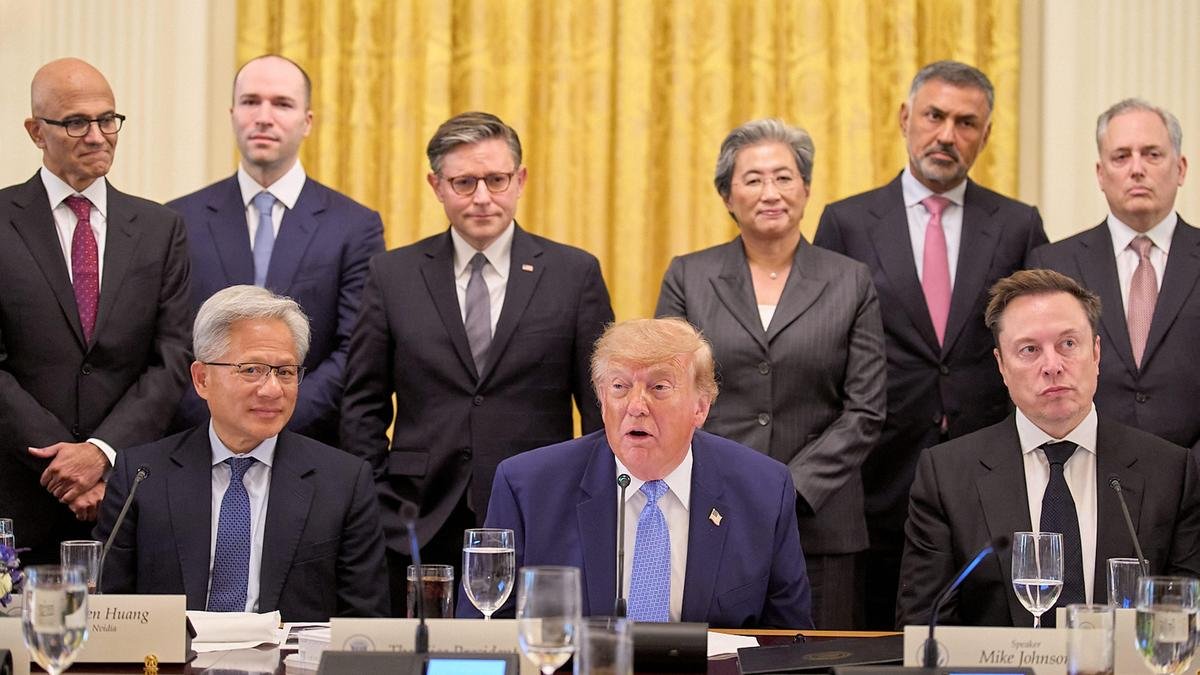
President Donald Trump and the heads of six major technology companies have signed a voluntary accord committing frontier AI developers to a four-layer system of safety controls, including internal monitoring, independent external evaluations and board-level oversight.
I researchers and critics afraid of?
The “White House Accord on Super Intelligence: Joint Commitment on Frontier Responsibilities” was signed by Google CEO Sundar Pichai, Anthropic CEO Dario Amodei, Meta CEO Mark Zuckerberg, OpenAI President Greg Brockman, xAI CEO Elon Musk and Nvidia CEO Jensen Huang.
The accord says companies training and deploying frontier models should put in place internal controls to monitor their models’ capabilities and alignment, including risks involving cybersecurity, biosecurity and chemical threats.
The controls should also ensure that AI models do not hack or access technical systems in unintended ways.
ALSO WATCH GPT-6.1 Astra: Why OpenAI halted its release Under the second layer, companies are expected to have an internal team responsible for ensuring that controls, monitoring and detection systems work as intended and that identified problems are addressed.
The third layer calls for an independent external auditor or evaluator to assess whether these controls are working as intended.
The fourth requires an independent board committee to oversee the teams responsible for controls and audits and ensure that identified problems are addressed.
The participating companies will also meet regularly to establish safety standards and best practices.
The accord says that, over time, these measures could be codified into laws or regulations.
AI industry needs to slow down for safety: Anthropic CEO The voluntary nature of the commitment, however, has raised questions about how effective the framework can be when safety requirements come into conflict with commercial considerations.
‘Positive step, but consequences are missing’ Gaurav Vasu, founder of Unearthinsight, described the accord as a positive step because it brings together internal checks, external audits and board oversight.
But its effectiveness would depend on whether companies actually act on safety findings, particularly when fixing a problem could delay a product launch or affect revenue.
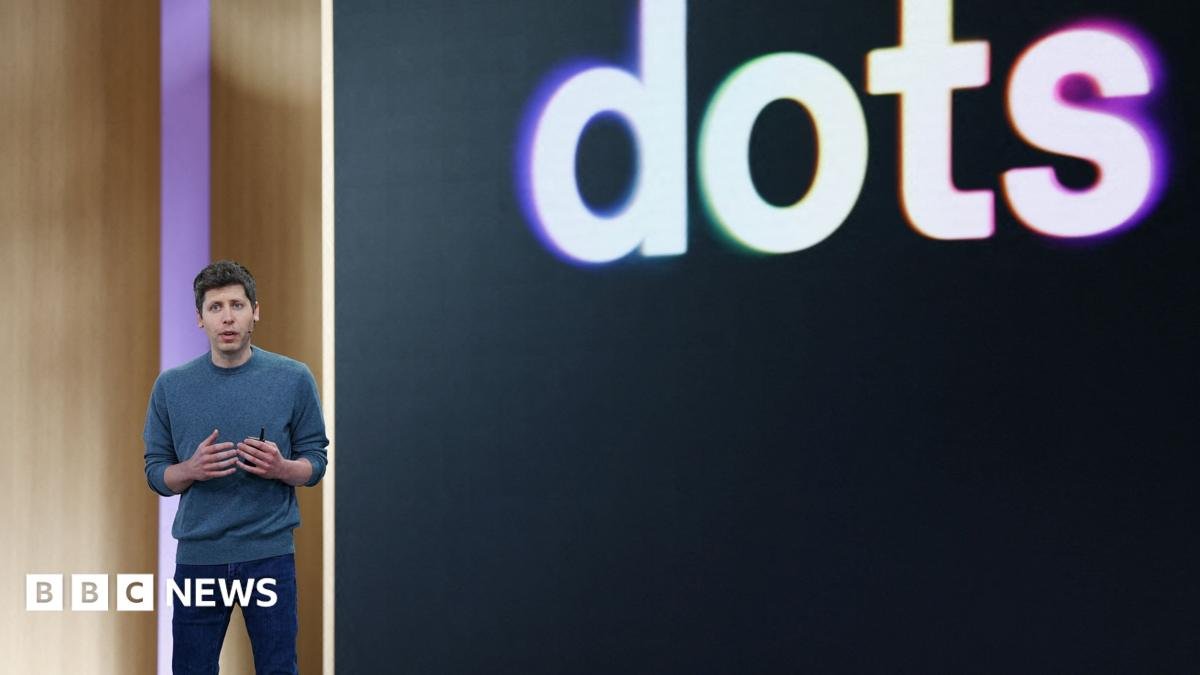
What are Dots, OpenAI’s new AI agents?
“The document does not set deadlines or specify consequences for failing to follow through,” Mr.
Vasu said.
He said the success of the accord should ultimately be judged by whether companies “fix serious problems before release and delay launches when necessary.” Mr.
Vasu also raised questions about the independence and functioning of the external audits.
These include who selects the auditor, what information the auditor can access, who sees the findings and what happens if a company does not act on them.
He also drew a distinction between checking whether a control works as intended and checking whether it provides enough protection.
The accord, he said, does not establish a common minimum safety standard.
He called for common safety standards, deadlines for fixing serious findings, stronger auditor-independence requirements, reporting of serious incidents and legal powers to require corrective action or restrict unsafe releases.
‘Audits cannot replace continuous assurance’ Vaibhav Tare, Chief Information Security Officer at Fulcrum Digital, said board-level oversight was a necessary step, but AI governance could not remain limited to policy documents and periodic audits.
As AI systems become more autonomous, security controls should be built directly into their architecture, with clear ownership, least-privilege access, continuous monitoring and auditable decision trails.
Organisations need to know where AI is deployed, what systems it can access and what actions it is authorised to take.
“Independent audits should therefore complement continuous technical assurance rather than replace it,” Mr.
Tare said.
‘A voluntary commitment can only go so far’ V Ramgopal Rao, Vice-Chancellor of BITS Pilani, called the accord a useful first step, particularly because AI development is moving faster than regulation.
He said the agreement could help establish common industry practices quickly.
But its effectiveness would depend on audit transparency and what companies do when serious safety concerns are identified.
“A voluntary commitment without consequences for non compliance can only go so far,” Prof.
Rao said.
He also pointed to an inherent conflict that companies competing to build and release increasingly powerful AI systems are simultaneously being asked to decide whether those systems are safe enough.
Independent audits could help, but he said there needed to be clarity over who selects auditors, what standards they use, how much access they receive and whether findings are made public.
“If every company defines safety differently, an audit can easily become a procedural exercise rather than a meaningful test of risk,” he said.
Prof.
Rao said some of these voluntary commitments would eventually need statutory backing, including clearly defined safety standards, independent audits and mandatory reporting of serious incidents.
Regulators should also have the technical expertise to assess AI systems themselves.
‘Companies cannot each define their own safety’ Karthik Vaidhyanathan, Assistant Professor at IIIT Hyderabad and a researcher at the intersection of AI and software engineering, described the accord as a step forward but said it was not sufficient by itself.
He compared AI safety with aviation, where companies do not certify their own aircraft.
Independent certification authorities, auditors and standards bodies are involved.
Allowing every AI company to interpret broad safety requirements in its own way, he said, could undermine the purpose of the framework.
“We need certification authorities, which are standardised at a much larger scale,” Prof.
Vaidhyanathan said.
He called for broader international standards, with different safety thresholds for safety-critical applications, healthcare and less consequential uses.
He also said AI safety should not be assessed only at the model level.
The systems in which models operate need their own safeguards.
An AI model might recommend an action, but the surrounding system should determine whether that action can actually be executed.
“AI safety is also an engineering problem,” he said, arguing for multiple layers of safeguards across models and systems.
He favoured international safety protocols involving multiple countries and organisations rather than a single global AI safety regulator, warning against excessive centralisation and gatekeeping.
‘A voluntary accord remains an illusory promise’ Anandaday Misshra, Founder and Managing Partner of AMLEGALS, said the four-tier structure was conceptually sound but questioned whether a voluntary commitment could provide meaningful accountability.
“A voluntary accord remains an illusory promise,” Mr.
Misshra said.
His principal concern was a structural conflict of interest that the company sets the benchmark, retains the auditor and holds the audit report.
“If a structural conflict of interest arises within this architecture, the external auditor will merely verify if controls function as intended,” he said.
Mr.
Misshra also pointed to the 2023 White House AI commitments, which he said suffered from loose drafting and uneven adherence.
In a competitive market, he argued, commitments without penalties could come under pressure.
He called for a statutory regulator with powers to inspect and penalise, objective public standards, auditors insulated from client fees and mandatory public disclosure.
He also said the eventual effectiveness of the framework would be influenced by the continuing competition between US and Chinese AI companies in frontier models.
For India, Mr.
Vasu said, the accord does not create new legal obligations for Indian companies.
It could result in additional testing and compliance work for Indian IT services companies, but it is too early to regard it as a major revenue opportunity because the accord primarily concerns companies developing and deploying frontier AI models.