
(In the weekly Health Matters newsletter, Zubeda Hamid writes about getting to good health, and staying there. You can subscribe here to get the newsletter in your inbox.)
Let’s talk contraception. And let’s question why, in 2026, despite multiple options available for both men and women, the burden of contraceptive use continues to fall primarily on women in our country. Let’s also unpack the link between reproductive agency and good health.
The National Family Health Survey - 6 (NFHS-6) throws up some interesting, but almost wholly predictable data: nationally, 20.1% of women aged 20–24 was married before the age of 18, with the rural figure reaching 23.3%. Why is this important? Because as Dr. Trishna Sarkar and Prof C. Saratchand point out, a girl married before she has had the opportunity to complete secondary education or enter the paid workforce, confronts a significantly extended reproductive window. This, compounded by limited access to contraception and negligible agency within the family, can contribute to unhealthy pregnancies, unsustainably more births, and heightened maternal and child health risks.
And what’s the most dominant method of contraception in India? Female sterilization, accounting for 36.5% of all contraceptive use in the country. Male sterilization (vasectomy), on the hand, accounts for just 0.5%. These figures alone ought to give us pause. It’s not just the massive difference in the numbers, despite, as Athira Elssa Johnson writes, vasectomies being simple, safe and highly effective: it’s that access to other scientific methods of contraception continue to be limited and that many women, therefore, have no choice but to access underfunded public healthcare institutions.
Even while much more needs to be done to improve access to all forms of contraception, a parallel debate about incentives for bigger families has been kindled after Andhra Pradesh Chief Minister Chandrababu Naidu announced cash incentives of ₹30,000 and ₹40,000 to women having their third and fourth child respectively in a bid to reverse the drop in fertility rates. Do read Priscilla Jebaraj’s parley on this.
While we’re on the subject of reproductive health, do also check out this story by Karan Babbar and Raunak Maitra on period product use, based on data from NFHS-6, bringing to the fore a crucial question: while there may be access to period products, the data doesn’t tell us whether it can be disposed of safely, or whether a girl or young woman can manage her period at school or at work. These are questions we perhaps need to begin looking at.
In good news from abroad, however, Colombia’s Senate has approved of a law to ban female genital mutilation, a practice that persists in some of the country’s Indigenous communities, after two years of debate.
Moving on to another subject that hit the headlines this week: the test, and drug for lung cancer. Prof S. Swaminathan explains that a research team said it had zeroed in on a set of 14 blood plasma proteins as a strong predictor of being diagnosed with lung cancer years in advance. The team also identified an existing drug, Canakinumab, that could potentially be used to reduce the risk of developing lung cancer. But as Dr. Rajeev Jayadevanpoints out, the findings are more complex than a headline would have you suppose. There are limitations to the study, and if this ‘protein signature’ genuinely identifies people at particularly high risk, it could eventually help make screening programmes more efficient, but whether treatment with Canakinumab actually reduces the incidence or progression of lung cancer remains uncertain.
Staying on cancer for a moment, do read Dr. Julie Gralow’s article on why cancer research from India matters and this intriguing piece by Dr. Narayana Subramaniam who notes that while AI is helping patients understand cancer it is also leading to misunderstandings with doctors.
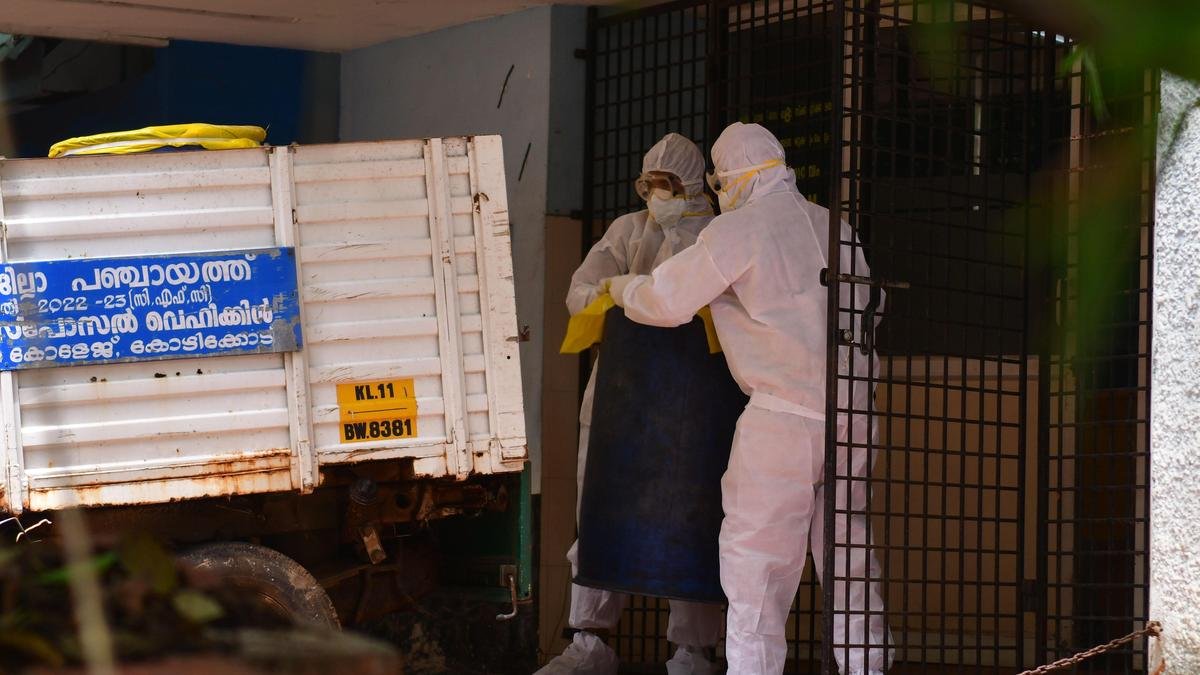
And finally, for this week, we have news on emerging infections. Kerala is once again on high alert: a 43-year-old man tested positive for Nipah and is in critical condition. Do read C. Maya’s analysis on what makes Kerala so vulnerable to zoonotic infections. The State has also seen an outbreak of shigellosis with at least five deaths this year and over 100 confirmed cases. What is shigellosis, you ask? Find out in Ramya Kannan’s profile on this disease.
Abroad, Brazil said that it was temporarily suspending use of the world’s first single-dose dengue vaccine following two suspicious deaths. More than half a million people have received doses of the vaccine this year, which was developed publicly in Brazil and approved by health authorities in November. Experts are now raising concerns about India’s soon-to-be-launched dengue vaccine, DengiAll, as it is very similar to the dengue vaccine in Brazil.
For our tailpiece this week, and staying on the theme of women and their health, we have Shipra Agarwal highlighting that digital care continues to stay out of reach for countless rural women not because of technical or infrastructural constraints alone, but because of deep-rooted imbalances at home: many lack access to a personal device, and do not have the literacy required, or even the space needed for a private consult.
Dive into any of our explainers that interest you:
Bindu Shajan Perappadan delves into why seizures could be early indicators of brain tumours
Sayantan Datta explains that scientists cannot reliably predict whether an individual carrying certain gene variants will eventually end up obese: there is no ‘obesity gene’
Biju Dharmapalan decodes a new analysis on ultra-processed foods and finds that it may not be the factory that is making us fat—it may be the recipe
Dr. Achuth M. Baliga explains what implant dentistry involves
Afshan Yasmeen writes on the National Task Force on student suicides call for wide-ranging reforms on campuses
Smruthi Prabhu analyses the science behind music for sleep
And Jacob Koshy decodes a study that finds heatwaves and ozone together increase India’s cardiac deaths
Don’t forget to watch our Health Wrap episode of the week, where IIT Madras researchers discuss a new hydrogel-based approach to fibrosis treatment!
For many more health stories, head to our health page and subscribe to the health newsletter here.