The scene is familiar.
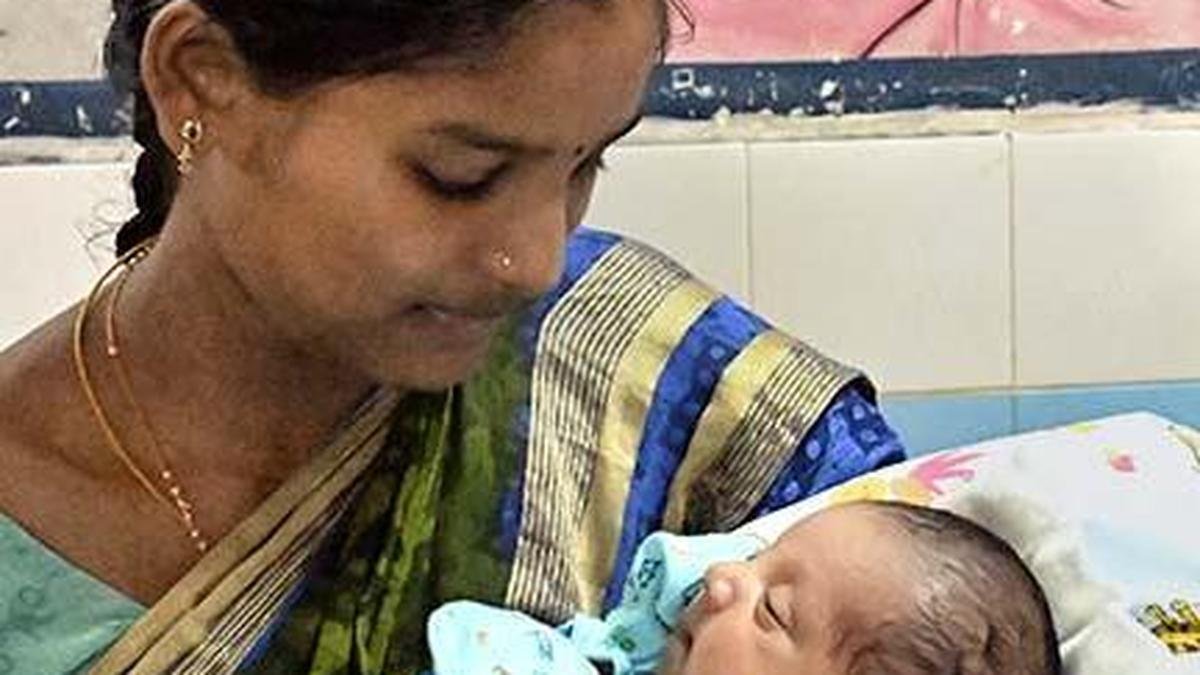
Five days after a caesarean section, a woman in one of our cities is at home with a newborn, a painful surgical wound, and a folder of papers.
The papers list the baby’s feeding schedule, immunisation dates, and the paediatrician’s phone number.
There is one line about her own care, a follow-up visit in six weeks.
She is bleeding more than she expected.
She has not slept longer than ninety minutes at a stretch.
Her mother tells her this is normal.
Her mother-in-law tells her this is normal.
It is extremely common.
But “common” does not mean harmless.
The fourth trimester: why we need to focus on postpartum care What’s happening in India India has done something remarkable in maternal health.
The maternal mortality ratio has fallen from 254 deaths per 100,000 live births in 2004–2006 to 87 in 2022–2024, a reduction of nearly two-thirds.
The National Family Health Survey-6 (NFHS-6) records institutional births at 90.6%.
But these numbers leave an important question unanswered: What happens to new mothers after birth?
The NFHS-6 reports that 82.8% of mothers received postnatal care within two days of delivery.
The postnatal care recorded within 48 hours of an institutional delivery may well be a check that occurs before the mother leaves the hospital.
A check before discharge and continuity after it are not the same thing, and the indicator cannot tell them apart.
The many challenges of ensuring maternal and child health in India Why this is important The World Health Organization’s postnatal care guidance sets a minimum of four contacts.
Each is meant to assess the mother as well as the baby.
India’s headline statistic largely overlaps with the first of those four contacts.
But no headline national indicator shows whether women received the complete schedule, or what those contacts assessed.
This is not merely a question of comfort.
A systematic review of 26 studies involving 8.7 million women globally identified 6,142 maternal deaths.
Nearly one-quarter of those deaths occurred between postpartum days 8 and 42.
That is precisely when an Indian mother is at home, and precisely when what is happening to her is least visible to the system.
Additionally, the caesarean section rate increased from 21.5% at NFHS-5 to 27.2% at NFHS-6.
More Indian women are therefore recovering from major abdominal surgery in flats and small houses, with a newborn, some of them without the extended household support that older arrangements assumed.
The missing link in India’s maternal health story What is missing A qualitative systematic review of 51 studies of traditional postpartum practices across more than 20 countries found the same elements recurring: organised support for the mother, a prescribed period of rest, particular foods, and additional help with the baby.
Read as medicine rather than ritual, it is a structured plan for recovery.
It feeds her at a time when she is depleted and breastfeeding.
And it does the thing our health system finds hardest to implement—treating the weeks after birth as a distinct state requiring care, rather than a return to ‘normal’ life.
Home-Based Newborn Care in India schedules an ASHA to visit the house on days 3, 7, 14, 21, 28 and 42.
National guidance is explicit that the visits on days 3, 7 and 42 are for the mother as well as the baby.
The ASHA’s job is to look for excessive bleeding, high temperature, foul-smelling discharge, cracked nipples, and engorged breasts.
The mother, in other words, is written into the design.
What is missing is the rest of her well-being.
The maternal component focuses on danger signs, feeding, and breast problems rather than on recovery.
The ASHA’s checklist does not include blood-pressure measurement, a systematic mental health screening, or a follow-up glucose test.
And the arithmetic of the schedule tells its own story: six visits for the baby, three of which are hers as well.
Across many Indian communities, the period after childbirth, in some up to 42 days, is marked out and protected.
Families understand that a woman who has just given birth needs feeding, rest, and helping hands.
The routine postnatal care schedule also centres on the first 42 days.
Yet in both settings, attention can still gravitate toward the baby.
Among 403 women in Gujarat, those with low social support had about two-and-a-half times the odds of postnatal depression compared with women who had strong support.
The findings suggest that support may be an important factor, and our households have supplied it for generations.
What the customs cannot do is examine the mother.
They cannot detect persistently high blood pressure or determine whether anaemia is contributing to the exhaustion everyone is calling normal.
Some customs and practices are not actual care; indeed, they may actively prevent a woman from being taken to a doctor when she is bleeding heavily or running a fever.
A good postnatal system would add an examination to the help that supportive households give.
Data | Apathy of family and high costs hinder maternal healthcare What is needed What would it take to consider the mother’s condition as well as the baby’s?
The schedule already exists and so do the workers.
What is missing is scope, ownership, and measurement.
Visits to the mother and baby after discharge should assess the mother’s recovery as well as her danger signs.
Responsibility for the mother’s follow-up should rest with a designated healthcare provider or service, which should document her care after the delivery record is closed.
A structured review can begin in minutes.
It should ask about bleeding, pain, and her surgical wound.
It should include measuring her blood pressure, particularly if she was hypertensive in pregnancy.
It should test for anaemia when her tiredness, or her pregnancy, points that way.
It should ask if she is experiencing changes in mood or sleep and whether she’s been having frightening or intrusive thoughts.
It should ask about feeding difficulty, urinary leakage, prolapse, and whether she’s experiencing pain during sex.
It should arrange a follow-up glucose test for the woman who had gestational diabetes and now carries a substantial lifetime risk of type 2 diabetes.
The point is not the panel.
The point is that somebody asks.
The future of predictive maternal healthcare: trustworthy data, robust public health teams can help save lives Making it part of the system Primary care also belongs here, not in place of the obstetrician or the ASHA but as part of the system that holds on to what the pregnancy revealed.
It is often during pregnancy that high blood pressure or high blood sugar first appears.
When the delivery record closes, that knowledge should not close with it.
We measure delivery and newborn outcomes in detail.
We should give equal attention to maternal recovery after discharge.
Until maternal recovery is counted, too much of it will continue to unfold privately at home, with symptoms described as ‘normal’ by everyone, including the mother herself, until enough time passes that she stops mentioning them and lives with ill health instead. (Dr.
Sowmya Josyula is an internist and public health specialist.
She writes on women’s health and on traditional practice examined against evidence. sowmya.josyula@kushalahealth.com)