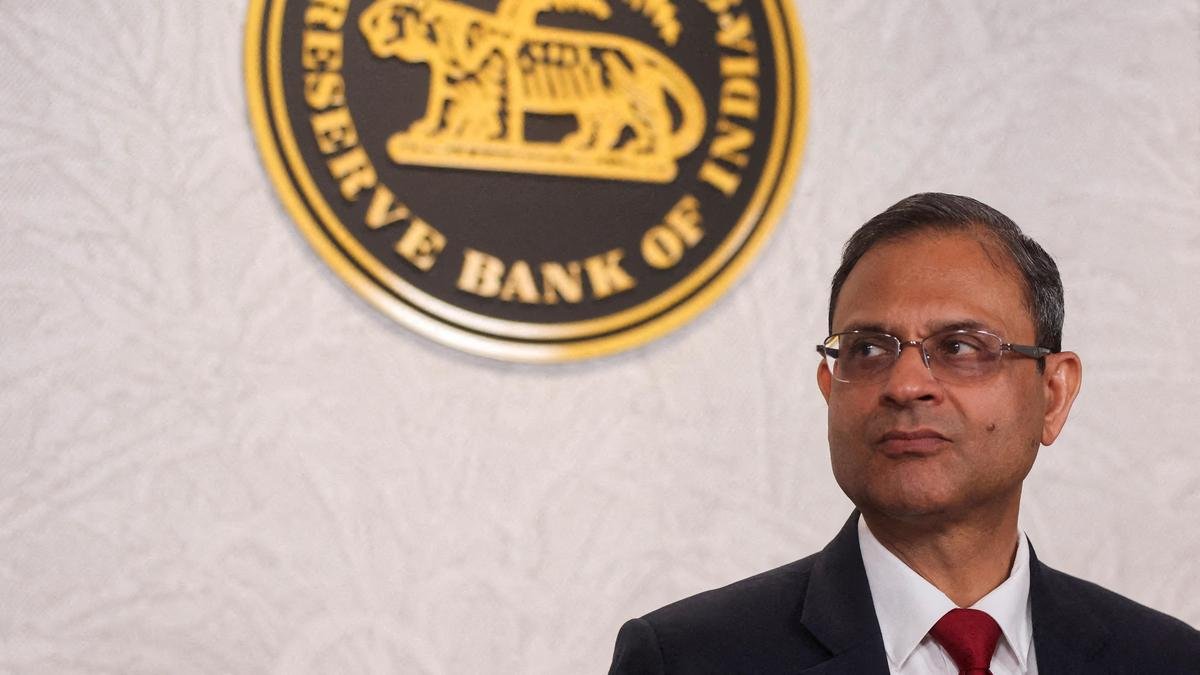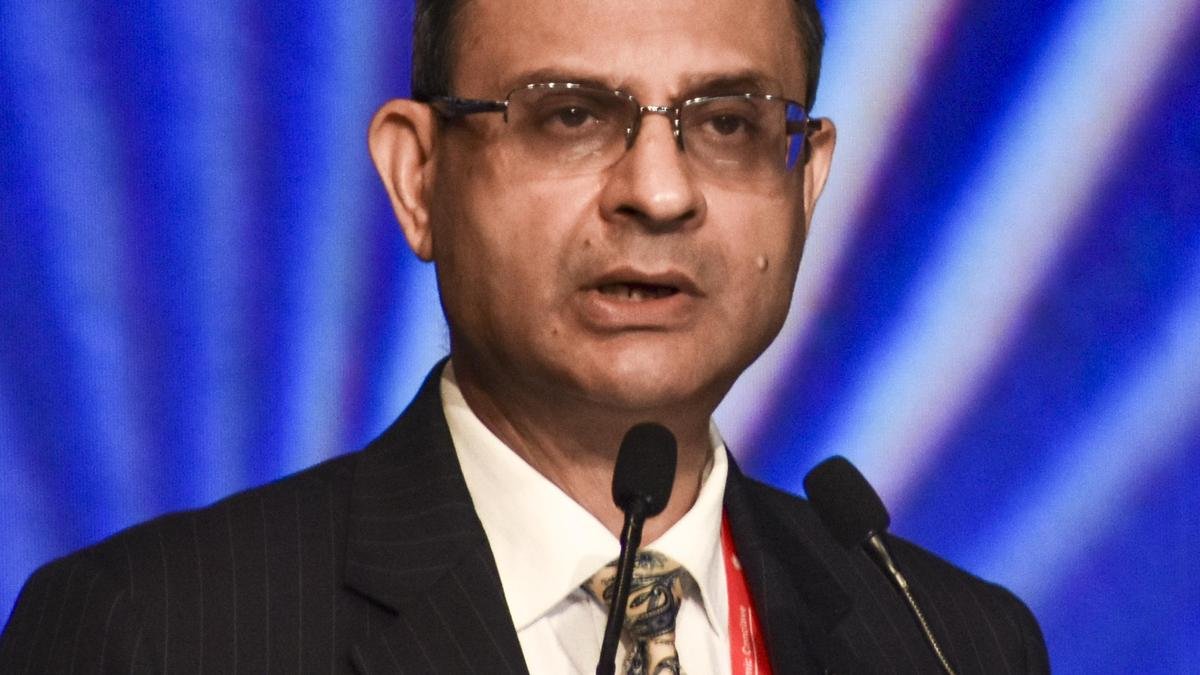
RBI may hike repo rate by 25 bps as inflation and oil risks mount: Sunil Sanghai Reuters Synopsis The RBI could raise the repo rate by 25 basis points in October and signal further tightening as inflation, elevated crude prices and a narrowing rate gap with the US pressure the rupee.
Strong reserves and a manageable current account provide crucial buffers.
By ET CONTRIBUTORS Last Updated: Oct 04, 2026, 06:10:00 PM IST Follow us India once had two credit policies a year: a slack season policy in April and a busy season policy in October.
That practice is gone.
The six-member Monetary Policy Committee (MPC) now reviews rates every two months, so October is one of six checkpoints rather than a seasonal pivot.
It still matters.
The busy season, with festive demand and rising credit offtake, begins now.
The US Federal Reserve (Fed) has moved to a similar cadence, with eight scheduled meetings a year, roughly every six weeks.ADVERTISEMENT Credit policy is treated as an event, with markets speculating and waiting for guidance.
But much of the mystery has gone.
Decisions are increasingly data-driven, and the framework is fixed in advance.
India targets consumer price index (CPI) inflation of 4% with a tolerance band of 2% to 6%.
Wholesale inflation is not part of the target, so everyone reads the same CPI print.
Central banks now differentiate themselves through guidance, not surprise.I believe this time there is a case for a hike.
The Fed has already moved.
On September 16 it raised the target range by 25 basis points to 3.75–4.00%, by a 12–0 vote, its first hike since July 2023.
The RBI, by contrast, has held the repo at 5.25% for four consecutive meetings after cutting by a cumulative 125 basis points in 2025.
The policy-rate gap with the US has narrowed sharply, which matters for a rupee that has struggled even with strong inflows into Foreign Currency Non-Resident (Bank), or FCNR(B), deposits.
Inflation is the second argument.
CPI rose to 4.82% in August, the highest since December 2024, its third straight month above the 4% target.
Oil is the main risk.
The landed cost of crude, including freight and insurance, stays elevated when geopolitical risk is high, and that feeds into transport, input costs and eventually core inflation.
With CPI near 4.8%, the real repo rate is only about 0.4%, which is thin for an economy growing this strongly.
Some economists expect the MPC to hike, with one 25 bps move in October and possibly another in December.
The counter-argument is that the central bank should look through supply shocks, since a repo hike cannot lower the price of oil.
However, when supply shocks start feeding second-round effects, waiting becomes costly.
I think the RBI will move: 25 bps with a firmly hawkish message is the most likely shape.
A larger move would risk growth and signal panic when inflation is only modestly above target.
A small hike with an explicit willingness to do more preserves flexibility and lets the earlier rate cuts transmit.
A hawkish hold would be the main alternative.
Either way, the language matters as much as the number.Liquidity: OMO or CRR - Liquidity is the second big question.
System liquidity stayed in surplus through August and rose further in early September as banks tapped the RBI's FCNR(B) swap facility.
The RBI can absorb it through open market operations (OMO) sales, variable rate reverse repo (VRRR) auctions, or a hike in the cash reserve ratio (CRR).ADVERTISEMENT I expect the RBI to prefer market-based tools.
CRR is a non-remunerated levy on every bank's deposits, regardless of whether it raised FCNR(B) money.
Banks that didn't participate in the swap window would lose out without having contributed to the surplus.
Raising CRR so soon after the 2025 cuts would also send a confusing signal.
Higher inflation, higher interest rates and a fiscal deficit that struggles to narrow make for an uncomfortable combination.
Oil is the common thread.
It raises prices, widens the import bill, weakens the rupee and strains the budget through subsidies and lower tax buoyancy.ADVERTISEMENT ADVERTISEMENT The 2008 comparison comes to mind.
Then, oil rose to nearly $150 and a US housing and credit crisis spread globally.
India's closer parallel is 2013, when the rupee slid, the current account deficit was about 4.8% of GDP, and the RBI opened an FCNR(B) swap window that raised more than $34 billion.
Today looks different.
Reserves were about $693 billion at end-July, covering more than ten months of imports, and the current account is near balance.
There is no twin-deficit crisis.Bottom line - The pressure is real, but the buffers are strong.
A cautious 25 bps hike with a hawkish message, backed by measured liquidity operations, would be a sensible response.
We are going through a tough patch, but it is not alarming.ADVERTISEMENT (Sunil Sanghai is a Founder & CEO at NovaaOne Capital Pvt.