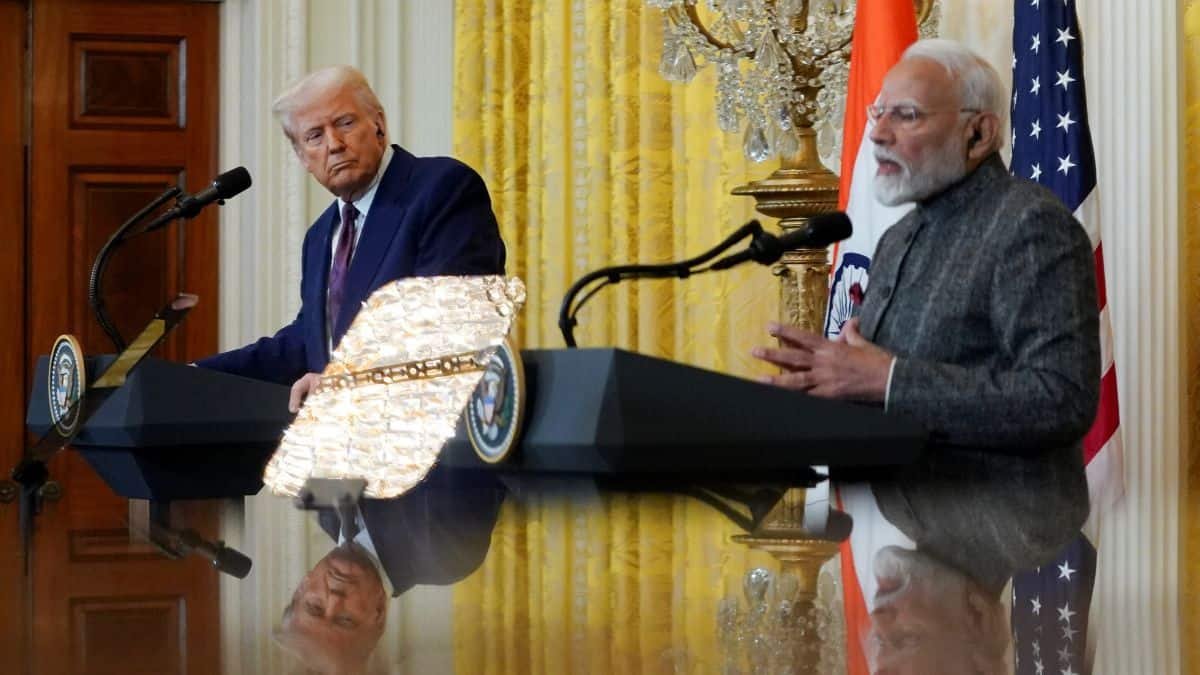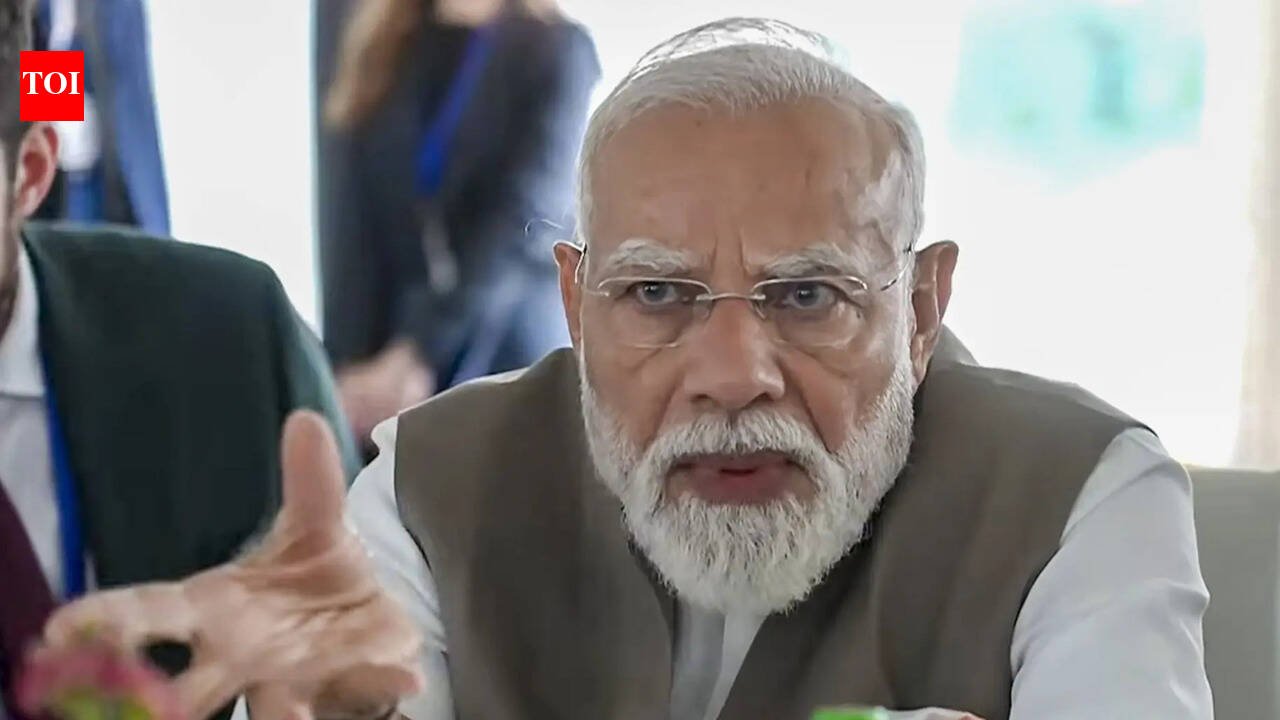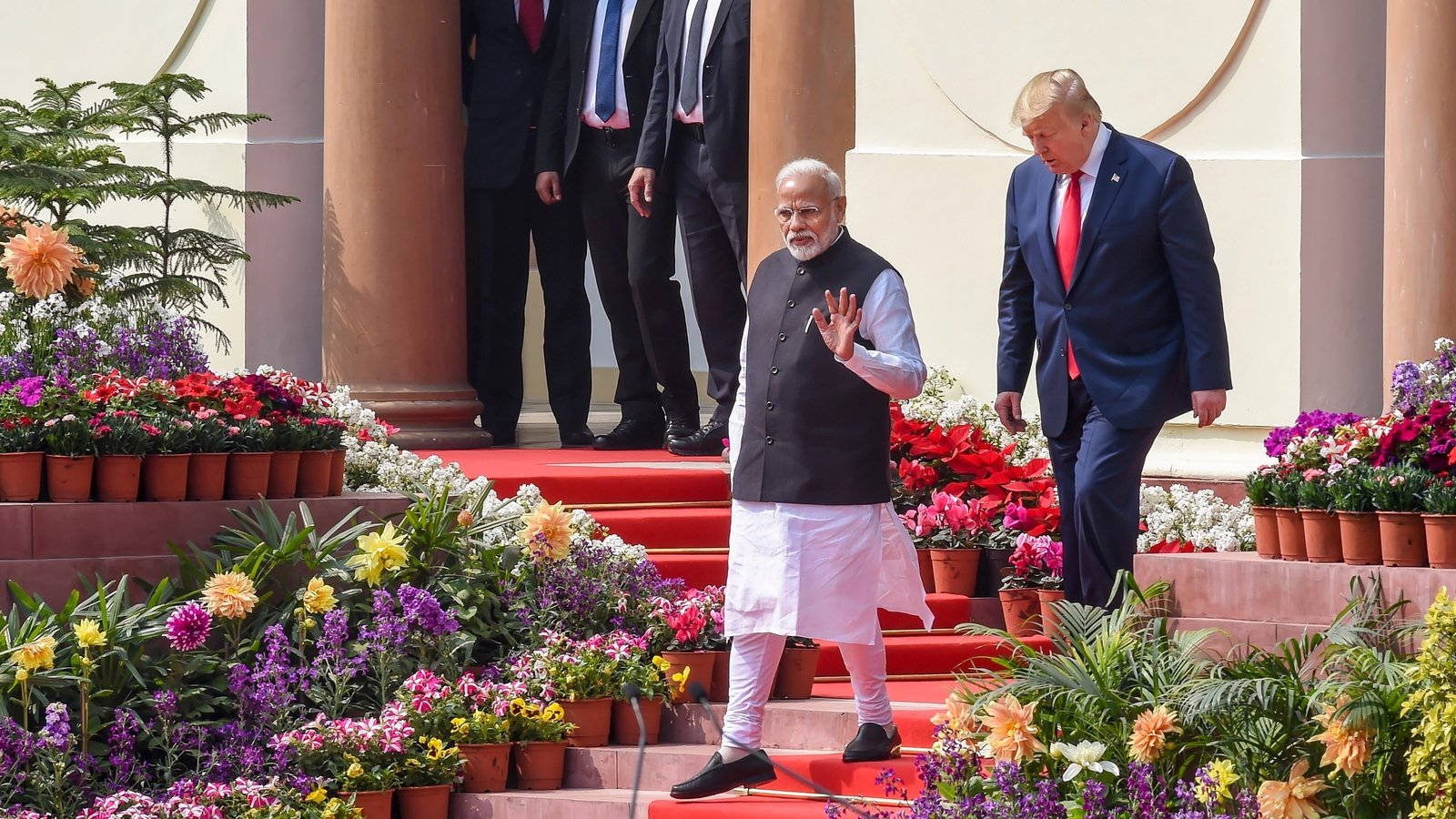
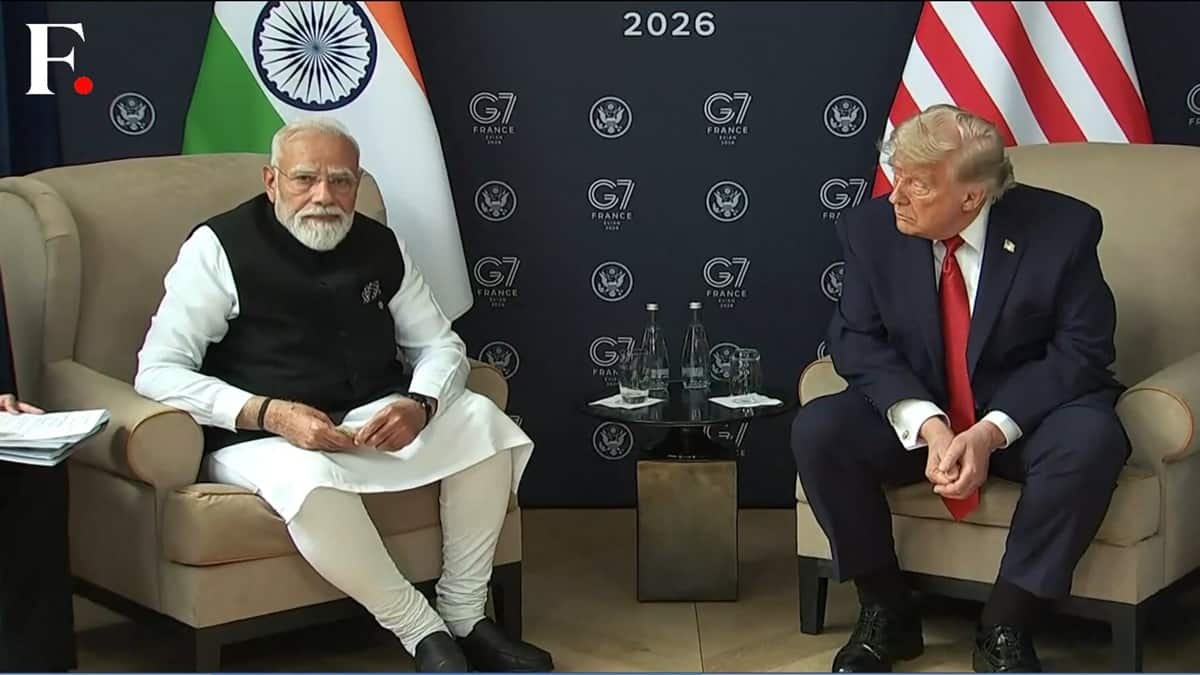
Prime Minister Narendra Modi on Wednesday held a bilateral meeting with US President Donald Trump on the sidelines of the ongoing G7 Summit in France.
During the meeting, PM Modi underscored the importance of maintaining freedom of navigation and ensuring the security of seafarers working across global maritime routes.
He noted that lakhs of Indian seafarers are engaged in maritime trade in different parts of the world and play a vital role in keeping international commerce moving.
Emphasising their safety, PM Modi said that the welfare and security of seafarers must remain a priority amid ongoing geopolitical developments.
Trump responded to questions regarding the deaths of three Indian seafarers in an attack near the Strait of Hormuz, describing maritime work as a “rough profession” and acknowledging the dangers faced by those employed in the sector.
He stressed that the United States and India continue to work together on issues related to maritime security.
The meeting marked the first in-person interaction between the two leaders since their last bilateral engagement at the White House in February 2025.
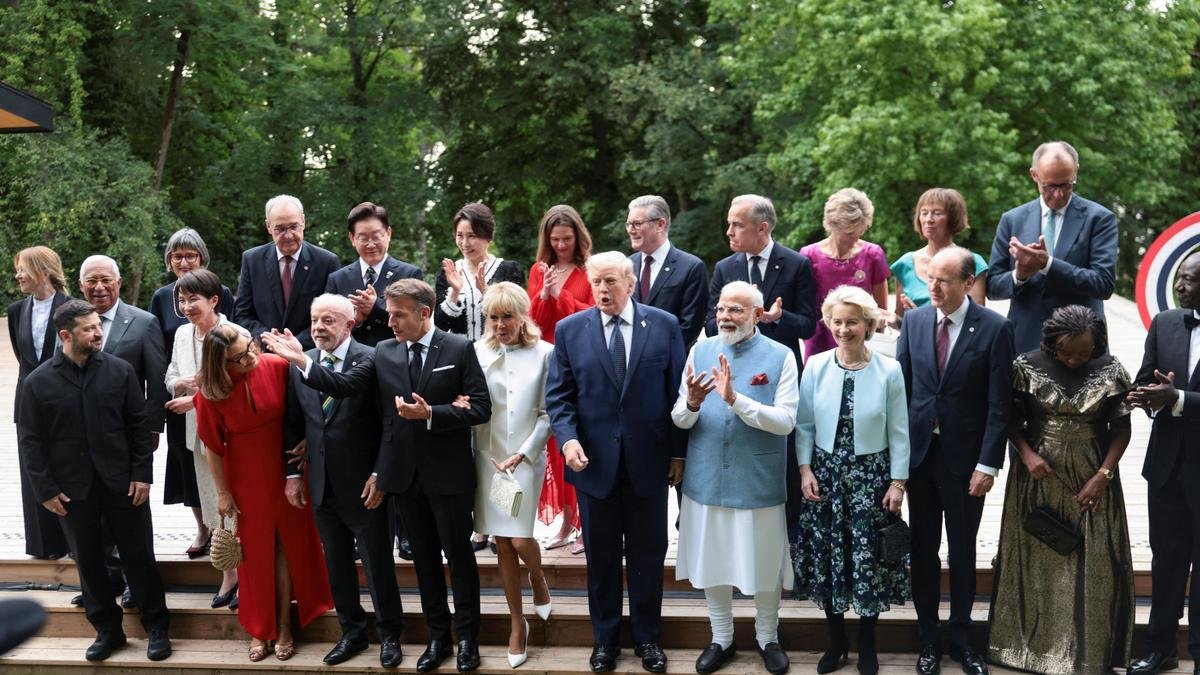
A day earlier, PM Modi and Trump were seen briefly interacting at the summit. Visuals showed the two leaders exchanging a handshake and engaging in a short conversation ahead of the outreach session.
Both leaders are attending the G7 Summit in the French commune of Evian-les-Bains, where India has been invited as a guest country.
Relations between the two countries came under strain last year after Washington imposed a 25 per cent tariff on Indian goods, along with an additional 25 per cent penalty linked to India’s purchase of Russian oil.
Quick Reads
Mortal remains of 2 Indians killed in MT Settebello attack brought back to India
The return of Pacific Command: 5 signals about America’s changing view of Asia
Although those tariffs were later withdrawn, the two sides subsequently began negotiations on a trade agreement that is expected to be finalised soon. Progress on the proposed deal is likely to feature prominently in the Modi-Trump discussions.
Another point of friction emerged after Trump made controversial claims regarding his role in de-escalating the India-Pakistan military clashes last year. The US President repeatedly asserted that he had helped resolve the conflict between the two neighbours, a claim that India publicly rejected.
Washington’s revised immigration policies and its decision to increase H-1B visa fees also contributed to concerns in New Delhi over the direction of bilateral ties.
Relations faced fresh challenges last week after three Indian sailors were killed in a US Navy strike on a merchant vessel off the coast of Oman.
Speaking at a G7 outreach session a day earlier, PM Modi stressed the importance of ensuring the security of global maritime routes and safeguarding seafarers.
Diplomatic tensions escalated after New Delhi summoned US Charge d’Affaires Jason Meeks and conveyed that the American military’s “lethal and deadly” strikes on commercial vessels carrying Indian crew members were “unacceptable”.
External Affairs Minister S. Jaishankar also raised the issue with US Secretary of State Marco Rubio. Washington, however, defended the operation, arguing that the vessel had violated the US blockade of Iranian ports.
Against this backdrop, PM Modi and Trump are expected to review the full spectrum of bilateral relations, including trade negotiations, defence cooperation and broader strategic engagement.
The proposed trade pact is expected to serve as an important step towards a comprehensive bilateral trade agreement, a goal first outlined during PM Modi’s visit to Washington in February 2025.
The Group of Seven (G7) comprises Canada, France, Germany, Italy, Japan, the United Kingdom and the United States. The European Union also participates as a member of the grouping.