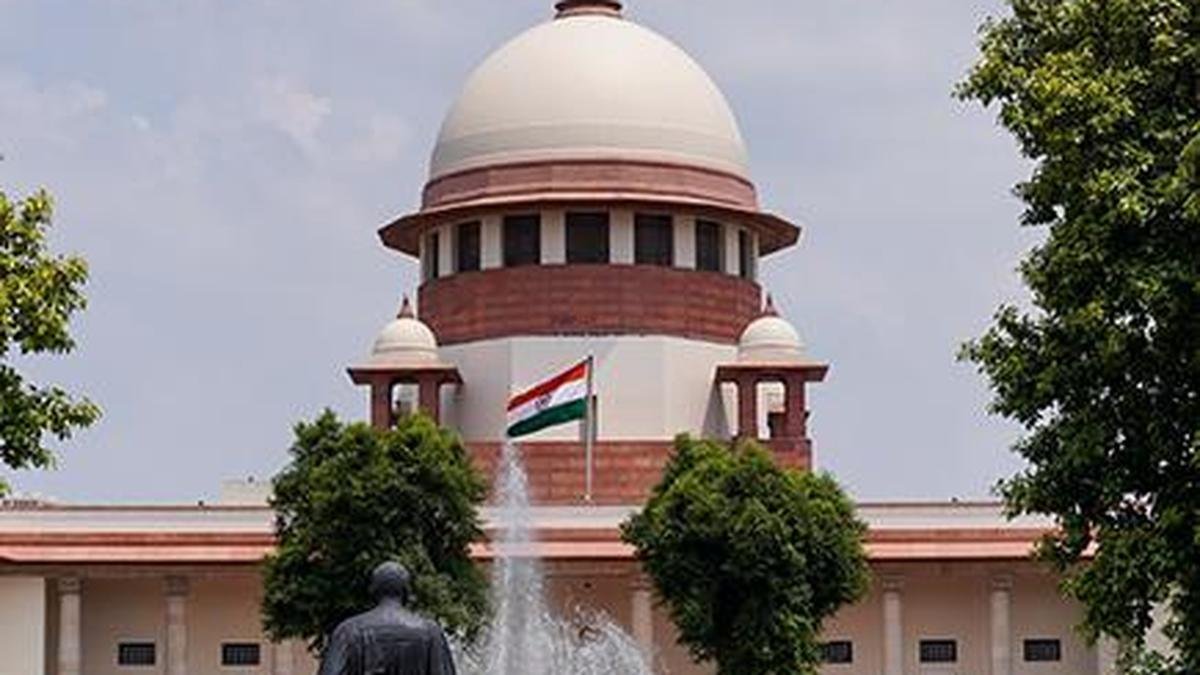
A petition has been moved in the Supreme Court challenging a decision by the government to levy a 0.4% charge on merchants for specified UPI person-to-merchant transactions in excess of ₹2,000.
The National Payments Corporation of India (NPCI) introduced the merchant discount rate (MDR) of 0.4% on UPI payments, applicable from October 15.
The petition was filed by advocate Anjan Datta, challenging the Centre’s September 14 notification and the MDR framework announced on September 15.
No question of rollback of 0.4% MDR charges on UPI transactions over ₹2,000: Top government official According to the government, an MDR of 0.4% would be introduced on Person-to-Merchant (P2M) UPI transactions above ₹2,000.
For transactions of ₹75,000 and above, the MDR would be capped at ₹300 per transaction.
The plea challenged the Constitutional validity of the amended Section 10A of the Payment and Settlement Systems Act, 2007, alleging that it gave unguided powers to the executive to decide which electronic payment modes would receive the no-charge protection.
In this context, the petitioner pointed out that the no-charge protection for RuPay debit cards would continue without a monetary ceiling.
In graphs | Why private banks and foreign UPI apps stand to gain from the MDR charge The plea further questioned why the fixation of the rates, transaction thresholds, etc, were introduced through a press release.
The petition alleged that the complete operative instrument prescribing these charges had not been published in the Official Gazette.
It sought wider and transparent consultations on the MDR framework along with publication of empirical data and an impact assessment.
The petition also called for safeguards for micro and small enterprises.
Who has to pay MDR on UPI and who stands to gain the most? | Explained