The glacial collapse and flash flood near the Nepal-China border are a devastating reminder of how fragile mountain environments can be, particularly in the Hindu Kush Himalayas, UN climate chief Simon Stiell said on Sunday (August 30, 2026).
He said scientists and local communities have been warning for years that the Hindu Kush Himalayas are at huge risk owing to climate change.
Nepal’s agony, the Himalayan warning to India "We also know a warming climate, driven by humanity burning colossal amounts of coal, oil and gas, is making tragedies like this one, and so many others around the world, much more likely, frequent and severe, with vulnerable communities often hardest hit," said Mr.
Stiell, the executive secretary of the United Nations Framework Convention on Climate Change (UNFCCC).
"But the solutions to global heating are equally clear — especially a faster global shift from fossil fuels to renewables and more investment in climate resilience," he added.
Also read: Nepal flash floods LIVE updates On Sunday (August 30), the death toll from flash floods in Nepal rose to 788 with more bodies being recovered, even as more than 2,500 people are still missing.
Rescuers raced against time to search for those missing and rescue those stranded on the fifth day since the disaster.
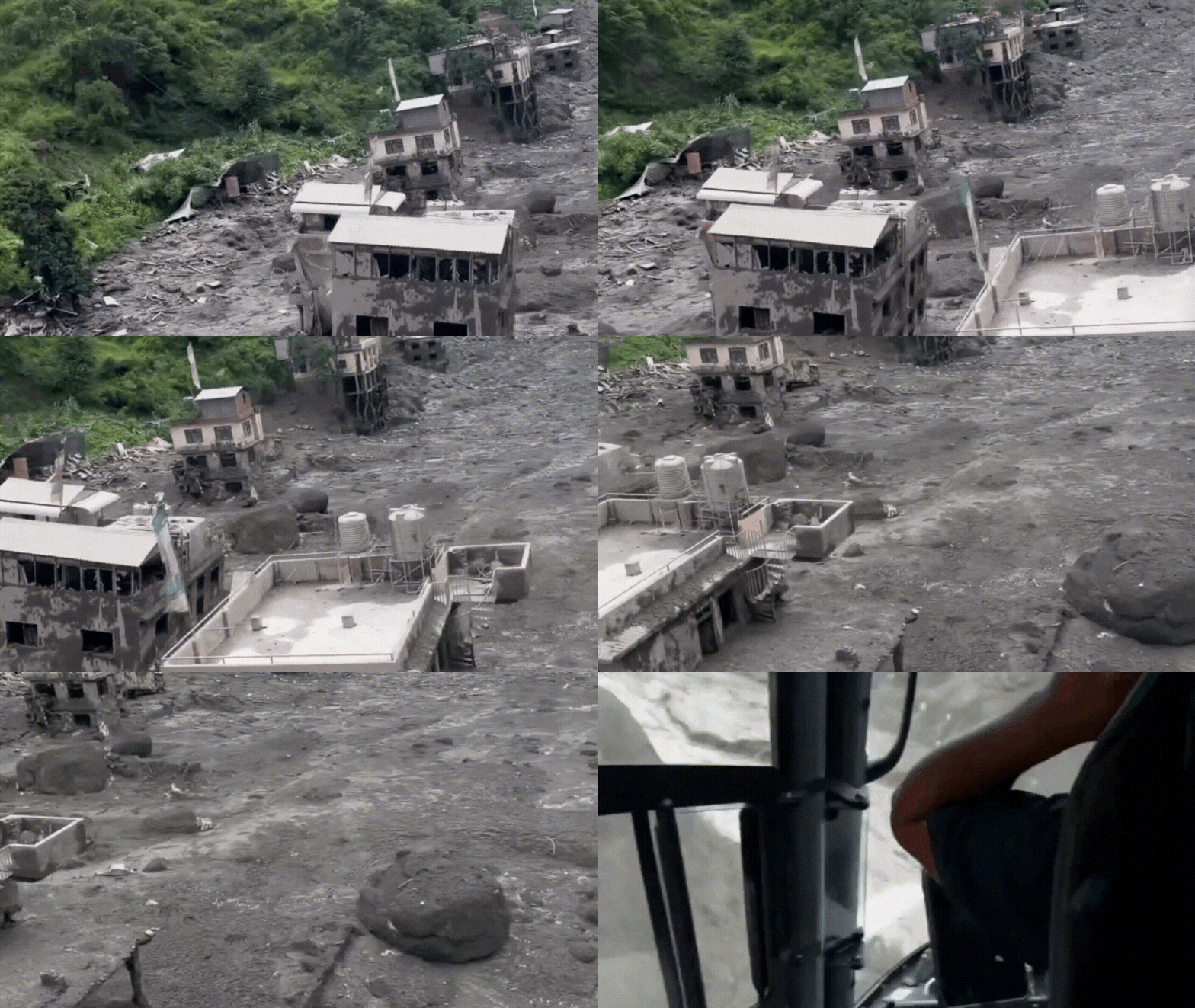
An ice-rock avalanche following a glacial collapse near the Nepal-Tibet border sent a torrent of water, mud and debris downstream, wiping out towns and villages, damaging crucial infrastructure and washing away hydropower stations through northern and central Nepal on August 26.
The Bhotekoshi flood | A Himalayan tragedy Nepal’s National Disaster Risk Reduction and Management Authority (NDRRMA) said the death toll has surged to 788.
The Bhotekoshi river, which flows south from the Himalayan border region, carried the floodwaters downstream, creating havoc on August 26.
On Saturday, the Ministry of External Affairs (MEA) said that more than 275 Indians and 128 persons of Indian origin remained missing or non-contactable in Nepal.
On Sunday, the MEA on its X handle shared a list of 149 people who were rescued.