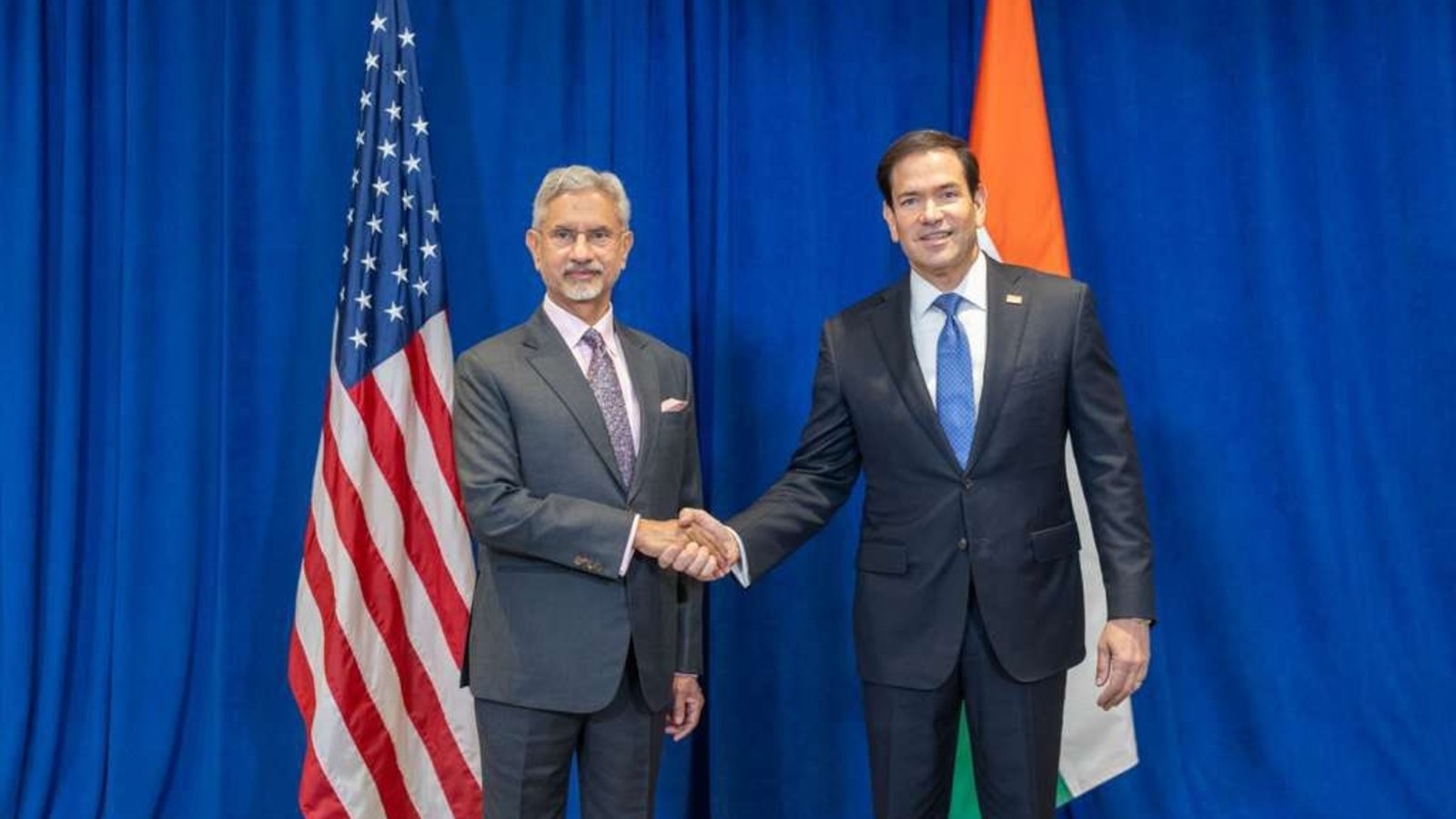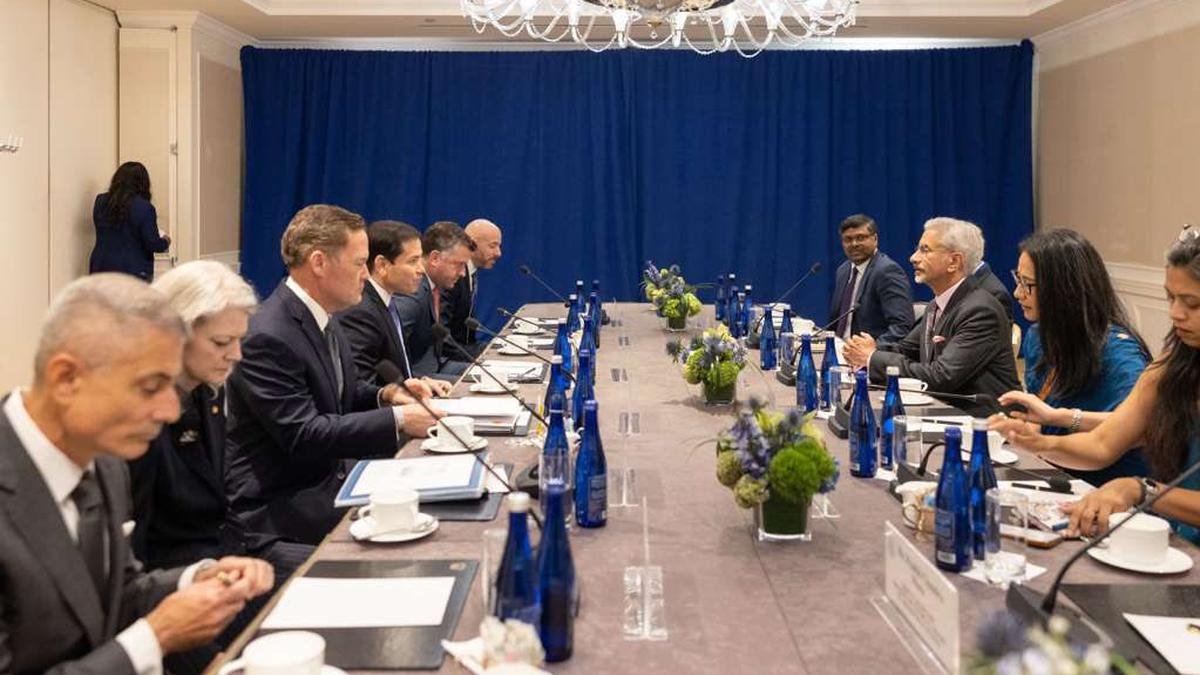
In their first meeting since the United States enacted the Sanctioning Russia and Iran Act (SRIA), External Affairs Minister S. Jaishankar raised concerns about the law with U.S. Secretary of State Marco Rubio in New York on Wednesday (September 23, 2026).
The law, which mandates U.S. President Donald Trump to penalise countries that buy Russian oil with up to 100% tariffs, and extends sanctions on Iran trade, could affect India if implemented after the stipulated one-month period.
In a social media post, Mr. Jaishankar said he had “reiterated India’s interests and concerns with regard to SRIA” and discussed the situations in Ukraine and Iran. In a strongly worded reaction to the U.S. Congress passing the Act last week, the Ministry of External Affairs had said it conveyed to various U.S. interlocutors in recent months that the move would have “implications” for both the India-U.S. bilateral relationship and the international energy market if India is pressured by the U.S. to drop its intake of Russian Ural, which currently makes up 51% of India’s total crude oil imports.
After the meeting, Mr. Rubio sidestepped the issue. In a social media post about the meeting with Mr. Jaishankar, he said, “Together, we are building on the U.S.-India strategic partnership and coordinating on key regional priorities and upcoming multilateral efforts.”
Editorial | Serious escalation: On the U.S., Russia Sanctions Act and India
Preparing for Modi-Trump meet
Mr. Jaishankar and Mr. Rubio are also understood to be preparing for high-level meetings between U.S. President Donald Trump and Prime Minister Narendra Modi later this year, with a possible meeting at the ASEAN Summit in November and then a bilateral meeting expected in mid-December, when Mr. Trump hosts the G20 Summit in Miami.
This is the third year in succession that India has failed to host the Quad Summit, and New Delhi has been keen to set a date later this year or in the first part of 2027 for Mr. Trump and leaders of Australia and Japan to travel to India. There has not been a breakthrough on a date thus far.
The External Affairs Minister and the Secretary of State have met often and extremely cordially in the past two years, even as bilateral relations have come under strain over U.S. tariffs on India, the Free Trade Agreement negotiations, and the U.S.’s ties with Pakistan in the aftermath of Operation Sindoor last year.
Trump’s claim
Their meeting on Wednesday came on the sidelines of the United Nations General Assembly (UNGA), which Mr. Trump addressed a day earlier. In his address on Tuesday, Mr. Trump repeated a claim, which has been denied on several occasions by the Modi government, that he negotiated the India-Pakistan ceasefire in May 2025.
“Since I took office, it has been my great honour to settle eight wars, and in so doing, become friendly with the leaders of many of those countries. It was a great honour to do it. Numerous of these wars have gone on for many years and even decades,” Mr. Trump said in his address to the General Debate of the 81st session of the UNGA, specifically naming India and Pakistan along with a number of other countries in conflict.
Addressing the press later in the day, Mr. Rubio also alluded to India-Pakistan tensions, suggesting that the U.S. was able to step in where the UN failed.
“It would be great if we had a functional international system, for example, that could deal with a war between Thailand and Cambodia that occurred, or a potential conflict between India and Pakistan... Right now, we don’t seem to have a functional international system that can address it,” he said.
Mr. Jaishankar is in New York this week to lead India's delegation at the UNGA and will address the body on Saturday (September 26, 2026).