Details of software used in SIR exempt from RTI, Election Commission cites 'trade secrets' It said no new software was developed or procured and that constituency-level electoral registration officers make decisions on voter inclusion or exclusion.
Updated on: Oct 25, 2026, 10:42:27 IST By Himanshi Dahiya Prefer HTon Google Share via Copy link The Election Commission of India (ECI) has declined to disclose the name and version of the software it used to identify errors and anomalies in voter rolls during the Special Intensive Revision (SIR) exercise, saying the information relates to “commercial confidence, trade secrets and intellectual property” and is exempt under the Right to Information (RTI) Act.
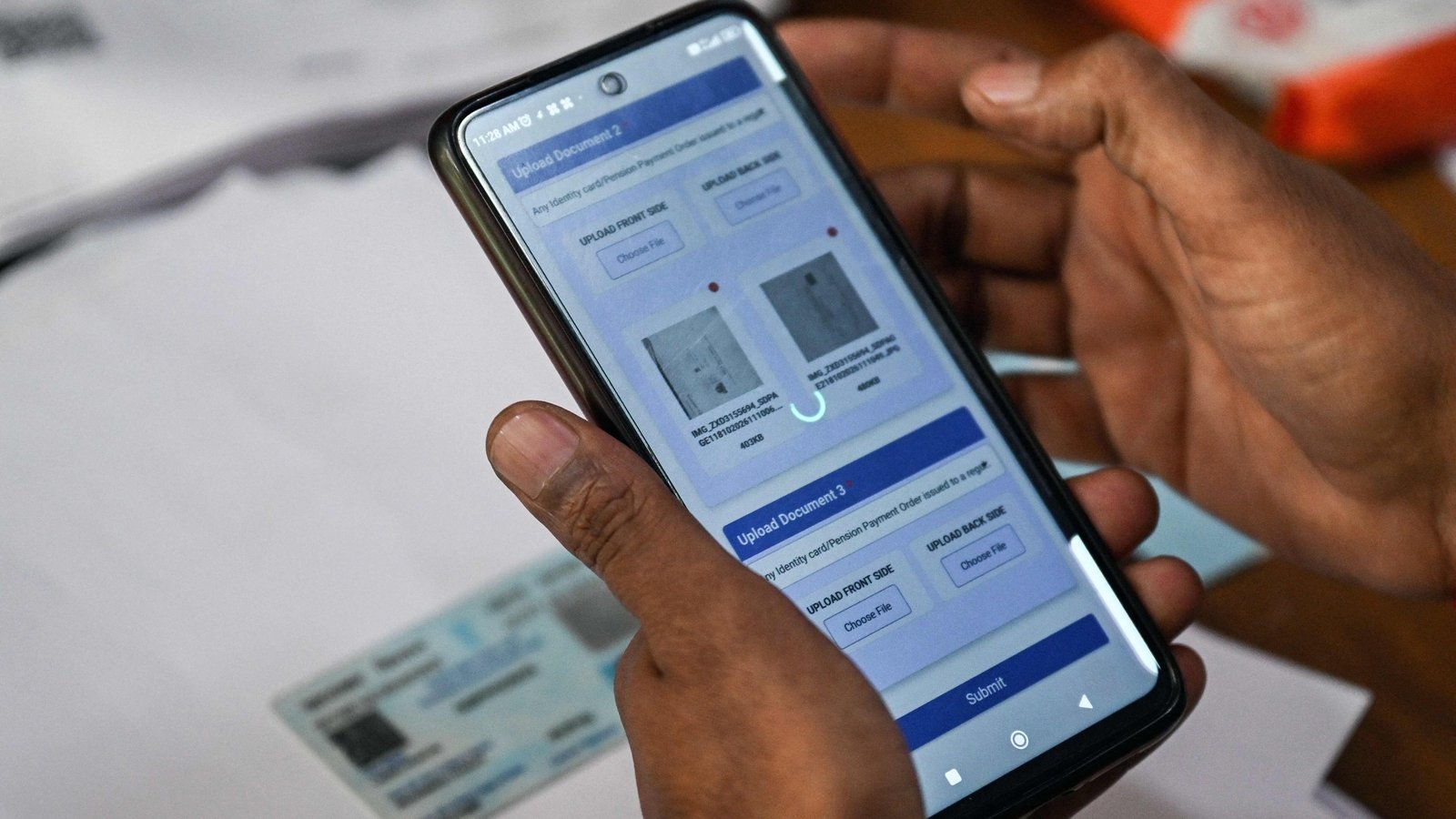
An enumerator uploads documents of an applicant registering for the Draft Electoral Roll 2026 as part of the ECI's SIR. (AFP) The panel, which has faced criticism amid allegations of irregularities in the controversial roll revision exercise, also said that “no new software has been developed or procured for the SIR exercise,” and that electoral registration officers (EROs) decide on the inclusion or exclusion of an elector “on the basis of facts and records.” “The ERO of the concerned constituency is the statutory authority responsible for the preparation and revision of electoral roll of that constituency,” the poll panel said.
The reply, dated October 16, came in response to an RTI application filed by MA Mujeeb Ayyub, a social activist based in Karimnagar, Telangana.
Also Read | 4.76 million names dropped from Delhi voter rolls, but just 250,000 Form 6 applications filed Ayyub sought the name and version of software, application or AI platform used to detect errors or inconsistencies in voter data; whether such a system automatically flags records for verification, correction or deletion, and the workflow that follows; whether AI, machine learning, predictive analytics or automated decision support tools were used at any stage; the safeguards against false positives and wrongful flagging of genuine electors; and the authority that reviews or approves flagged anomalies before action is taken on a voter’s record.
In response to Ayyub’s first question, the ECI invoked Section 8(1)(d) of the RTI Act, which exempts information involving commercial confidence, trade secrets or intellectual property, the disclosure of which would harm a third party’s competitive position.
Regarding the queries covering automatic flagging, the use of AI or ML, and safeguards against wrongful flagging, the commission said the information sought was a “clarification” that does not fall within the definition of “information” under Section 2(f) of the Act.
Also Read | ECI reverses stand on searchable electoral rolls; adds no safeguards against misuse it once cited On the question about who reviews flagged anomalies, the poll body cited Section 8(1)(g), which exempts information whose disclosure could endanger the life or physical safety of any person or reveal the source of information given in confidence for law enforcement or security purposes.
It added that under Sections 13B(1) and 13B(2) of the Representation of the People Act, 1950, the ERO of the concerned assembly constituency is the statutory authority responsible for preparing and revising the electoral roll.
Responding to disclosures in the RTI, former CEC OP Rawat said that the activist must file an appeal.
“This is a legal matter and the applicant must file an appeal to the competent authorities to seek answers to questions ECI is evading,” Rawat said.
ECI has been under pressure over SIR – which has already deleted 130 million names from India’s electoral rolls – and other allegations.
These concerns follow an investigation by The Indian Express that said election commissioners SS Sandhu and Vivek Joshi recorded written dissents and objections at least 14 times between November 2025 and August 2026 and even wrote to the cabinet secretary.
It also alleged that election officials found their access to the ECI software curtailed by the central IT team.
ECI, for its part, said differing views and observations were a normal part of deliberation and that all its digital platforms operated under strict data security protocols.
Also Read | How ECI identifies, removes duplicate electoral roll entries HT this February reported that some of the problems in the West Bengal SIR have their roots in ECI’s Electoral Registration Officer Network (ERONET) portal, senior officials from the IT division of the poll body said.