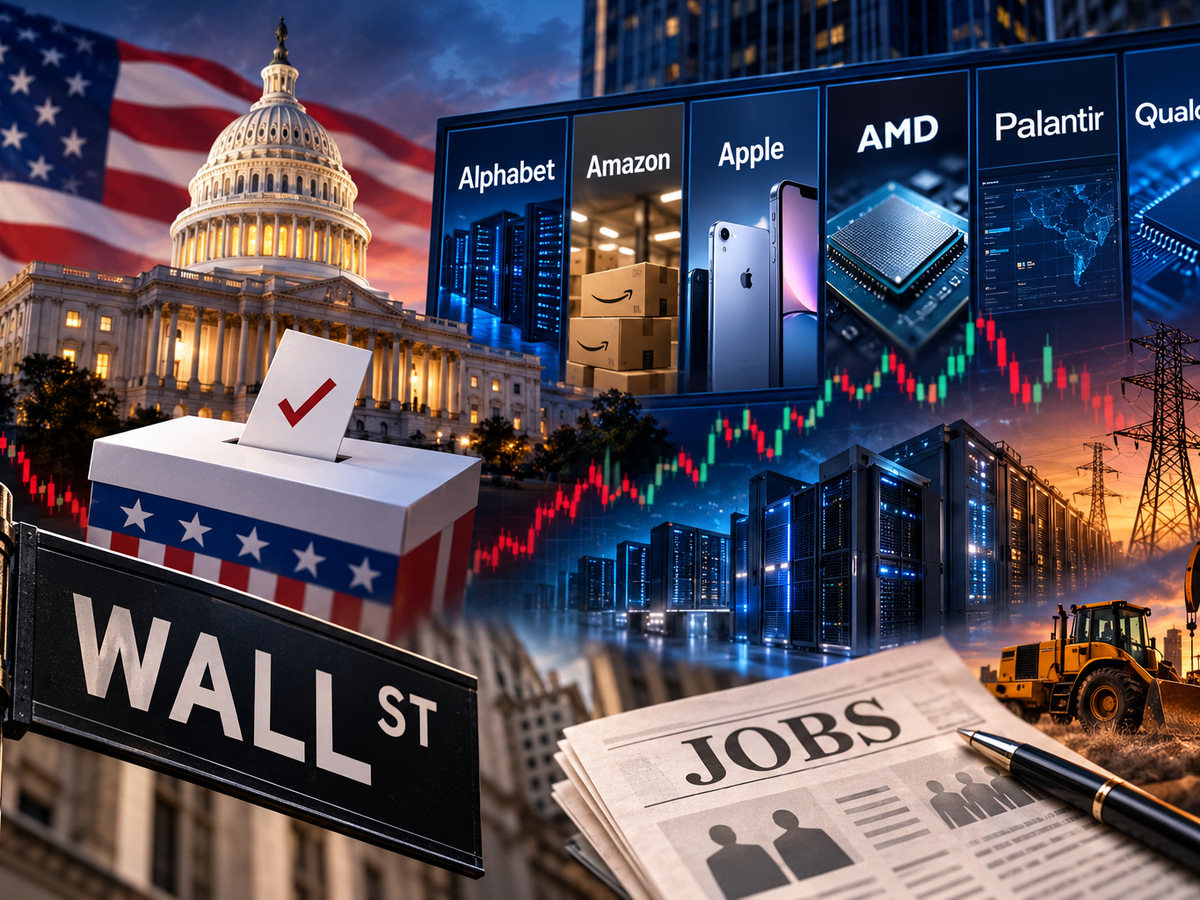
The Democratic victory in the US midterm elections has added another layer of uncertainty for stock markets navigating the fallout of the Iran war and the AI boom/AI Image
Last Updated: Nov 04, 2026, 11:20:00 PM IST
The Democratic victory in the US midterm elections will throw a new spanner into the workings of the stock markets which are already dealing with the fallout of the Iran war and the AI boom, raising concerns over the mounting debt of the world's biggest economy, Reuters reported.
While the overall market reaction to the results remained modest on Wednesday, with European equities trading higher and the dollar recovering, investors are preparing for continued volatility. Their attention is focused on two key areas: the trajectory of the Iran war, which has driven oil prices up 70% this year, and the contentious debate over US fiscal spending.
"The biggest potential market implications could be if, with the midterms now out of the way, the President (Donald Trump) decides to escalate in the Middle East," Mike Bell, head of market strategy at RBC BlueBay Asset Management, which manages almost $600 billion of assets, told Reuters.
"If escalation... were to follow and energy prices then move higher it could hurt both stocks and bonds at the same time."
As the Iran war continues, oil prices have remained above $100 a barrel, increasing fuel costs for consumers and businesses. Central banks, meanwhile, are monitoring the risk of a spillover into a broader inflation surge that could necessitate significantly higher interest rates.
The US central bank has missed its inflation target for more than half a decade. Euro zone inflation climbed to a three-year high of 4% in October, driven by elevated energy prices, and was expected to rise further in the coming months. Data released on Wednesday reinforced market expectations of a European Central Bank rate hike in December.
Geopolitical risks have remained elevated as Trump retains control over foreign policy, said Berenberg chief economist Holger Schmieding.
Alongside the Iran war, the US capture of Venezuelan President Nicolas Maduro and Trump's tariff threats against European allies over Greenland earlier this year also caught investors off guard.
"We probably have to brace ourselves for significant foreign policy noise in the two final years of the Trump presidency," Schmieding said.
AI boom to mounting debt
Concerns that rapid growth in the AI sector could face regulatory scrutiny following the Democratic victory emerged as an immediate focus for markets.
Opinion polls have indicated that Democratic voters favour greater oversight of AI, and investors expect the Democratic-controlled Congress to subject the sector to increased scrutiny.
Nevertheless, global stocks recovered from initial volatility and moved higher, while US stock futures also advanced after falling as much as 2% overnight.
"AI is such a core part of the US growth story. So whoever is in government will try and get the best of both worlds - support the build out while respecting affordability concerns," said Seema Shah, chief global strategist at Principal Asset Management, noting that the S&P stock index has been higher a year after midterms on each occasion since the end of World War Two.
However, investors have become increasingly concerned about market resilience. The surge in AI capital investment and heavily indebted governments has pushed borrowing costs to multidecade highs, exposing vulnerabilities in financial markets.
Shah added that she would closely monitor developments in fiscal policy, which could face even greater constraints following the election result.
Treasury yields declined on Wednesday, with analysts expressing relief that Trump's promise to distribute $5,000 cheques to US adults in the event of a Republican victory would not materialise.
Concerns over the US national debt, which recently crossed $40 trillion, have contributed to rising government bond yields this year.
Congress has postponed a contentious debate over fiscal 2027 spending until after the midterms, setting December 11 as the deadline for reaching a funding agreement.
The deadline for raising the debt ceiling is unlikely to arrive until late 2027. Democrats could use the so-called X-date as leverage in negotiations with Republicans over spending and tax policies, seeking concessions in exchange for votes to address the borrowing limit.
"We expect market volatility to continue," said Shah. "It will be white-knuckled ride for the next year."