
More than a gaming tablet, the ROG Flow Z13 KJP is a collector's dream packed with desktop class performance.


I cannot tell you how excited I was when the Asus ROG Flow Z13 KJP landed on my desk. Even before opening the box, I already knew what to expect because Asus had shown the machine multiple times before launch. But knowing what it looks like and actually holding it in your hands are two completely different things. As a long time fan of Hideo Kojima's games and the world of Death Stranding, this was one of those rare products that I wanted to own before I even reviewed it. And honestly, after spending a few weeks with it, I still think this is one of the coolest pieces of gaming hardware I have ever used.

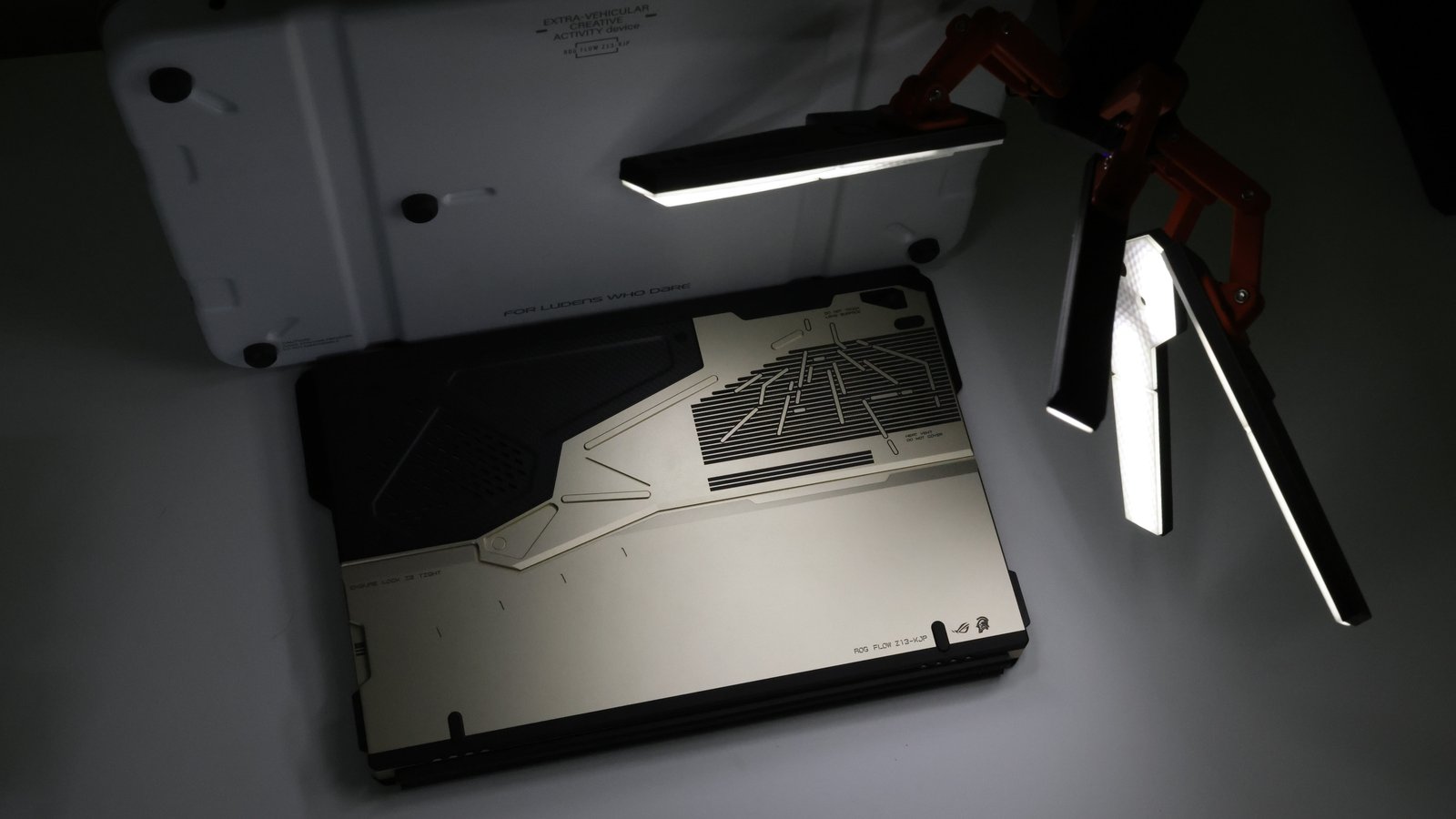
Before I even powered it on, I spent several minutes just looking at it. The white carrying case looked like something Sam Porter Bridges would carry across a fractured America. The artwork, the stickers, the details hidden throughout the machine, everything felt intentional. The Asus ROG Flow Z13 KJP feels like a product that was actually designed by people who understand why Death Stranding fans obsess over every tiny detail. The funny thing is that after all this fan service, I almost forgot the Asus ROG Flow Z13 KJP is also one of the most powerful gaming tablets ever made.
Asus ROG Flow Z13 KJP specifications
This machine belongs in the Death Stranding universe
The biggest compliment I can give the Asus ROG Flow Z13 KJP is that it never feels like a lazy special edition product. Most collaborations stop at a custom wallpaper, a few logos, and maybe a fancy box. Asus clearly went much further. The moment I unboxed the tablet, I was captivated by how much attention went into the design. Every surface feels inspired by Death Stranding, from the gold accents and carbon fiber detailing to the artwork spread across the chassis. It is the kind of machine that immediately stands out, even before you turn it on.

The white carrying case deserves special mention because it genuinely looks like something Sam Porter Bridges would carry during one of his deliveries. Asus also includes themed stickers and custom packaging elements that make the entire experience feel more like opening a collector's item than a gaming device. The best part is that the Death Stranding references never feel excessive. They are noticeable enough for fans to appreciate, but subtle enough that the tablet still looks premium and sophisticated.

People constantly noticed the Asus ROG Flow Z13 KJP whenever I carried it around. Colleagues kept asking what kind of laptop it was, while fellow Kojima fans were immediately drawn to the design. There were moments when I genuinely felt like putting it inside a display cabinet instead of using it. Thankfully, Asus did not forget that this is still a gaming machine.

The detachable keyboard connects through magnetic pogo pins, the kickstand opens well beyond ninety degrees, and port selection is surprisingly generous for a tablet. You also get a clever SSD access door secured with a single screw, making upgrades far easier than on most modern laptops. The Asus ROG Flow Z13 KJP may look like a collector's piece, but underneath all that artwork is a thoughtfully engineered gaming device.

Display is where the magic begins
The display on the Asus ROG Flow Z13 KJP is exactly what I expected from an ROG device, and I mean that in the best possible way. My personal gaming laptop is also an Asus machine, so I already had fairly high expectations going into this review. The 13.4 inch ROG Nebula display offers a QHD resolution and a 180Hz refresh rate, and it does a fantastic job whether you are gaming or simply watching content. Colors look vibrant, the panel feels colour accurate, and HDR support adds extra punch to supported games and movies.

What I like most about this display is that the 180Hz refresh rate never feels wasted. The Asus ROG Flow Z13 KJP has enough horsepower to push modern games well beyond 100 FPS, making the high refresh rate genuinely useful rather than a marketing checkbox. Brightness could have been higher, especially for outdoor use, but it never became a major issue during my testing.
Of course, the first game I had to install was Death Stranding. Playing it on a device that looks like it was designed inside Kojima Productions somehow felt fitting. What surprised me the most was how effortlessly the tablet handled it. The game ran smoothly, looked fantastic, and remained playable even when running on battery power.
You are obviously not going to spend hours gaming unplugged, but the fact that the can comfortably run a demanding title like Death Stranding without turning into a stuttering mess is impressive. That alone tells you this is not a regular Windows tablet pretending to be a gaming machine. It is a serious gaming device that just happens to come in a tablet form factor.
The performance beneath the artwork
After spending so much time admiring the design, it is easy to forget just how absurd the hardware inside the Asus ROG Flow Z13 KJP actually is. This tablet is powered by AMD's Ryzen AI Max+ 395 processor paired with Radeon 8060S graphics, and the combination is far more capable than most people would expect from a device that looks like a giant tablet. In fact, we can compare its gaming performance to laptops equipped with RTX 4060 graphics, which is impressive considering everything is running on integrated graphics.

My review unit handled pretty much everything I threw at it without breaking a sweat. Whether it was gaming, multitasking, or simply running dozens of browser tabs, the Asus ROG Flow Z13 KJP never felt short on power. The 128GB of LPDDR5X memory is honestly overkill for most users, but it ensures that the tablet never runs out of breathing room no matter how demanding your workload gets.

The gaming performance is equally impressive. Death Stranding runs beautifully on the Asus ROG Flow Z13 KJP and often stays well above 100 FPS depending on the settings. Forza Horizon 5 can comfortably cross the 100 FPS mark, while Cyberpunk 2077 remains highly playable with the help of FSR. Even demanding titles like Black Myth: Wukong are surprisingly playable on this machine when you tweak the settings a little.

The fans become very noticeable when Turbo mode is enabled and you are pushing the hardware hard. During gaming sessions, the fan noise often became loud enough to overpower the tablet's small speakers. Thankfully, I almost always game with headphones, so it never really bothered me. The good news is that Asus has done an excellent job with thermal design. Since all the components sit behind the display, the heat is pushed away from where your hands normally rest.
Not quite a tablet, not quite a laptop
Despite being marketed as a gaming tablet, I rarely used the Asus ROG Flow Z13 KJP as one. At 1.7 kilograms, it is simply too heavy to use comfortably as a traditional tablet for extended periods. I tried using it that way a few times, but every session ended with me pulling out the kickstand, attaching the keyboard, and using it like a laptop instead.

The kickstand itself is excellent and offers plenty of flexibility, making it easy to find a comfortable viewing angle. The detachable keyboard also looks fantastic with its black and white colour scheme, although the typing experience is best described as usable rather than exceptional. The keys feel a little bouncy, while the trackpad is decent enough for daily use without ever becoming a highlight.
Honestly, none of this bothered me much because I never viewed the Asus ROG Flow Z13 KJP as a tablet in the first place. This is a gaming machine that happens to have a detachable keyboard, not the other way around. Once you start looking at it from that perspective, most of these compromises become much easier to accept.
The battery lasts, until you start gaming
Battery life on the Asus ROG Flow Z13 KJP is actually better than I expected for a machine this powerful. During regular usage, browsing, writing, and media consumption, I was comfortably getting around six to seven hours of runtime, which is respectable for a Windows gaming tablet. Gaming is a different story, of course. While I was pleasantly surprised to see Death Stranding running smoothly on battery power, you are realistically looking at around an hour of gaming before reaching for the charger.
Considering the kind of hardware packed inside this machine, I honestly have very little to complain about. The Asus ROG Flow Z13 KJP was clearly designed to deliver maximum performance when plugged in, and the battery life it offers away from the charger feels more than acceptable for a device in this category.
The price of fandom
At ₹3,79,990, the Asus ROG Flow Z13 KJP is difficult to justify if you look at it purely as a gaming machine. For this kind of money, Asus itself will happily sell you far more powerful gaming laptops with larger displays, dedicated GPUs, and fewer compromises. That is simply the reality of the market.

But every time I sat down to write about the price, I kept running into the same problem. The Asus ROG Flow Z13 KJP is not the kind of device you cross shop against a regular gaming laptop. Nobody buys a limited edition Death Stranding themed gaming tablet because it offers the best performance per rupee.
What you are paying for here is the novelty, the exclusivity, the design, and the fact that this machine feels like a genuine collaboration between Asus and Kojima Productions rather than a standard gaming device with a few logos slapped on top.
If I had ₹3.8 lakh to spend on gaming hardware, I honestly would not buy the Asus ROG Flow Z13 KJP as my primary gaming machine. I would buy it because I wanted to own it. And that probably tells you everything you need to know about who this product is really for.